

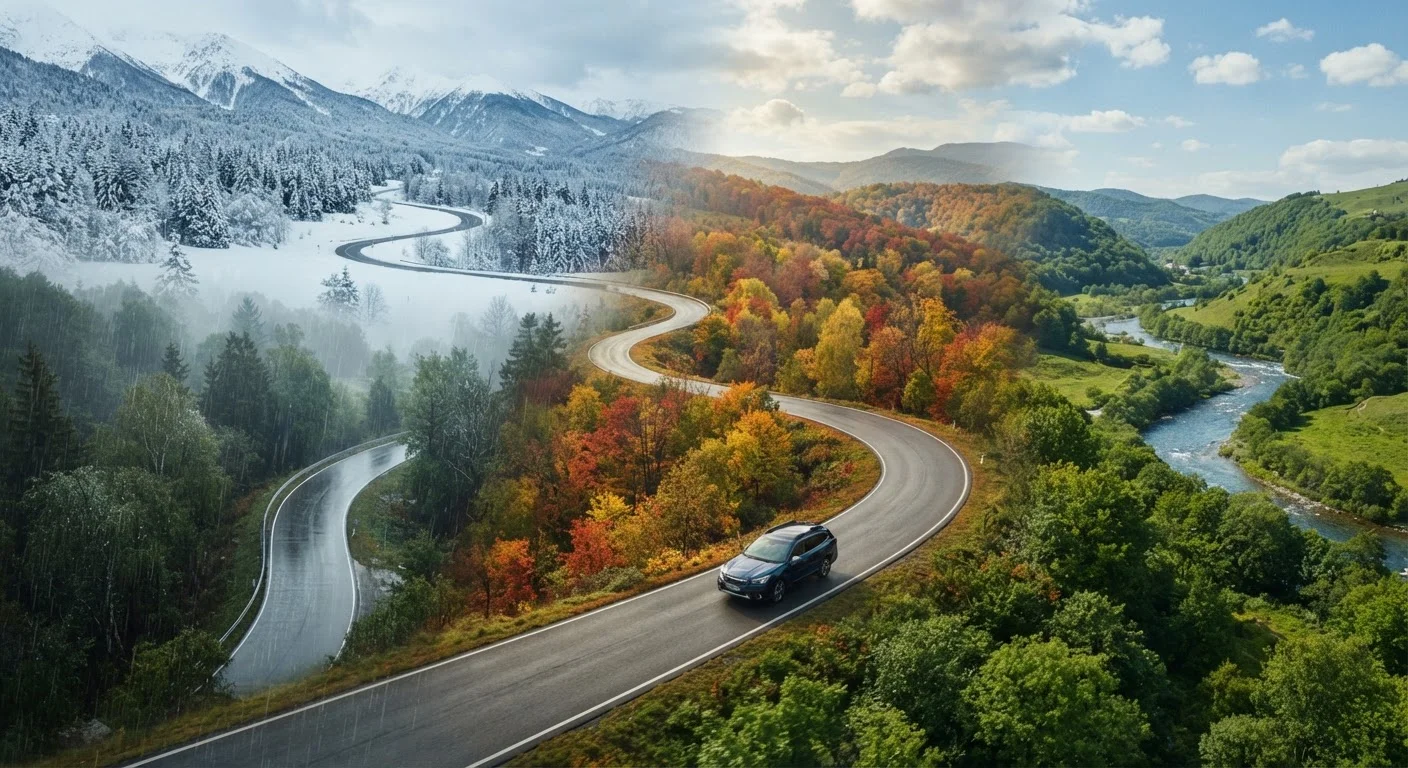
Why Seasonal Driving Habits Matter
Most drivers develop a set of habits behind the wheel and apply them consistently - regardless of what month it is or what the road looks like. That consistency isn't inherently bad, but every season introduces a distinct set of physical and environmental conditions that can make those default habits less effective, or even dangerous.
Road surfaces, lighting angles, tire performance, and driver visibility all shift meaningfully across the year. The drivers who adapt tend to avoid the scenarios that lead to close calls. Those who don't often find themselves reacting to conditions rather than anticipating them.
This reference is designed to give you a practical season-by-season framework - not a checklist of gear to buy, but a set of habits and awareness adjustments that apply to any vehicle and any driver. Pair it with our seasonal car care guide for a complete picture of how to prep both yourself and your vehicle.
1 PSI
Tire pressure change per 10°F temperature shift
A well-documented relationship noted by tire industry and safety organizations; regular checks prevent under- or over-inflation.
3x
Increase in stopping distance on ice vs. dry pavement
Stopping distances on ice can be three or more times longer than on dry roads, according to general road safety guidance from highway safety organizations.
Oct-Dec
Peak deer-vehicle collision season
State wildlife and transportation agencies consistently identify late fall as the highest-risk period for deer-related crashes due to breeding season movement.
Spring: Navigating Wet Roads and Post-Winter Hazards
Spring is deceptively tricky. Warmer temperatures and longer days feel like a return to easy driving, but the roads themselves often tell a different story. Winter months leave behind potholes, frost heaves, and crumbling pavement edges that weren't visible under snow. Rain becomes more frequent, and early spring showers fall on roads that may still carry residual sand and gravel from winter treatment.
Hydroplaning - where a layer of water lifts your tires off the road surface - is a real risk on spring roads, particularly in the first few minutes of rainfall when oils and grime surface before washing away. Slow down in rain, avoid puddles of unknown depth, and ease off the accelerator smoothly rather than braking hard if you feel the steering go light.
Spring is also when wildlife becomes more active near roadways. Deer, in particular, move frequently during dawn and dusk. Scan the road edges, not just the center, especially in rural areas.
Check Tire Tread After a Wet Winter
Spring is an ideal time to assess tire tread depth. A simple way: insert a penny into the tread groove with Lincoln's head pointing down. If you can see the top of his head, the tread is below 2/32 inch - generally considered the minimum safe depth. Worn tires are especially dangerous on wet spring roads.
Before spring road trips, run through our pre-road trip inspection checklist to catch any winter damage early.
Summer: Managing Heat, Glare, and Tire Pressure
Summer driving comes with its own hazards, many of which are underestimated because the roads feel clear and dry. Heat is the chief concern. Pavement temperatures on hot days can exceed ambient air temperatures significantly, which accelerates tire wear and increases the risk of a blowout on tires that are already underinflated or aging.
Tire pressure rises roughly 1 PSI (pound per square inch) for every 10°F increase in temperature. If you set your tire pressure on a cool morning, a hot afternoon drive can push it higher than ideal. Conversely, cool nights can drop it again. Checking pressure monthly - and always when tires are cold - is a simple habit with real safety payoff. Our tire pressure guide explains exactly what to look for and how to check it yourself.
Sun glare is a genuine visibility hazard in summer, particularly during the low-angle morning and evening hours. Keep your windshield clean inside and out - interior film and smudges scatter light and make glare far worse. A pair of quality polarized sunglasses reduces eye strain and improves contrast on bright roads.
Always check tire pressure when the tires are cold - ideally before you've driven more than a mile. Driving heats the air inside tires and gives you a falsely elevated reading.
Accurate pressure readings require a cold baseline; checking after a drive can lead drivers to leave tires underinflated, increasing blowout risk.
Before any season transition, take your car through a car wash that includes undercarriage cleaning. Salt and grit accumulate in places you can't easily see and quietly accelerate corrosion.
Road salt used in winter treatment is highly corrosive to brake lines, suspension components, and frame structures; removing it promptly extends component life.
For those dealing with summer allergies affecting alertness behind the wheel, it's worth reading our guide to managing seasonal allergies - some antihistamines can impair reaction time.
Fall: Leaves, Rain, and Changing Light
Fall is one of the most hazardous seasons on American roads, though it rarely gets the same attention as winter. Wet leaves packed onto pavement can reduce traction to levels comparable to light ice - a surprise to many drivers who assume a dry-looking road is a grippy one. Brake earlier than you think you need to, and avoid sudden lane changes over leaf-covered surfaces.
Daylight saving time ends in fall, which means many commuters who drove home in daylight suddenly find themselves driving in darkness. Night driving reduces your reaction window and changes how you read road cues. Increase your following distance and drop your speed slightly until your eyes and habits recalibrate.
Fall is also when deer activity peaks during the rut - the breeding season that runs roughly October through December depending on region. Dusk and dawn are the highest-risk windows. If you see one deer cross the road, slow and watch for more; deer rarely travel alone.
Wet Leaves Are Slicker Than They Look
A road covered in wet, matted leaves can have traction properties approaching light ice. Many drivers discover this mid-corner or when braking - not a good moment for surprises. Treat leaf-covered pavement with the same caution you'd give a wet road, and increase your braking distance accordingly.
As seasons change, dashboard warning lights sometimes appear for the first time due to temperature-related sensor behavior. Our dashboard warning light reference helps you understand which alerts need immediate attention.
Winter: Traction, Visibility, and Cold-Weather Awareness
Winter demands the most significant behavioral adjustments of any season. Ice and snow reduce the friction your tires rely on for steering, braking, and acceleration. The core adaptation is smooth inputs: steer gently, brake progressively, and accelerate gradually. Jerky or sudden movements on slick surfaces cause the vehicle to lose the traction it does have.
Black ice - a thin, nearly transparent glaze that forms on bridges, overpasses, and shaded road sections - is among the most dangerous winter hazards because it's visually indistinguishable from wet pavement. If the road looks wet but your surroundings are below freezing, treat it as potentially icy. Our guide to road conditions that surprise drivers covers black ice in greater depth.
Following distance should roughly double in snow and triple on ice. Stopping distances increase dramatically on slick surfaces, and modern ABS (anti-lock braking system) helps you steer while braking but cannot shorten physics. Give yourself and the vehicles around you room to stop.
Cold also affects braking components over time. Brake habits that cause premature wear matter more in winter when brake performance is already tested by temperature and road conditions.
Year-Round Habits That Pay Off in Every Season
Some driving habits transcend the calendar. Building situational awareness behind the wheel - scanning ahead, tracking blind spots, and reading traffic flow - is effective in every season and every road type. It's the foundation that makes all other adjustments more effective.
Consistent following distance, smooth braking, and deliberate mirror checks take on added importance when conditions degrade. Defensive driving techniques apply equally to a snow-covered highway and a summer interstate.
- Check tire pressure monthly - temperature swings affect it constantly.
- Keep your windshield clean inside and out - glare and condensation are year-round visibility hazards.
- Adjust following distance for conditions - not just the posted speed limit.
- Know your vehicle's warning lights - season changes often trigger them for the first time.
- Schedule seasonal inspections - a quick mechanical check before each major season transition catches problems before they become emergencies.
See our car maintenance hub for a full library of upkeep guides organized by topic.
All-Season Tires Have Real Limitations
Despite the name, all-season tires are a compromise. They perform adequately across a range of conditions but are outperformed by dedicated winter tires in sustained snow and ice, and by summer performance tires in extreme heat. Drivers in regions with severe winters should consider dedicated winter tires - a decision worth discussing with a qualified tire professional.
The content on this site is for informational purposes only and is not a substitute for professional advice. Always consult a qualified professional for guidance specific to your situation.