

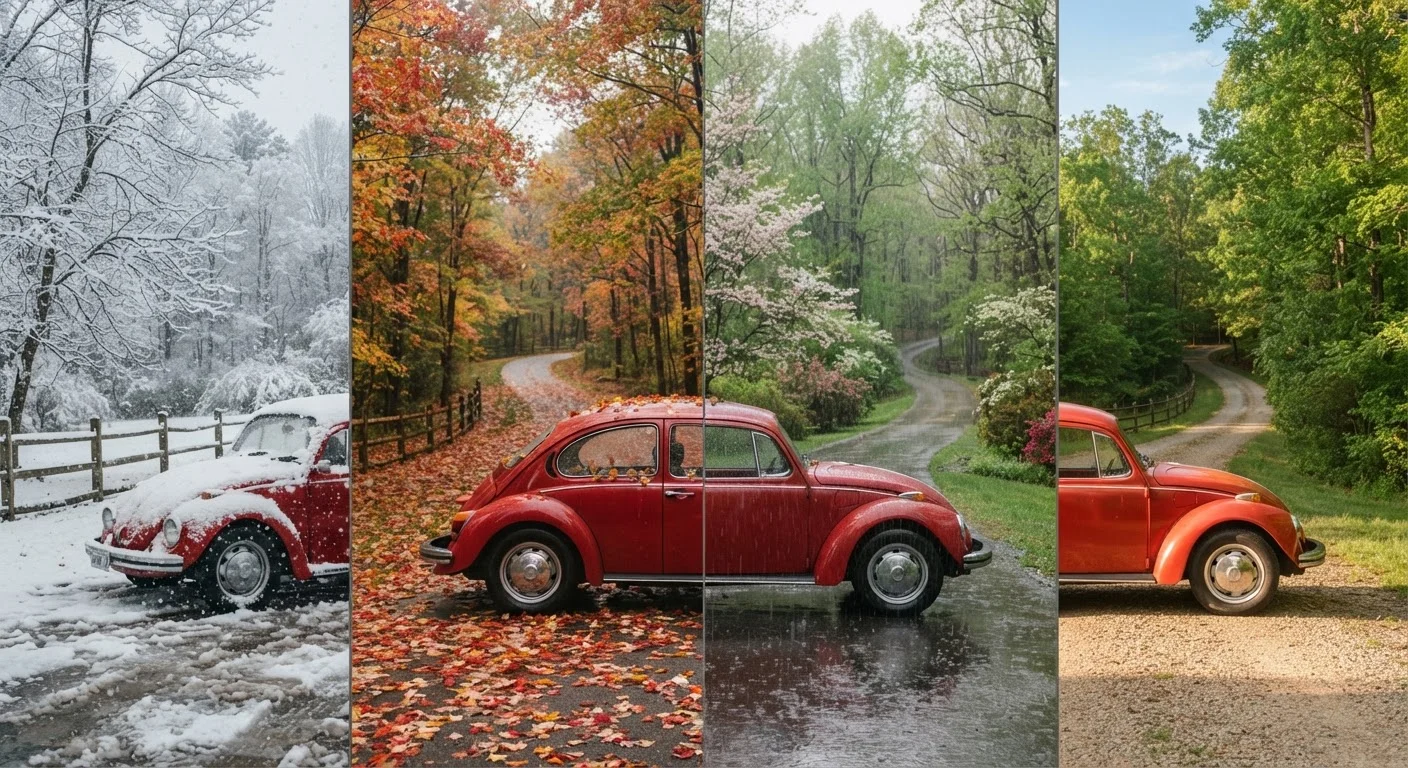
Why Climate Should Shape Your Maintenance Calendar
Most car owners follow a single, static maintenance schedule based on mileage alone. That approach is a reasonable starting point, but it overlooks a critical variable: where you live and what your vehicle endures season to season. A car in Phoenix faces relentless heat stress on its cooling system and rubber components. A vehicle in Minnesota battles battery strain and road-salt corrosion every winter. One-size-fits-all servicing leaves real protection gaps.
Adapting your upkeep to local climate conditions doesn't mean overhauling everything - it means layering a few targeted checks onto your existing schedule at the right times. For a broader look at what each standard service interval covers, see our maintenance schedule guide.
“Your car doesn't know what month it is - it only knows what conditions it's operating in. Maintenance that ignores climate is maintenance that's always playing catch-up.”
— Automotive Service Excellence (ASE), National certification body for professional automotive technicians
Winter Preparation: Cold-Weather Priorities
Low temperatures put measurable stress on several vehicle systems simultaneously. Here's where to focus before and during cold months:
Test your battery before the first hard freeze of the season.
Cold temperatures reduce a battery's ability to deliver starting current - a battery that performs adequately in summer can fail at 20°F. A load test, available at most auto parts stores or service shops, reveals remaining capacity before it leaves you stranded.
Switch to the correct engine oil viscosity for cold-weather operation.
Oil thickens in cold temperatures, slowing its flow to engine components at startup - the moment wear is highest. Your owner's manual specifies the appropriate viscosity range for your climate; using a multi-grade oil rated for low temperatures (e.g., 0W-20) protects metal surfaces during cold starts.
Check tire pressure weekly during cold snaps.
Tire pressure drops roughly 1 PSI for every 10°F decrease in ambient temperature. Underinflated tires reduce fuel efficiency, handle poorly, and wear unevenly - risks that compound on slippery winter roads.
Inspect coolant concentration and condition before temperature extremes.
Coolant (antifreeze) prevents both freezing in winter and boilover in summer, but its protective range degrades over time. An inexpensive test strip or refractometer can verify whether the mixture is still adequate for your regional low and high temperatures.
Drivers in snowy regions should also consider dedicated winter tires rather than relying solely on all-season tires, as tread compounds on true winter tires remain pliable well below freezing, improving grip on ice and packed snow. For guidance on how seasonal driving habits pair with these mechanical preparations, see year-round driving habits.
Summer and Heat: Protecting Against Thermal Stress
Heat is just as damaging as cold - it accelerates fluid degradation, strains belts and hoses, and pushes tires to their pressure limits. Before summer peaks, prioritize the following:
~1 PSI
Tire pressure lost per 10°F temperature change
This relationship holds across seasons - pressure drops in winter cold and can spike dangerously in summer heat, especially on long highway drives.
50%
Of roadside breakdowns attributed to battery or overheating issues
Industry service data consistently shows battery failure and cooling system problems as leading causes of non-collision roadside calls, with seasonal extremes as a common trigger.
Air conditioning systems are also worth a pre-summer check. A system low on refrigerant doesn't just mean a warm cabin - it forces the compressor to work harder, shortening its lifespan. If you notice weak airflow or warm output, have a qualified technician inspect the system.
Check Coolant and Hoses Together
When inspecting coolant before summer, also squeeze the upper and lower radiator hoses. They should feel firm but pliable - brittle, cracked, or excessively soft hoses can fail under the pressure spikes that come with high-temperature operation. Replacing a hose proactively costs far less than an overheating tow.
Wet Seasons and Year-Round Regional Adjustments
Regions with heavy rain, coastal humidity, or salty roads face corrosion and traction risks that deserve year-round attention. Wiper blades degrade quickly in UV exposure and freeze-thaw cycles - replace them at least once a year, or immediately if streaking appears. Tread depth matters more on wet roads than dry ones; most safety organizations recommend replacing tires when tread reaches 4/32 of an inch for wet-weather driving, not the legal minimum of 2/32.
Road salt, common in northern states from roughly November through March, accelerates rust on brake lines, wheel wells, and the vehicle undercarriage. Washing the underside of your car periodically during winter months is a simple, low-cost way to limit long-term corrosion damage. High-mileage vehicles are especially vulnerable - our high-mileage car guide covers additional age-related concerns.
If you drive a hybrid or electric vehicle, seasonal factors affect battery range and brake wear patterns differently than in conventional cars. See how maintenance needs differ across powertrains for a fuller comparison. And for a reality check on which seasonal maintenance advice is actually worth following versus which is overblown, common car care myths is a useful counterpart to this guide.
The content on this site is for informational purposes only and is not a substitute for professional advice. Always consult a qualified professional for guidance specific to your situation.