

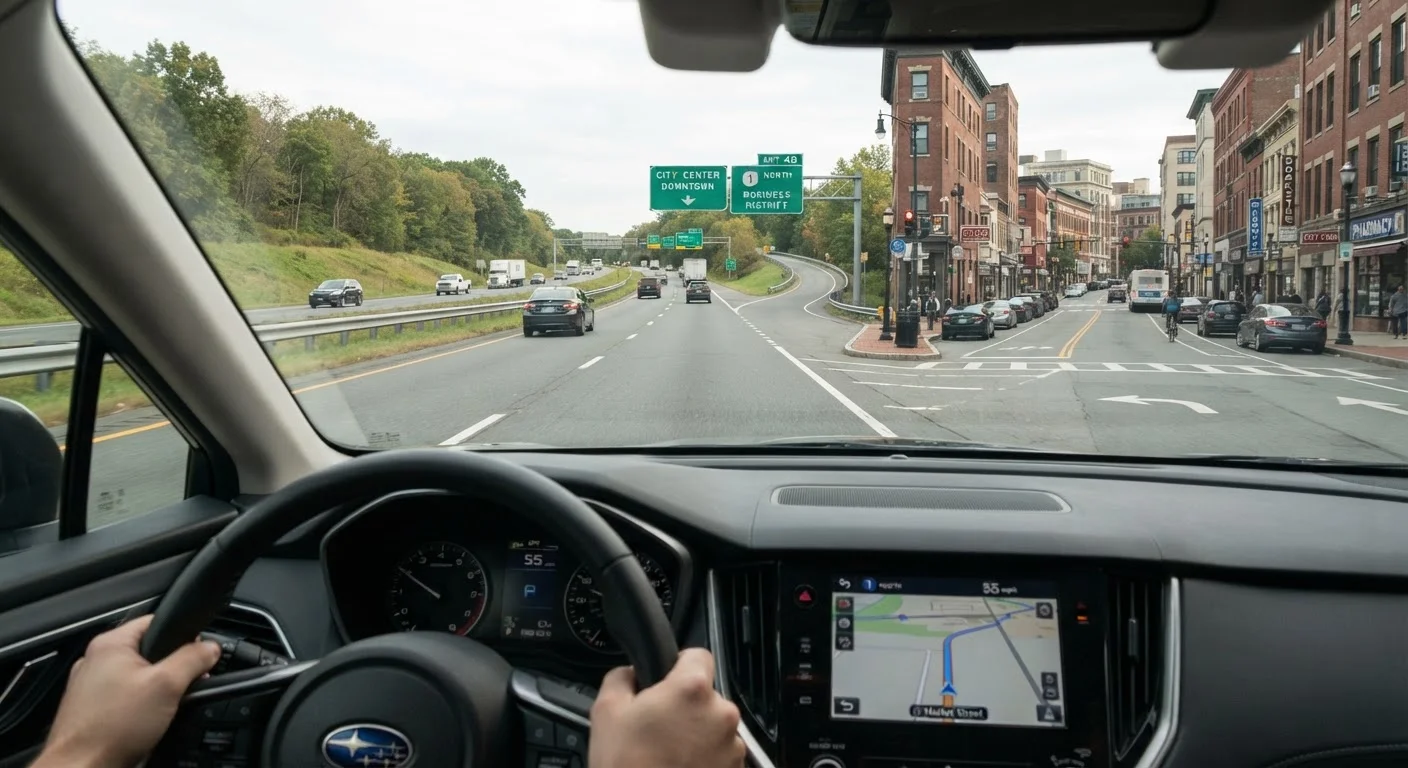
Why One-Size Driving Doesn't Work
Most drivers develop their habits on the roads they travel most - and then carry those same habits onto unfamiliar terrain. That mismatch is where many preventable crashes occur. A comfortable cruising gap on a quiet suburban road is dangerously short on a 70 mph interstate. A rural two-lane demands an entirely different kind of attention than a gridlocked city block.
Defensive driving isn't a single technique. It's a layered set of habits calibrated to the environment around you. Understanding what each road type asks of you - before you're on it - is the foundation of genuinely safer driving. For a deeper look at environmental awareness, see our guide to situational awareness.
Interstate and Highway Driving
High-speed roads compress reaction time dramatically. At 70 mph, a vehicle covers roughly 103 feet per second. The three-second following rule - counting three full seconds between you and the car ahead - is a practical minimum; extend it to four or five seconds in heavy traffic or reduced visibility.
Maintain a minimum three-second following distance at highway speeds, extending it in poor conditions
At highway speeds, stopping distances increase far faster than most drivers expect. A three-second gap provides the reaction buffer needed to respond to sudden slowdowns without hard braking.
Scan 12 to 15 seconds ahead, not just the car directly in front of you
Looking further down the road gives you earlier awareness of slowdowns, debris, merges, or hazards, allowing gentler, more controlled responses instead of reactive braking.
Match highway traffic speed before merging rather than adjusting after entering the lane
A speed mismatch during a merge forces other drivers to brake or swerve, creating a risk multiplier. Entering at the correct speed makes the merge predictable and smooth for everyone.
Pause briefly at intersections even on a green light before proceeding
Intersection collisions often involve a driver who had the right of way but failed to confirm the cross-traffic had cleared. A one-second check costs nothing and catches the occasional red-light runner.
Reduce speed on rural roads approaching crests and blind curves
You cannot see hazards - an animal, a stalled vehicle, a slow-moving farm vehicle - that lie just beyond your sight line. Reducing speed before the curve keeps your stopping distance within your visible range.
Merging deserves particular care. Match the speed of traffic before entering the lane, signal early, and identify your gap before you reach the merge point. Late, reactive merges force other drivers to brake and create the accordion effect that causes chain-reaction slowdowns.
Lane discipline also matters. On multi-lane interstates, the left lane is intended for passing, not cruising. Staying right when not actively overtaking reduces the likelihood of being caught in a high-speed conflict. If you're planning a longer highway trip, run a pre-trip vehicle inspection before you leave - a tire failure at highway speed is a very different emergency than one at city speeds.
Urban and Suburban Street Driving
City driving is lower speed but higher complexity. Pedestrians, cyclists, delivery vehicles double-parked, and traffic signals that shift every few seconds demand constant attention management.
The most common urban hazard is the unexpected: a pedestrian stepping off a curb mid-block, a car door opening into the bike lane, a cyclist appearing at the edge of your peripheral vision. Slowing to the posted limit - rather than matching the flow of faster traffic - gives you additional seconds to respond. Intersections deserve a specific pause: before proceeding on a green light, briefly scan left, right, and then left again for vehicles running a red.
Urban environments also expose drivers to more lane changes, more parking lot interactions, and more low-speed fender-bender risk. Check mirrors every five to eight seconds in city traffic to maintain a current picture of what surrounds you. Weather and time of day compound these challenges; night driving introduces additional visibility risks worth preparing for separately.
Rural Roads and Two-Lane Highways
Rural roads carry a disproportionate share of fatal crashes relative to their traffic volume. The reasons are structural: unmarked intersections, no lighting, animals crossing unexpectedly, soft shoulders, and head-on risk on undivided roads with no physical barrier between opposing traffic.
~50%
Share of U.S. traffic fatalities on rural roads
According to NHTSA data, rural roads consistently account for roughly half of all U.S. traffic fatalities despite carrying far less than half of total vehicle miles traveled.
3 sec
Minimum recommended following distance at highway speeds
Traffic safety educators and agencies including the National Safety Council recommend at least a three-second gap, extended in adverse conditions.
On two-lane roads, the most dangerous maneuver is passing. Before initiating a pass, you need a clear sight line far enough ahead to complete the move and return to your lane with margin - often more distance than it appears. If you have any doubt, wait. Speed also plays an amplified role on rural roads: posted limits on winding or crested roads can feel conservative, but they reflect the sight-distance geometry of those specific stretches.
Watch for roadway edge degradation. Many rural roads lack adequate shoulders, and the transition from pavement to gravel or soft earth can cause a vehicle to pull unexpectedly. If a tire drops off the edge, ease gradually back onto the pavement rather than jerking the wheel. Loose surfaces and other conditions can catch even experienced drivers by surprise.
At Dawn and Dusk, Treat Light Like Weather
Low sun angles during the golden hours can render traffic signals, stop signs, and pedestrians nearly invisible. Drop your speed and increase your following distance during these periods just as you would in rain. Polarized sunglasses help cut glare but are not a substitute for reduced speed.
Seasonal changes affect rural roads differently than urban ones - for a full picture, see our year-round driving habits reference.
The content on this site is for informational purposes only and is not a substitute for professional advice. Always consult a qualified professional for guidance specific to your situation.