

Start here
What Situational Awareness Actually Means While Driving
Build the skill
Scanning the Road: The Eyes-in-Motion Habit
Fill the gaps
Managing Blind Spots and Mirror Use
Think ahead
Reading Traffic Flow and Predicting What Comes Next
Protect your progress
Habits That Quietly Undermine Your Awareness
What Situational Awareness Actually Means While Driving
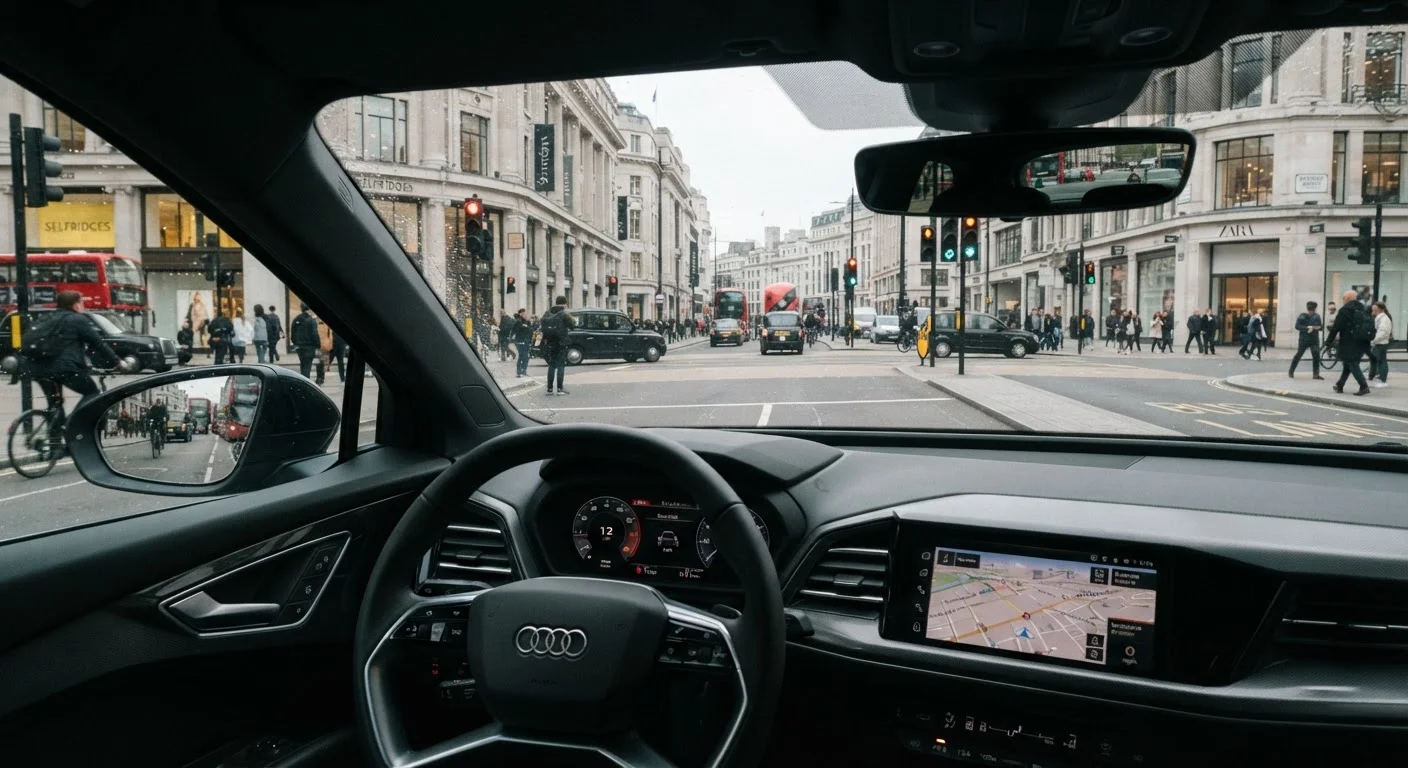
Situational awareness is the continuous process of perceiving what's happening around you, understanding what it means, and projecting how conditions will change in the next few seconds. Behind the wheel, this translates to knowing where every nearby vehicle is, what pedestrians might do, how road conditions affect stopping distances, and where the next hazard could emerge - all at the same time.
The good news: this is a learnable skill. Like any practiced habit, it gets faster and more automatic over time. Drivers who struggle with it usually haven't been taught a system - they simply react to whatever appears immediately in front of them. A structured approach changes that.
Strong situational awareness also complements the mechanical side of safe driving. Before any trip, knowing your vehicle is in good condition supports your confidence behind the wheel. See our pre-trip inspection checklist for a practical walkthrough.
Situational awareness
The ongoing process of perceiving, understanding, and anticipating what is happening around your vehicle so you can respond before problems develop.
12-second visual lead
A scanning habit where you train your eyes to look roughly 12 seconds of travel distance ahead, giving more time to recognize and react to developing hazards.
Blind spot
The zone alongside and slightly behind your vehicle that your mirrors cannot show - typically near the rear quarter panels on each side.
Cognitive tunneling
A mental state where attention narrows to a single stimulus - like a phone screen - causing the driver to miss information from the broader environment even after looking away.
Predictive driving
A style of driving where you read cues - brake lights, vehicle drift, pedestrian movement - to anticipate what will happen next rather than simply reacting after it occurs.
Scanning the Road: The Eyes-in-Motion Habit
Most drivers are taught to look ahead - but where ahead, and how far, matters enormously. The standard professional driving recommendation is to scan roughly 12 seconds of travel ahead. In urban traffic at 30 mph, that's about one full city block. At highway speeds, it stretches to approximately a quarter mile.
Scanning means your eyes are moving, not locked. A fixed gaze narrows your peripheral awareness and delays recognition of movement off to the sides. A trained driver's eyes cycle through: far ahead (the 12-second zone), mid-range (the 4-6 second zone where lane shifts happen), left and right for intersections and cross-traffic, and back to the mirrors.
At intersections specifically, pause your scan to check both directions even on green - a brief confirmation that cross-traffic has actually stopped takes less than one second but catches a significant share of red-light violations. For additional context on how road type changes these scanning demands, see defensive driving techniques for every road type.
Practice Scanning on Familiar Routes First
When you're learning a new scanning habit, familiar roads are ideal training ground because you already know the layout. Use a regular commute to consciously practice cycling your eyes through far, mid, and side zones. Once the pattern feels automatic, it transfers naturally to unfamiliar roads and higher-stress conditions.
Managing Blind Spots and Mirror Use
Every vehicle has zones its mirrors cannot cover - typically alongside the rear quarters of the car. The size of these blind spots varies with vehicle design, but all drivers must account for them.
Start with mirror adjustment. Many drivers angle their side mirrors inward until they can see the rear corner of their own car. This feels reassuring but wastes significant coverage. Instead, angle each mirror outward until your car's body is just barely visible at the inner edge. This wider field dramatically reduces the traditional blind zone.
Even with optimally adjusted mirrors, no mirror arrangement covers every angle. Before any lane change, a quick head check - a brief glance over the appropriate shoulder - confirms the space is clear. This takes under a second and fills the gap that mirrors alone cannot.
Newer vehicles often include blind-spot monitoring systems that provide a visual or audible alert when a vehicle enters those zones. These systems are useful, but they have documented limitations - narrow vehicles, fast-moving vehicles, and certain sensor conditions can reduce their reliability. Treat them as a supplement to your own checks, not a replacement. For a broader look at what driver-assist systems actually do, see how driver-assist features work.
Driver-Assist Systems Have Real Limitations
Blind-spot monitors, lane-keeping aids, and automatic emergency braking are designed as supplements - not substitutes - for driver attention. Sensor performance can degrade in rain, snow, heavy sun glare, or when obstructed by dirt. Never rely on these systems as your sole defense; always combine them with manual checks and active scanning.
Reading Traffic Flow and Predicting What Comes Next
Reactive driving means responding to what just happened. Predictive driving means anticipating what's about to happen. The difference in stopping time between these two approaches can be a car length or more.
Start by tracking brake lights two or three vehicles ahead, not just the car immediately in front of you. A cluster of brake lights appearing farther up the road gives you extra seconds to begin easing off the throttle - reducing both your risk of rear-ending someone and the abruptness of your own braking for drivers behind you.
Also watch for behavioral cues: a vehicle drifting toward a lane boundary often signals an impending lane change. A pedestrian stepping toward the curb is likely to cross. A merging ramp with vehicles backing up signals that those cars may merge aggressively. Learning to read intent - not just position - is what separates experienced drivers from novice ones.
Seasonal conditions add another layer to this. Weather, road surface, and visibility all shift how traffic flows and where hazards concentrate. Seasonal driving adjustments explain how to update your habits as conditions change.
Habits That Quietly Undermine Your Awareness
Situational awareness isn't just about what you do - it's also about what you protect it from. Several common habits steadily erode the mental bandwidth driving requires.
- Phone use: Even glancing at a notification diverts cognitive attention for several seconds after your eyes return to the road - a well-documented phenomenon sometimes called cognitive tunneling.
- Driving fatigued: Drowsiness narrows your attentional field progressively. If you're struggling to maintain lane position or find your scanning rhythm breaking down, stop and rest.
- Fixed cruise control on variable roads: On roads where traffic density changes rapidly, cruise control can reduce the sense of engagement that keeps awareness active. Use it selectively.
- Relying too heavily on GPS audio: Following spoken turn directions without looking ahead at the full road picture can lock attention to the immediate instruction rather than the broader environment.
Situational awareness is a skill that requires practice and protection. Removing distractions, maintaining adequate rest, and keeping your vehicle's mechanical systems reliable all contribute to the mental clarity that safe driving demands. For a reference on what your dashboard may be trying to tell you, see dashboard warning lights explained.
Awareness Is Affected by Vehicle Condition Too
A cracked windshield, misaimed headlights, or an illuminated dashboard warning can all quietly reduce your ability to see and process the road clearly. Keeping your vehicle in good mechanical condition is part of maintaining situational awareness - not just a separate maintenance concern. A quick vehicle check before longer drives pays dividends in both safety and confidence.
Frequently Asked Questions
Situational awareness in driving means knowing where you are in relation to other vehicles, pedestrians, road conditions, and hazards at all times. It involves actively scanning your environment, not just reacting to what appears directly ahead. Drivers with strong awareness tend to anticipate problems before they become emergencies.
A commonly taught guideline is to glance at your mirrors every five to eight seconds. This keeps you updated on vehicles approaching from behind or alongside without fixating on the mirrors at the expense of watching ahead. Adjust your check frequency during lane changes, merging, and stop-and-go traffic.
First, adjust your side mirrors outward so that your own vehicle's body is barely visible in the innermost edge of each mirror. This wider angle covers the zones where blind spots typically occur. Always combine proper mirror adjustment with a quick physical head check before changing lanes.
No - driver-assist systems are designed to supplement human attention, not replace it. Features like lane-keeping and automatic braking have documented limitations and may not respond to every hazard. Manufacturers and safety regulators consistently emphasize that drivers must remain alert and in control at all times.
The 12-second rule means training your eyes to scan roughly 12 seconds of travel distance ahead of your vehicle. At highway speeds that's roughly a quarter mile; in the city it's about one city block. Scanning this far ahead gives you more time to recognize and respond to developing hazards.
Fatigue narrows the driver's field of attention, slows reaction time, and can cause brief involuntary microsleeps. Even mild drowsiness measurably reduces the ability to track multiple objects simultaneously. If you notice symptoms of fatigue - yawning, heavy eyelids, or difficulty maintaining lane position - stop driving and rest.
The content on this site is for informational purposes only and is not a substitute for professional advice. Always consult a qualified professional for guidance specific to your situation.