

Why These Features Are Showing Up Everywhere
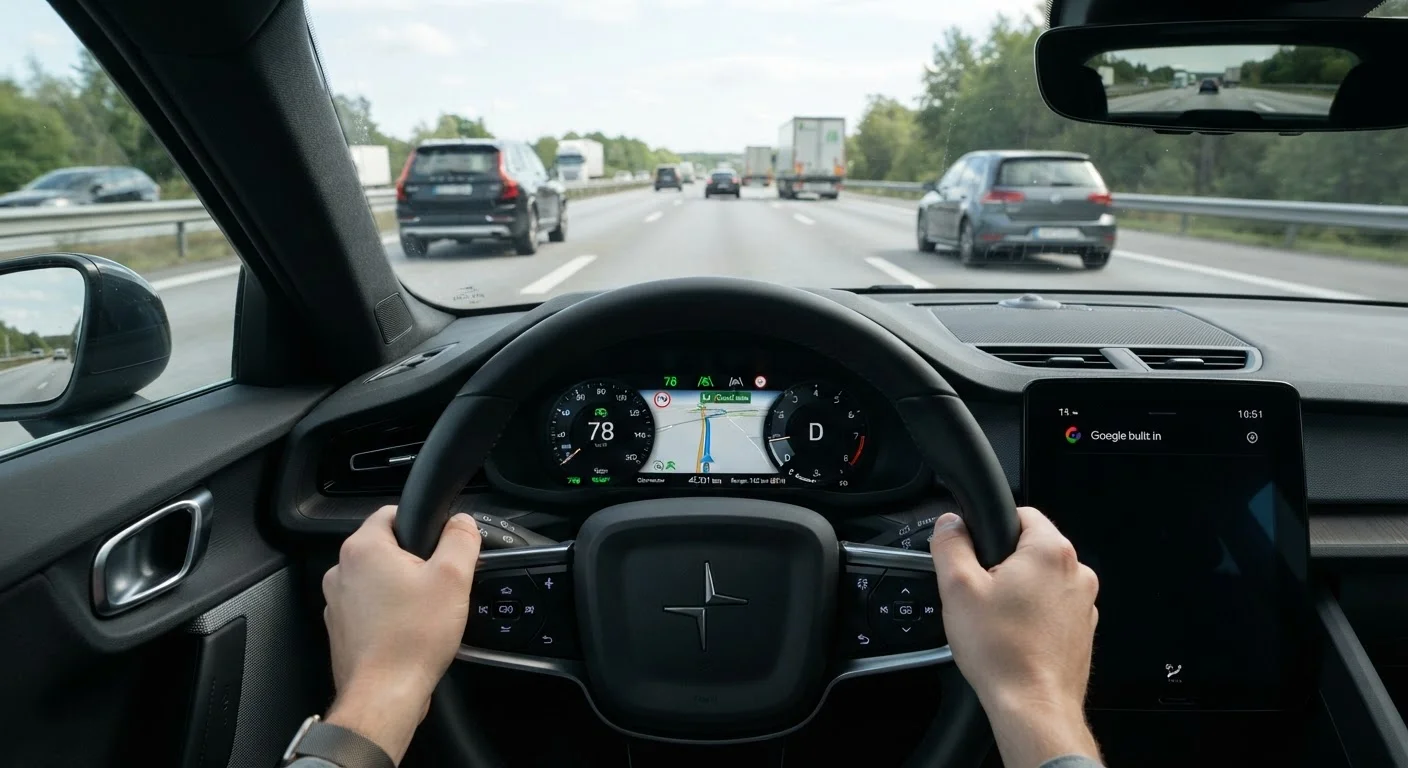
Walk into any dealership today and you'll encounter a vehicle equipped with safety features that were reserved for luxury models a decade ago. Automatic emergency braking, lane-keeping assist, and adaptive cruise control are now appearing across sedans, trucks, and SUVs at nearly every price point. This shift didn't happen by accident.
The National Highway Traffic Safety Administration (NHTSA) and the Insurance Institute for Highway Safety (IIHS) have long pushed for these technologies to become standard equipment. In 2016, twenty automakers voluntarily committed to making automatic emergency braking standard on new passenger vehicles. Federal rulemaking has continued to reinforce that direction. For everyday drivers, the practical result is the same: if you've bought or are considering a new vehicle, you're very likely getting some form of ADAS whether or not you specifically asked for it.
Understanding what these systems actually do - and where their boundaries are - is essential for anyone behind the wheel. See the plain-language guide to automotive acronyms for a broader reference on the terminology surrounding these technologies.
20+
Automakers committed to standard AEB
In 2016, more than 20 major automakers agreed with NHTSA and IIHS to make automatic emergency braking standard equipment on new passenger vehicles.
~50%
Reduction in rear-end crashes with AEB
IIHS research has found that forward collision warning with AEB is associated with roughly a 50% reduction in rear-end police-reported crashes compared to vehicles without the technology.
Level 1-2
SAE autonomy level of most ADAS
Nearly all mass-market driver-assist systems operate at SAE Level 1 or 2, meaning a human driver must remain alert and in control at all times.
Automatic Emergency Braking: The System With the Most Impact
Automatic emergency braking - often abbreviated AEB - is widely considered the highest-value safety technology currently deployed at scale. The system uses forward-facing cameras or radar (or both) to monitor the distance and closing speed between your vehicle and the one ahead. When it calculates that a collision is imminent and the driver hasn't responded, it first issues an alert. If the driver still doesn't brake, the system applies braking force automatically.
AEB systems vary in capability. Some are designed only to mitigate low-speed rear-end collisions in city traffic. Others include pedestrian detection or function at highway speeds. Real-world performance also varies: heavy rain, snow, and direct glare can impair the sensors that these systems rely on. Drivers should treat AEB as a backup layer - not a substitute for maintaining a safe following distance.
Building situational awareness behind the wheel remains the most reliable crash-prevention tool, with AEB serving as a meaningful safety net rather than a replacement for attention.
Read Your Owner's Manual for AEB Settings
Many AEB systems allow drivers to adjust sensitivity or set thresholds for how closely the system monitors following distance. Spending ten minutes with the driver-assistance section of your owner's manual will tell you exactly what your vehicle's system can and cannot do - and how to configure it to match your driving habits.
Lane-Keeping Assist and Lane Departure Warning: Similar Names, Different Jobs
These two features are frequently confused but behave differently. Lane departure warning monitors your vehicle's position relative to lane markings and alerts you - usually through a sound, vibration in the steering wheel, or a dashboard indicator - if the vehicle begins drifting without a turn signal active. It detects, then notifies. That's where its involvement ends.
Lane-keeping assist goes a step further by applying gentle corrective steering inputs to guide the vehicle back toward the center of the lane. Some systems are subtle enough that drivers barely notice the intervention; others are more assertive. Both systems depend on clearly visible lane markings, which means performance can degrade on faded lines, in construction zones, or during heavy snowfall.
For drivers spending time on rural roads or highways with worn markings, understanding these limitations matters. If the system is generating false alerts or fighting you through a curve, most vehicles allow you to disable it temporarily through a settings menu. Check your owner's manual for the steps specific to your vehicle.
Adaptive Cruise Control: More Than Just Holding Speed
Traditional cruise control locks your vehicle at a set speed. Adaptive cruise control (ACC) does that - but also monitors the vehicle ahead and automatically adjusts your speed to maintain a preset following distance. On open highway, it operates like standard cruise control. When traffic slows, the system reduces your speed to match. Some versions can bring the vehicle to a complete stop in slow traffic and resume when the car ahead moves again.
ACC is particularly useful for long highway drives where speed variations in traffic create fatigue. It won't react to stopped vehicles at the side of the road or handle lane changes - the driver is fully responsible for steering and must stay engaged at all times. Think of it as a tool that manages throttle and moderate braking in predictable highway scenarios, not a system that manages the whole drive.
ACC pairs naturally with other comfort features - for context on how different vehicle modes interact with throttle and transmission behavior, see the article on Eco-Mode, Sport Mode, and Normal Mode. Drivers of electric vehicles may also notice that ACC interacts differently with regenerative braking, which can affect how deceleration feels when the system reduces speed.
ACC and Full Stops: Know Your Version
Not all adaptive cruise control systems can bring the vehicle to a complete stop. Some earlier or entry-level versions disengage below a certain speed - typically around 20 mph - requiring the driver to take over braking. If you drive in heavy stop-and-go traffic, confirm whether your specific system includes low-speed follow or stop-and-go functionality before depending on it in that environment.
What Drivers Should Know Before Relying on Any of These Systems
ADAS features are most effective when drivers understand both their purpose and their limits. A few practical points worth keeping in mind:
- Sensors need maintenance. After a windshield replacement, alignment, or front-end repair, ADAS cameras and radar units typically require professional recalibration. A misaligned sensor can cause a system to react late - or not at all. This is a task for a qualified technician, not a DIY project.
- These systems can be fooled. Adverse weather, unusual road geometry, and even certain vehicle types (motorcycles, bicycles) can reduce system reliability. Don't assume the technology will always catch what you might miss.
- Over-reliance is a documented risk. Research has shown that drivers sometimes compensate for safety features by paying less attention. ADAS works best when treated as a backup layer, not a reason to disengage.
For a broader look at how new technology features - including some safety-adjacent ones - are showing up behind paywalls, see the article on subscription features in new cars. Staying informed about what's included in your vehicle versus what might require an additional fee is increasingly part of modern vehicle ownership.
“The goal of these systems is to make the average driver perform more like the best driver - not to take the human out of the equation, but to add a layer of protection when attention lapses or reaction time falls short.”
— David Zuby, Former Chief Research Officer, Insurance Institute for Highway Safety
Frequently Asked Questions
No. AEB performance can be reduced by heavy rain, snow, fog, or direct sunlight that obscures sensors and cameras. Most systems also have speed thresholds - they are typically designed to prevent or reduce low- to moderate-speed collisions rather than high-speed impacts. Always check your vehicle's owner manual for stated limitations.
On most vehicles, yes. Lane-keeping assist can usually be disabled through the driver-assistance settings menu. Some drivers prefer to turn it off on winding roads or when towing, where the system may misread lane lines. Refer to your owner's manual for the specific steps on your vehicle.
No. Adaptive cruise control maintains a set following distance from the vehicle ahead but requires the driver to stay alert and be ready to intervene at any moment. It operates at SAE Level 1 or 2 - meaningful assistance, but not autonomous driving by any definition.
Research from the Insurance Institute for Highway Safety and the National Highway Traffic Safety Administration indicates that systems like AEB and lane-departure warning are associated with meaningful reductions in certain crash types. However, effectiveness varies by system design and real-world conditions.
Yes. After a windshield replacement, front-end collision repair, or alignment service, ADAS cameras and radar sensors often need professional recalibration to work correctly. A qualified technician should perform this work - misaligned sensors can cause systems to behave unpredictably.
Absolutely. ADAS technologies are driver aids, not substitutes for attention. Drivers remain legally responsible for vehicle control at all times. Treating these systems as a reason to be less attentive increases risk rather than reducing it.
The content on this site is for informational purposes only and is not a substitute for professional advice. Always consult a qualified professional for guidance specific to your situation.