

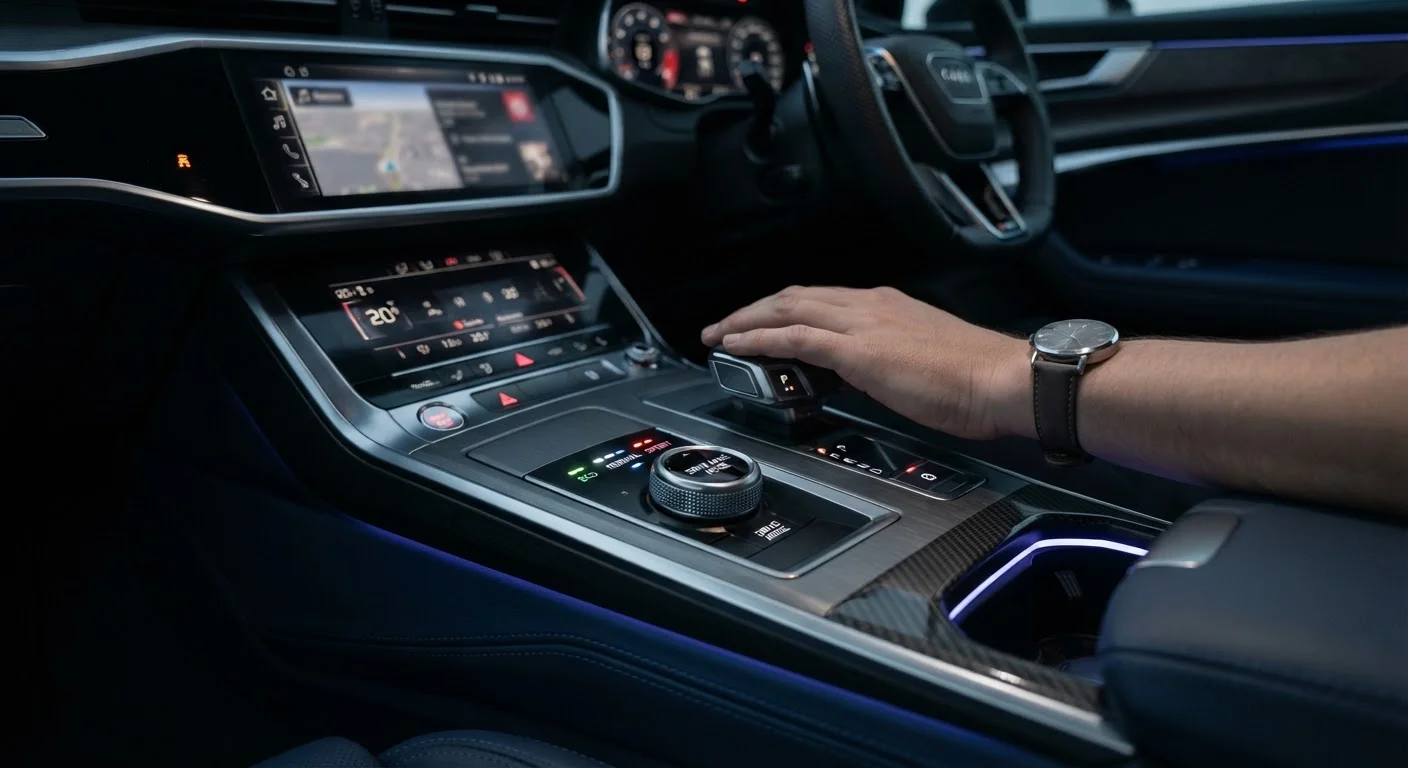
What Drive Modes Actually Change
When you press the drive mode button, you're not switching mechanical components - you're changing software instructions that govern how existing systems behave. The engine control unit (ECU) adjusts how aggressively it responds to throttle input, the transmission control module shifts earlier or later, and the electric power steering may increase or decrease assist levels.
On most vehicles, this happens across three or four parameters simultaneously, which is why the difference between Eco and Sport can feel quite dramatic even though nothing physical has moved. Understanding what each mode changes - rather than just knowing its name - helps you use them with intention.
~7-12%
Typical city fuel savings in Eco vs. Normal mode
Fuel economy gains from Eco mode vary by vehicle and driving pattern; manufacturers and independent testing have generally found the largest benefits in urban stop-and-go conditions.
3
Core systems typically adjusted by drive modes
Throttle mapping, transmission shift logic, and power steering calibration are the three most commonly altered systems; adaptive suspension is added on premium vehicles.
~500ms
Reduction in throttle lag in Sport vs. Normal mode
Engineers describe Sport mode's advantage primarily in perceived responsiveness - the engine reacts faster to pedal input, which drivers notice most during passing and merging.
Eco Mode: What It Does and When to Use It
Eco mode is engineered around one goal: stretching fuel mileage. It does this by softening throttle mapping so that pressing the accelerator produces a more gradual engine response. The transmission also upshifts earlier, keeping engine RPM lower during acceleration. On hybrid models, Eco mode often maximizes the electric motor's share of propulsion and increases regenerative braking - the system that recaptures energy during deceleration. For more on how that works, see our explainer on regenerative braking.
When it makes sense: Eco mode pays dividends in city driving - stop-and-go traffic, school zones, and neighborhood streets where hard acceleration is unnecessary. It's less impactful on open highways, where the engine runs at a relatively steady load regardless of mode. If you're merging onto a fast-moving freeway or need to pass quickly, Eco's dulled throttle can feel sluggish at precisely the moment you need response.
Eco Mode Works Best Combined with Smooth Driving
Eco mode's fuel benefits are amplified when paired with gradual acceleration and anticipatory braking - looking ahead to coast toward stops rather than accelerating to them. Aggressive inputs in Eco mode will override much of its efficiency programming. Think of Eco mode as a prompt to drive more smoothly, not a guarantee of savings on its own.
Sport Mode: Sharper Response, Higher Cost
Sport mode does the opposite of Eco: it advances the throttle map so that small pedal movements produce larger engine responses. The transmission holds gears longer before upshifting, keeping RPM in a higher, more responsive range. Steering weight typically increases to give a more direct feel, and on vehicles with adaptive suspension, dampers firm up for reduced body roll.
When it makes sense: Sport mode earns its keep on winding roads, during highway merging where decisive acceleration matters, or when driving in mountainous terrain where holding a gear through a corner is preferable to an untimely upshift. It is not particularly useful - and does burn more fuel - in slow city traffic, where the extra responsiveness just means you accelerate harder to the next red light. To understand how throttle behavior interacts with coasting and braking strategies, our piece on coasting and engine braking offers useful context.
Normal Mode: The Default Worth Respecting
Normal mode often gets overlooked because it lacks the identity of its siblings - but it represents the manufacturer's carefully engineered balance point. Throttle response is neither blunted nor amplified, shift points fall where engineers determined was optimal for average use, and steering feel sits at a neutral middle ground. For most drivers, most of the time, Normal mode is the correct choice.
Its calibration suits mixed driving well: a commute that includes surface streets, a stretch of freeway, and a parking lot doesn't demand the extremes of either Eco or Sport. It's also worth noting that fuel economy in Normal mode is often quite close to Eco mode during steady-state highway cruising, where mode differences matter least. For a deeper look at how driving environment shapes efficiency, see our article on fuel economy on city streets vs. open highways.
Not All Drive Modes Are Created Equal
The actual changes each mode makes vary significantly between manufacturers and even between model years from the same brand. Some vehicles also offer additional modes - such as Sand, Snow, or Comfort - that layer in traction control adjustments or suspension changes. Always consult your owner's manual to understand exactly what your specific vehicle's modes alter, rather than assuming they match the general descriptions here.
Matching Mode to Moment
The most practical approach to drive modes is situational. Use Eco during predictable city driving or long idling situations. Switch to Normal for mixed commutes or unfamiliar roads where balanced response is safest. Engage Sport when road conditions - or your driving task - genuinely benefit from sharper inputs. There's no single correct setting, and toggling between them as conditions change is exactly what the feature is designed for.
One final note: drive modes don't override physical limits. Eco mode won't make a poorly maintained vehicle efficient, and Sport mode won't transform an economy car's performance. They're calibration tools, not transformations. For drivers interested in how modern vehicles layer additional technologies on top of these settings, our overview of driver-assist features covers how systems like adaptive cruise increasingly interact with mode selection.
“The best mode is the one that matches what you actually need in that moment. Most drivers leave a lot of efficiency - and a lot of enjoyment - on the table simply because they never experiment with the settings their car already has.”
— Automobile Editorial Team, Automotive journalists and driver education specialists
Frequently Asked Questions
Yes, in most conditions. Eco mode reduces throttle sensitivity and encourages earlier upshifts, which keeps the engine operating at lower RPMs. The savings are most noticeable in city driving and stop-and-go traffic rather than steady highway cruising.
Sport mode won't damage your vehicle, but it will use more fuel and may increase wear on drivetrain components over very long periods of aggressive use. It's best reserved for situations where sharper response is genuinely useful, such as highway merging or mountain driving.
Most modern vehicles allow mode changes while in motion - there's usually no need to stop first. However, switching from Normal to Sport during hard acceleration can cause a noticeable jolt, so smoother transitions happen at steady speeds. Check your owner's manual for any model-specific guidance.
Often yes. Sport mode commonly adds weight to the power steering to give a more connected feel, while Eco mode may lighten it to reduce the energy the power steering pump consumes. The effect varies significantly by vehicle make and model.
EVs and hybrids offer analogous modes, but the underlying mechanics differ. Eco mode on an EV limits peak motor output and often increases regenerative braking to extend range. Sport mode on an EV can deliver instant, substantial torque. See our guide on <a href="/automobile/auto-trends/hybrid-plug-in-hybrid-or-fully-electric-understanding-the-powertrain-spectrum">hybrid and electric powertrains</a> for more detail.
Normal mode uses the manufacturer's default calibration - a balance between fuel efficiency and responsive driving. It's the setting most vehicles launch in and is appropriate for the vast majority of everyday driving situations.
The content on this site is for informational purposes only and is not a substitute for professional advice. Always consult a qualified professional for guidance specific to your situation.