

Our Verdict
Each deceleration method has a legitimate place depending on vehicle type and driving context. Engine braking is the go-to for gas-powered vehicles on long grades; regenerative braking is the most energy-efficient option for EV and hybrid drivers; coasting in neutral offers little practical benefit in modern vehicles and can reduce control. Understanding all three lets drivers tailor their habits for safety and efficiency.
| Best for | Recommended |
|---|---|
| Drivers descending long grades in gas-powered vehicles | Engine Braking |
| EV and hybrid drivers seeking maximum range | Regenerative Braking |
| Highway cruising with ample stopping distance ahead | Coasting (in gear) |
| City stop-and-go driving in any vehicle type | Regenerative Braking or Engine Braking |
What Each Technique Actually Means
Most drivers slow down in one of three ways before touching the brake pedal - or instead of touching it at all. Understanding the mechanics behind each approach helps clarify when one is preferable over another.
Coasting means allowing the vehicle to roll freely with minimal engine input. In a manual transmission car, this often means pressing the clutch or shifting to neutral. In an automatic, it can happen naturally when you lift off the throttle at light loads. Contrary to older driving advice, coasting in neutral on a modern fuel-injected vehicle does not save fuel - the engine still idles and burns a small amount of gas. More importantly, it disconnects the drivetrain from the wheels, reducing your ability to modulate speed precisely.
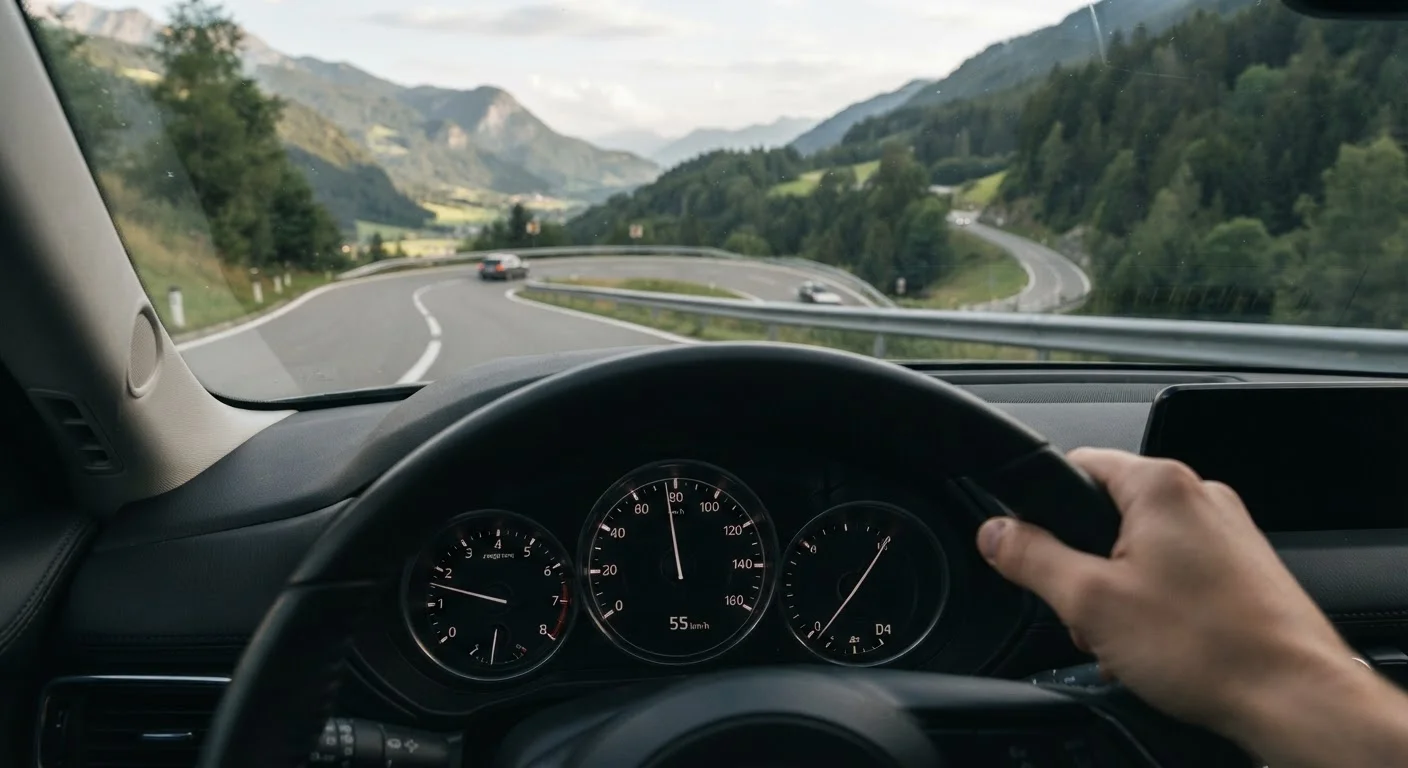
Engine braking happens when you lift off the throttle while remaining in gear. The engine's internal resistance slows the drivetrain, which in turn slows the wheels. On fuel-injected engines, this actually cuts fuel delivery to near zero - making it more efficient than coasting in neutral. It's the preferred technique for descending steep grades without overheating the friction brakes.
Regenerative braking is specific to hybrid and electric vehicles. When you lift off the throttle, the electric motor switches into generator mode, converting the car's kinetic energy into electricity and storing it in the battery. The result feels similar to engine braking - a noticeable slowdown - but the energy isn't wasted as heat. For a deeper look at how this system works mechanically, see how regenerative braking works.
How They Compare Across Key Factors
Fuel efficiency, brake wear, driver control, and vehicle compatibility all vary meaningfully between these three approaches. The table below summarizes the key tradeoffs.
| Coasting (neutral) | Engine Braking | Regenerative Braking | |
|---|---|---|---|
| Fuel efficiency | Minimal benefit; engine still idles | Cuts fuel delivery near zero | Recaptures energy; most efficient |
| Brake pad wear | Unchanged; pads still needed | Reduced on long grades | Significantly reduced |
| Driver control | Reduced; drivetrain disconnected | Good; engine adds modulation | Good; consistent and predictable |
| Vehicle compatibility | All vehicles (not recommended) | All gas/diesel vehicles | Hybrids and EVs only |
| Best use case | Rarely advantageous | Long downhill grades | City traffic and descents |
| Heat generated in brakes | Same as normal braking | Low on sustained descents | Minimal; friction rarely needed |
Engine braking stands out for gas-powered vehicles because it simultaneously reduces brake pad wear and cuts fuel delivery. Drivers who use engine braking on long descents tend to arrive at the bottom with cooler brakes - an important safety margin. This connects directly to habits discussed in our guide on brake-shortening habits to avoid.
When to Use Each - and When to Combine Them
The Anticipation Advantage
The single most effective habit is simply looking further ahead. Drivers who anticipate stops 4-6 seconds in advance spend more time decelerating naturally and far less time on the brake pedal. This works regardless of vehicle type and compounds into meaningful fuel and wear savings over time.
In practice, smooth deceleration usually means layering techniques. An EV driver approaching a red light might lift off the throttle early to let regenerative braking do most of the work, then apply friction brakes gently for the final stop. A manual transmission driver on a mountain road might downshift progressively - using engine braking - and reserve the brake pedal for sharper corrections.
On city streets, anticipating traffic flow matters most. Lifting off the throttle well before a stop allows either engine braking or regenerative braking to reduce speed gradually, minimizing both fuel use and brake wear. The fuel economy differences between city and highway driving article explains why stop-and-go conditions are so costly - and smooth deceleration is one of the main levers available to offset that.
On the highway, gentle coasting (remaining in gear, throttle lifted) is reasonable when significant stopping distance exists. This is different from coasting in neutral - staying in gear keeps the engine connected and fuel delivery low. If terrain changes or traffic tightens, you retain full engine-braking capacity immediately.
Aggressive or late braking - the opposite of all three techniques discussed here - drives up costs across the board. For context on how driving style shapes overall vehicle wear and fuel costs, see the real costs of aggressive driving.
Practical Takeaways for Everyday Drivers
The most consistent efficiency and safety gains come from anticipation rather than any single technique. Looking further ahead, reading traffic flow, and lifting off the throttle early gives all three of these approaches time to work before friction brakes are needed.
- Gas or diesel vehicle: Stay in gear when decelerating. Use lower gears on steep descents rather than riding the brake pedal.
- Hybrid or EV: Experiment with your vehicle's regenerative braking settings - many allow adjustable strength - and use higher regen levels in stop-and-go traffic.
- Any vehicle: Avoid shifting to neutral while moving as a fuel-saving tactic. The efficiency benefit is minimal to nonexistent, and the control trade-off is real.
- In wet or slippery conditions: Be aware that sudden engine braking can shift weight abruptly. Gradual, smooth inputs reduce the risk of traction loss. See understanding traction loss for more on managing grip limits.
Drive mode settings can also influence how aggressively your vehicle engine-brakes or applies regen. Our explainer on eco, sport, and normal drive modes covers how these settings interact with throttle and transmission behavior.
The content on this site is for informational purposes only and is not a substitute for professional advice. Always consult a qualified professional for guidance specific to your situation.