

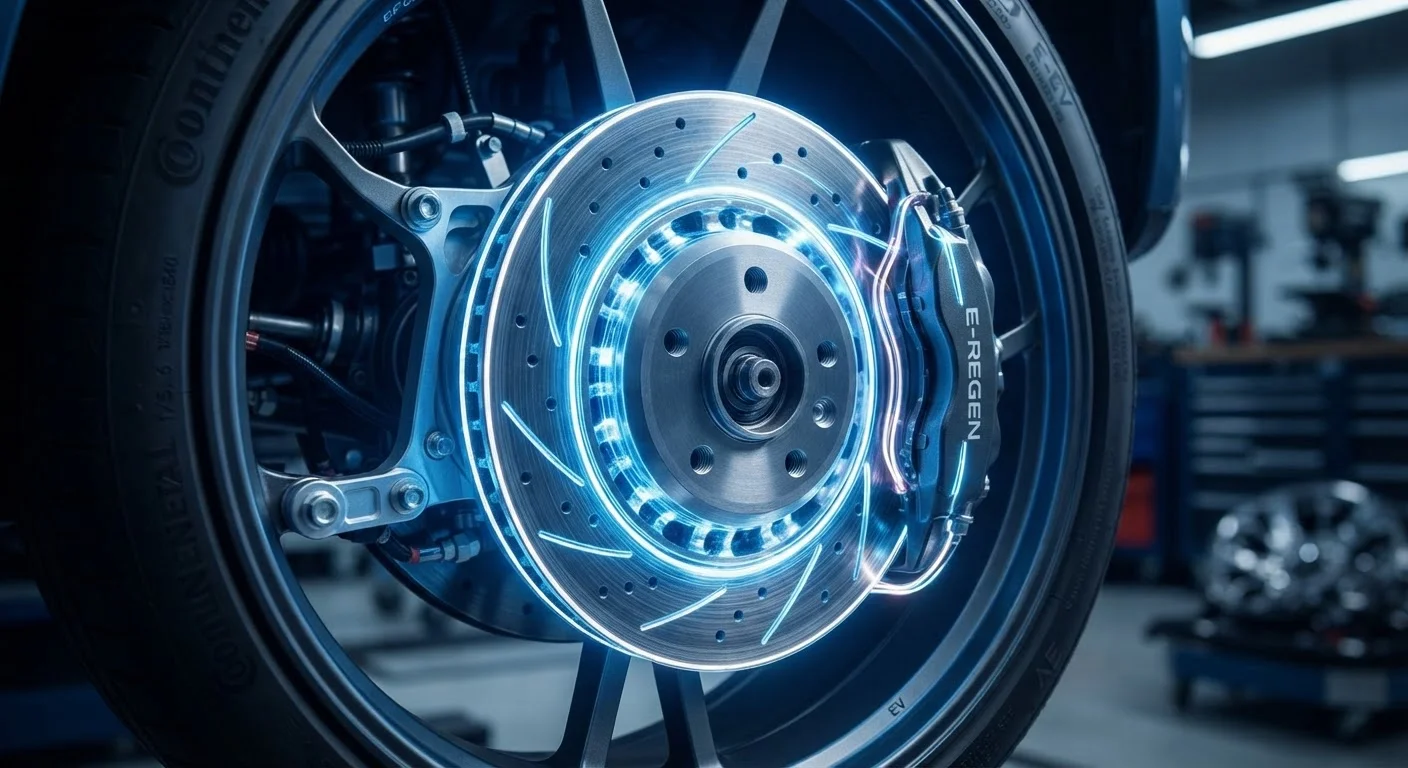
What Regenerative Braking Actually Does
In a conventional gasoline-powered car, every time you press the brake pedal, kinetic energy - the energy of your moving vehicle - is converted to heat through friction between brake pads and rotors. That heat dissipates into the air and is lost entirely. Regenerative braking works on a fundamentally different principle: instead of wasting that energy as heat, it routes it back into the vehicle's battery pack.
Here's the core mechanism. Electric motors can operate in two directions. When powered by the battery, they drive the wheels forward. When the vehicle decelerates, the relationship reverses - the spinning wheels drive the motor, which then acts as a generator, producing electricity. That electricity flows back into the battery, partially recharging it on every slowdown. The mechanical drag created during this power generation is what actually slows the vehicle.
For a deeper look at how this system fits into the broader powertrain picture, see our guide on hybrid, plug-in hybrid, and fully electric powertrains. The efficiency gains from regen are one reason EVs routinely post real-world range figures that compare favorably to their rated estimates, particularly in stop-and-go urban driving where repeated deceleration cycles create frequent recovery opportunities. For context on range in practice, see our breakdown of EV range anxiety.
How to Adapt Your Driving for Maximum Regen
Regenerative braking isn't just a passive background feature - drivers who understand it and adjust their habits can meaningfully extend range and reduce mechanical brake wear. The steps below walk through practical technique changes worth developing.
What you will need
Learn your vehicle's regen adjustment controls
Before changing your driving style, identify how your specific vehicle adjusts regenerative braking intensity. Check your owner's manual or center display settings for regen level options. Most EVs use steering column paddles or a dedicated drive mode menu. Knowing what's available prevents you from guessing on the road.
Practice anticipating stops early
Regen works best when deceleration is gradual and extended. Scan ahead - watch traffic signals, slowing vehicles, and intersection patterns as far ahead as possible. Lifting off the accelerator earlier gives the regen system more time to work, recovering more energy than a late, hard brake application would.
Try one-pedal driving in a low-traffic environment first
If your vehicle supports one-pedal driving, test it in a parking lot or quiet street before relying on it in traffic. Set regen to its highest level, then practice lifting off the accelerator at varying speeds to develop a feel for how quickly the car responds. The deceleration rate can feel abrupt at first.
Adjust regen intensity to match the driving environment
Use higher regen settings in city driving, where frequent stops make energy recovery most productive. On open highways with long gaps between deceleration events, a lower regen setting often produces a more comfortable, predictable ride. Dial in what works for the conditions rather than leaving one setting fixed.
Reserve the friction brakes for hard stops and emergencies
Regenerative braking handles routine deceleration, but friction brakes remain essential for quick, hard stops. Don't hesitate to press the brake pedal firmly when necessary - the vehicle's blended braking system will coordinate both regen and friction braking seamlessly. Never rely on regen alone in emergency situations.
Regen Pays Off Most in Stop-and-Go Traffic
Urban and suburban driving - with its frequent stops and moderate speeds - is where regenerative braking delivers the largest range benefit. Highway driving at steady speed produces very little regen opportunity. If your daily commute involves heavy traffic, you're already in the ideal environment for maximizing what the system can do.
Because regen handles the bulk of routine deceleration, friction brakes on EVs typically see far less wear than those on conventional vehicles. That said, very light use can allow brake rotors to develop surface rust over time, which is worth keeping in mind. For more on brake health, see habits that quietly shorten the life of your brakes and what brake squealing actually signals.
Regen Levels, One-Pedal Driving, and Drive Modes
Most EVs and plug-in hybrids offer adjustable regenerative braking intensity. Paddle shifters on the steering column - typically labeled with + and − - let drivers cycle through regen levels on the fly. Some vehicles integrate regen settings into their drive modes; selecting an efficiency-focused setting often raises regen intensity automatically. Our article on eco, sport, and normal drive modes explains how these broader mode selections affect overall vehicle behavior.
At maximum regen intensity, many EVs support what's called one-pedal driving - a mode where simply lifting your foot off the accelerator brings the vehicle to a complete or near-complete stop without touching the brake pedal. For drivers coming from conventional cars, this takes some adjustment. The sensation is similar to strong engine braking in a manual transmission vehicle, except the energy is recovered rather than dissipated. For a direct comparison of coasting, engine braking, and regenerative braking, see our side-by-side comparison.
Lower regen settings produce gentler deceleration more similar to a conventional car's coast-down feel. Some drivers prefer this on highways where smooth, gradual speed reduction is more natural. The right setting often varies by driving environment, and many experienced EV drivers adjust regen level the same way they'd adjust a radio - routinely, based on conditions.
The content on this site is for informational purposes only and is not a substitute for professional advice. Always consult a qualified professional for guidance specific to your situation.