

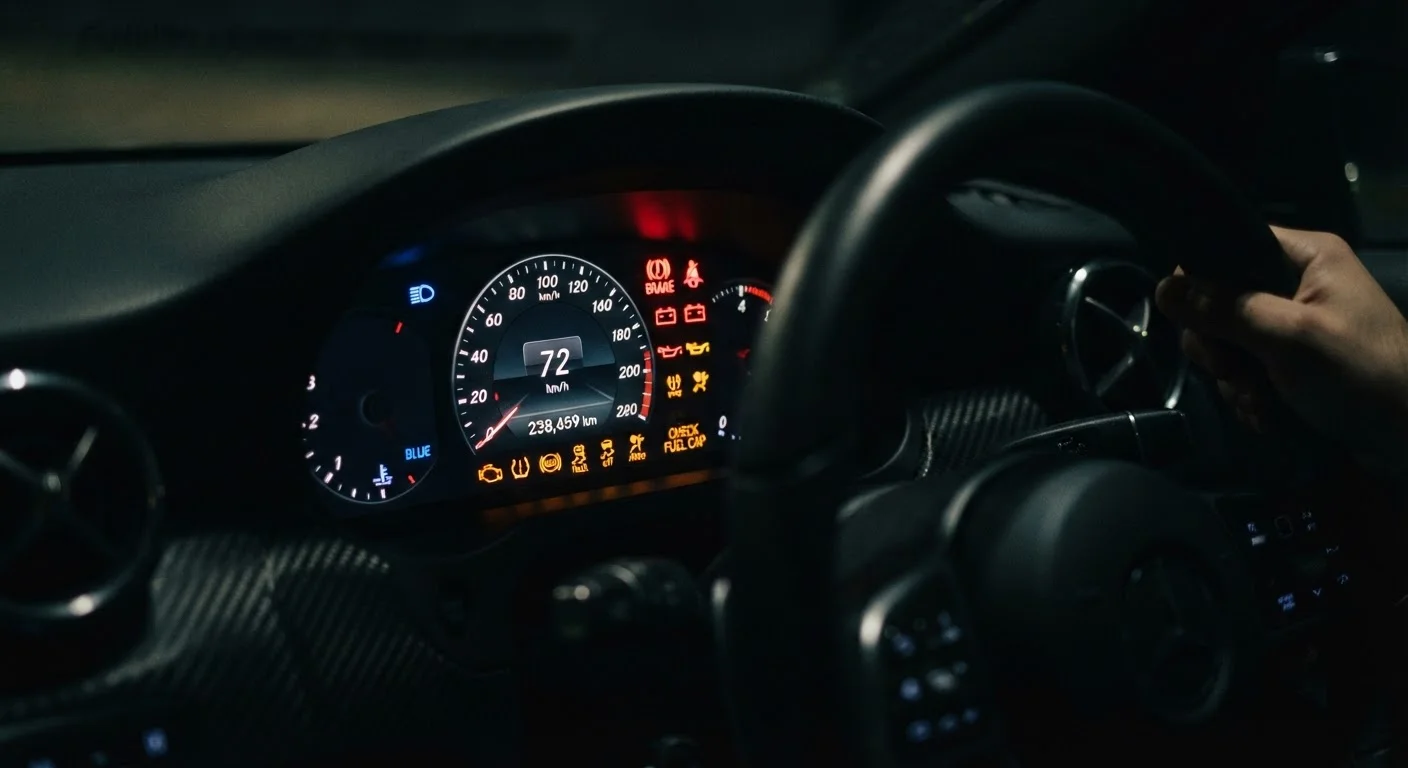
Why Warning Lights Exist - and Why Color Matters
Your vehicle's onboard diagnostic system monitors dozens of sensors simultaneously. When something falls outside acceptable parameters, it triggers a dashboard warning light to alert you. The challenge for most drivers isn't noticing the light - it's knowing whether to pull over immediately or simply schedule a service appointment.
Color is your first and fastest filter. Red lights signal conditions that are potentially dangerous and often require you to stop driving as soon as it's safe. Yellow or amber lights indicate something needs attention soon but rarely demand immediate roadside action. Green and blue lights are informational - they confirm that a system (headlights, turn signals, cruise control) is active.
Always consult your owner's manual for vehicle-specific meanings, since some symbols vary across makes and models. That said, the core lights below follow patterns consistent across most vehicles sold in the U.S.
The Warning Lights Every Driver Should Recognize
Understanding the most common dashboard symbols removes the guesswork and helps you respond proportionately.
Red Lights - Act Promptly
- Oil Pressure Warning (oil can icon): Low or lost oil pressure is one of the most serious alerts your car can send. Continuing to drive can cause irreversible engine damage within minutes. Pull over safely, shut off the engine, and check oil level. If the level is fine and the light stays on, have the vehicle towed - do not drive it.
- Engine Temperature (thermometer in water icon): Your engine is overheating. Immediately turn off the A/C, crack the windows, and if the temperature gauge doesn't drop, pull over and let the engine cool. Never open the radiator cap on a hot engine. See our guide to your car's fluids for coolant basics.
- Battery / Charging System (battery icon): The charging system isn't keeping up with electrical demand. This often points to alternator or battery trouble. Minimize electrical loads and drive directly to a shop. Learn more in Battery, Alternator, and Starter.
- Brake Warning (exclamation mark in circle): If the parking brake is off and this light is on, brake fluid may be low or a system fault has been detected. Don't ignore it - brakes are foundational to safety. Brake noises are a related signal worth understanding too.
Amber/Yellow Lights - Schedule Service Soon
- Check Engine (engine outline icon): This light is the most misunderstood on the dashboard. A steady check engine light usually means a stored fault code that a mechanic can read with a diagnostic scanner - often something like a loose gas cap or a misfiring cylinder. A flashing check engine light signals an active misfire that can damage the catalytic converter; treat it as urgent.
- Tire Pressure Monitoring System / TPMS (flat tire icon): One or more tires are significantly under- or over-inflated. Check and adjust pressure at the nearest air station. Proper inflation affects handling, fuel economy, and tire longevity. Cold weather causes pressure to drop naturally, so don't be surprised to see this light on a winter morning.
- Traction Control / Stability Control (car with squiggly lines): The system is actively intervening, or has been switched off. If it stays on without you disabling it, a sensor fault may be present - worth a shop visit.
- Low Fuel (fuel pump icon): Self-explanatory, but worth noting: consistently running near empty can strain the fuel pump, which uses fuel as a coolant.
OBD-II
On-Board Diagnostics II - a standardized system built into U.S. vehicles since 1996 that monitors engine and emissions performance and stores fault codes readable by a diagnostic scanner.
Fault Code (DTC)
A Diagnostic Trouble Code stored by the vehicle's computer when a sensor reading falls outside normal range. Mechanics retrieve these codes to identify the source of a warning light.
TPMS
Tire Pressure Monitoring System - sensors in each wheel that alert the driver when tire pressure drops to an unsafe level.
Catalytic Converter
An exhaust component that reduces harmful emissions by converting pollutants into less harmful gases. Active engine misfires can overheat and damage it quickly.
Instrument Cluster
The panel behind the steering wheel that houses the speedometer, fuel gauge, temperature gauge, and all warning lights.
Building Habits Around Dashboard Awareness
Warning lights reward drivers who glance at the cluster regularly rather than only noticing a glow in their peripheral vision miles later. A few habits make a real difference.
First, when you start your car, give the instrument cluster a quick look during the ignition cycle - most lights illuminate briefly as a self-test and then go off. Any light that stays on after startup deserves attention. Second, pair your dashboard awareness with a consistent maintenance routine; many warning lights appear because a service interval has been missed. The maintenance schedule guide is a solid starting point for staying ahead of those triggers.
Third, invest in an inexpensive OBD-II scanner (the diagnostic port found on all U.S. vehicles made after 1996). These hand-held tools let you read the specific fault code behind a check engine light before visiting a shop, giving you a clearer picture of what you're dealing with. Finally, before any long drive, a walk-around inspection catches visible issues before they become dashboard alerts - the pre-road trip inspection checklist covers exactly that.
When in Doubt, Get It Scanned
A warning light alone doesn't tell you how serious a problem is - the underlying fault code does. Most auto parts retailers in the U.S. offer free OBD-II code reading as a service. Getting the code before you call a mechanic puts you in a better position to understand the diagnosis and ask informed questions. Always follow up with a qualified technician for repair decisions.
The content on this site is for informational purposes only and is not a substitute for professional advice. Always consult a qualified professional for guidance specific to your situation.