

Start here
Why Car Fluids Matter
Core knowledge
Engine Oil: Your Engine's Lifeline
Go deeper
Coolant, Brake Fluid, and Transmission Fluid
Round it out
Power Steering and Windshield Washer Fluid
Stay alert
Warning Signs You Should Never Ignore
Why Car Fluids Matter
Think of your car's fluids as its circulatory system. Each one performs a specific job - lubricating moving parts, managing heat, transmitting force, or keeping your windshield clear. When a fluid drops too low, becomes contaminated, or breaks down chemically, the systems it supports can fail in ways that are expensive, dangerous, or both.
The good news: most fluid checks require no tools, cost nothing, and take less than five minutes. Building the habit of a monthly under-hood glance is one of the simplest and most cost-effective things any driver can do. For a broader maintenance rhythm, see your car's maintenance schedule decoded.
Viscosity
A measure of how thick or thin a fluid is. Engine oil viscosity ratings (like 5W-30) tell you how the oil flows at different temperatures - important for proper engine lubrication.
Hydraulic fluid
A liquid used to transmit mechanical force through a sealed system. Brake fluid and power steering fluid are hydraulic fluids - pressing the pedal or turning the wheel moves fluid to generate force at the other end.
Coolant (antifreeze)
A liquid that circulates through the engine and radiator to carry heat away. It also contains additives that prevent freezing in winter and corrosion year-round.
Dipstick
A long, thin metal rod inserted into the engine or transmission that lets you check fluid level and condition without any tools beyond a clean rag.
Fluid flush
A service in which old fluid is completely removed and replaced with fresh fluid, rather than just topping off. Used for coolant, brake fluid, and transmission fluid at scheduled intervals.
Engine Oil: Your Engine's Lifeline
Engine oil lubricates the hundreds of metal parts inside your engine that move at high speed and temperature. Without adequate oil, metal grinds against metal, generating heat that can warp or seize components within minutes.
How to Check It
With the engine off and cool, locate the dipstick (usually a brightly colored ring or handle). Pull it out, wipe it clean, reinsert it fully, then pull it out again. The oil level should fall between the two marks near the tip. Also note the color: fresh oil is amber; dark brown is normal wear; black, gritty, or milky oil signals a problem.
What Low Levels Signal
Frequent top-offs suggest a leak or that the engine is burning oil - both worth investigating. Most manufacturers recommend an oil and filter change roughly every 5,000 to 7,500 miles for conventional oil, though full-synthetic formulas often extend that interval. Consult your owner's manual for the specification that matches your engine. If a dashboard warning light appears, reading your dashboard warning lights can help you interpret exactly what your car is telling you.
Check Oil When the Engine Is Cold
Always check engine oil at least five minutes after the engine has been off, ideally in the morning before your first drive. Hot oil expands and can cling to the dipstick, giving you an inaccurate reading. A cold check gives you the most reliable picture of your actual oil level.
Coolant, Brake Fluid, and Transmission Fluid
Coolant (Antifreeze)
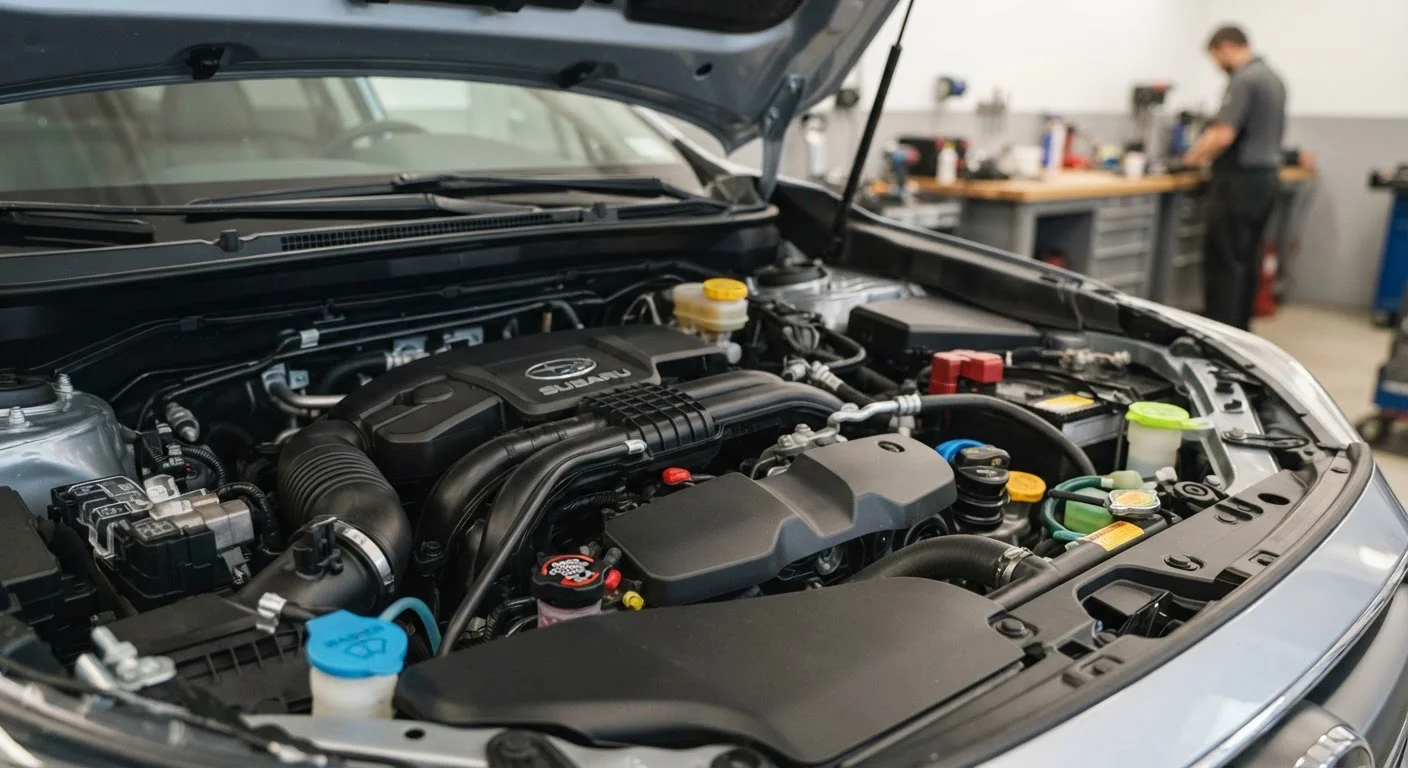
Coolant circulates through the engine and radiator to absorb heat and prevent both overheating in summer and freezing in winter. The reservoir is a translucent plastic tank - check the level against the MIN and MAX marks on the outside without opening it when the engine is hot. Coolant should appear bright green, orange, or pink depending on formulation; a rusty or oily appearance suggests contamination.
Brake Fluid
Brake fluid is a hydraulic fluid that transfers the force of your foot on the pedal to the brakes at each wheel. It lives in a small reservoir near the back of the engine bay. The level should sit between MIN and MAX. Because brake fluid absorbs moisture over time - lowering its boiling point and reducing stopping power - it typically needs replacement every two to three years, though your owner's manual is the definitive reference. Brake work is a safety-critical task; when in doubt, have a qualified mechanic inspect the system.
Transmission Fluid
Transmission fluid lubricates and cools the gearbox. Some vehicles have a dipstick for this (checked with the engine warm and running in park); others are sealed systems requiring a mechanic to inspect. Dark, burnt-smelling fluid or difficulty shifting are reasons to schedule professional service promptly. Owners of high-mileage vehicles should pay particular attention here - see keeping a high-mileage car on the road for what changes as the miles accumulate.
Never Open the Coolant Cap on a Hot Engine
The cooling system operates under pressure. Opening the radiator cap or coolant reservoir cap while the engine is hot can cause scalding fluid to spray out instantly. Always wait until the engine is completely cool - at minimum 30 minutes after shutting off - before removing any coolant-system cap.
Power Steering and Windshield Washer Fluid
Power Steering Fluid
Power steering fluid allows you to turn the wheel with minimal effort by transmitting hydraulic pressure to the steering rack. Many newer vehicles use electric power steering and have no fluid reservoir at all - check your owner's manual to find out which system your car uses. If your car does have a reservoir, the fluid should be clear to light amber. A whining noise when turning the wheel is a classic low-fluid symptom that warrants prompt attention.
Windshield Washer Fluid
This one is purely visibility-related, but it matters for safety. Use a washer fluid formulated for your climate - plain water can freeze in the lines and crack the reservoir in cold weather. This is the one fluid almost any driver can safely refill themselves without any mechanical concern.
If you ever find yourself uncertain about a fluid's condition or the right course of action, knowing what to tell your mechanic can help you communicate the issue clearly and get an accurate diagnosis.
Pre-Road Trip Inspection Checklist
A structured walkthrough covering fluids, tires, lights, and more - useful before any long drive. See our pre-road trip inspection guide.
Dashboard Warning Lights Reference
A practical reference explaining what each warning light means and how quickly you need to respond - helpful when a fluid-related alert appears on your dash.
Warning Signs You Should Never Ignore
Puddles under the car are the most obvious red flag. Here is a quick color guide:
- Clear water: Usually normal condensation from the air conditioning system.
- Bright green, orange, or pink: Coolant leak - stop driving and investigate.
- Dark brown or black: Engine oil or brake fluid - schedule service promptly.
- Red or reddish brown: Transmission or power steering fluid - have it checked.
Dashboard warning lights for oil pressure or temperature are not suggestions - they are urgent alerts. Continuing to drive on a lit oil pressure warning can destroy an engine in minutes. Pull over safely, shut off the engine, and call for assistance.
Staying on top of fluids is ultimately about pattern recognition. Sudden changes in level, color, or smell between your monthly checks tell a story. Share those observations clearly with your mechanic - what to tell your mechanic and what to ask before you leave walks you through exactly how to do that effectively.
Your Owner's Manual Is the Final Word
Every vehicle has specific fluid type requirements and service intervals that can differ significantly from general guidelines. Using the wrong fluid - even a close substitute - can damage seals or reduce performance. Your owner's manual lists the exact specifications; if you no longer have a printed copy, most manufacturers provide them as free PDF downloads on their official websites.
Frequently Asked Questions
A quick visual check once a month takes only a few minutes and can catch problems early. Your owner's manual also lists specific change intervals for each fluid. When in doubt, check before any long trip - see our <a href="/automobile/car-maintenance/the-pre-road-trip-inspection-every-driver-should-run">pre-road trip inspection guide</a> for a full checklist.
Dark or black oil indicates it has accumulated combustion byproducts and oxidation - a normal result of doing its job. If the oil is also gritty or smells burnt, it is overdue for a change. Milky or frothy oil can signal coolant contamination, which requires prompt professional attention.
Mixing different coolant formulations is generally not recommended, as the additives can react and reduce effectiveness. Your owner's manual specifies the correct coolant type for your vehicle. When topping off, use distilled water and the matching coolant formula, or have a mechanic perform a proper flush.
A slight drop in brake fluid level over time can occur as brake pads wear down. However, a noticeably low level or a sudden drop often signals a leak or severely worn pads - both conditions warrant professional inspection before driving further.
EVs eliminate engine oil and transmission fluid, but they still use coolant (often for the battery thermal system), brake fluid, and washer fluid. Check your EV owner's manual for the specific maintenance schedule for these remaining fluids.
Washer fluid is always safe to add yourself. Engine oil, coolant (when cold), and power steering fluid are straightforward top-offs if you use the correct product. Brake fluid and transmission fluid are more sensitive and are best handled or verified by a qualified mechanic to avoid introducing moisture or the wrong fluid type.
The content on this site is for informational purposes only and is not a substitute for professional advice. Always consult a qualified professional for guidance specific to your situation.