

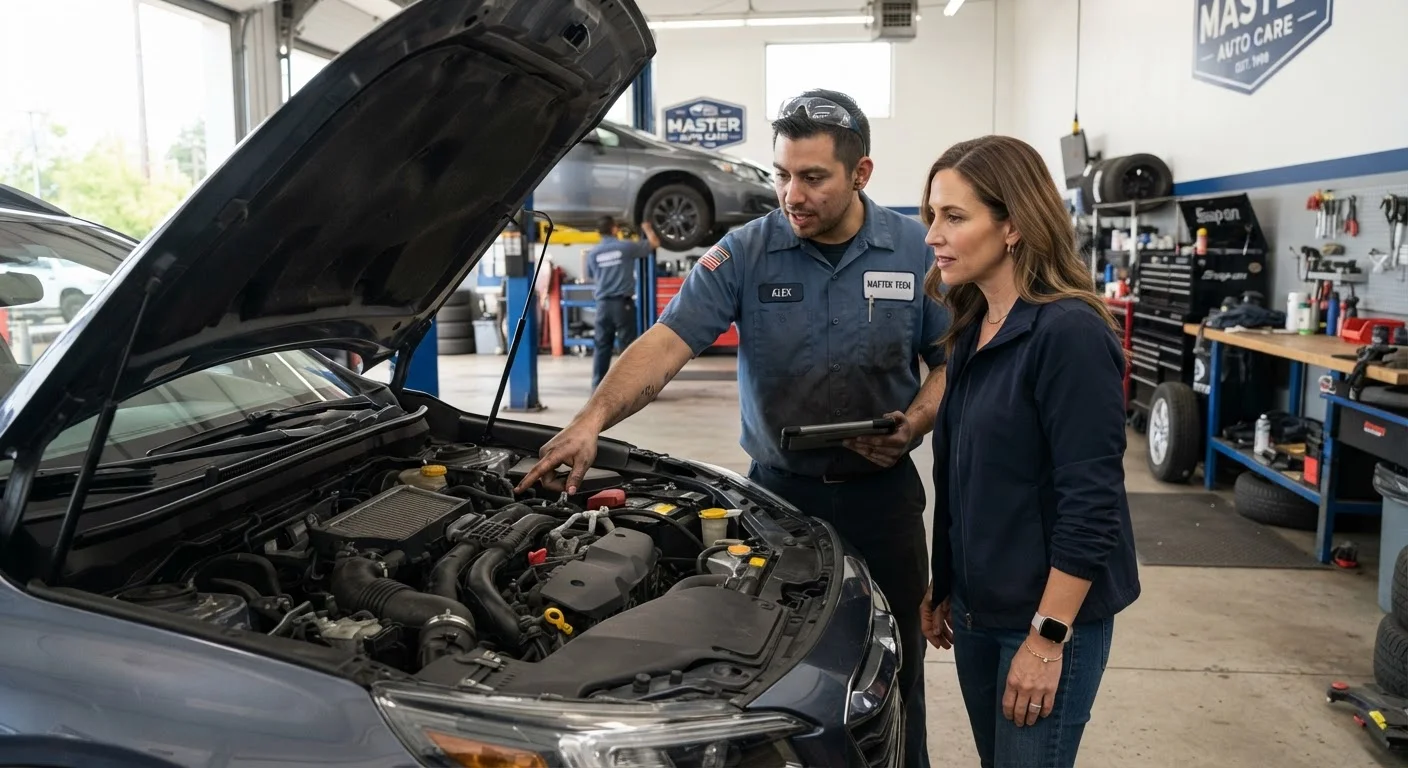
Why the Way You Talk to Your Mechanic Matters
Most drivers hand over their keys and say something like, "It's making a noise." That's a starting point, but it leaves a mechanic with very little to work from. The more precisely you can describe what's happening, the faster and more accurately a technician can identify the problem - which saves everyone time and can keep your repair bill from ballooning.
Think of it like calling a doctor's office. A vague complaint gets a general response. A specific one - "I hear a grinding sound from the front-left wheel when braking at highway speeds, and it started three days ago" - gives a professional something concrete to investigate. The same logic applies under the hood.
Before your next service visit, take a few minutes to mentally log your vehicle's behavior. Jot notes on your phone if it helps. That preparation is one of the simplest things you can do to get better service.
What to Tell Your Mechanic Before They Touch the Car
Bring as much relevant context as you can. Here's what technicians say helps most:
Describe the symptom, not your diagnosis
Mechanics need raw observations, not conclusions. If you say "my transmission is slipping," a technician may start there - but if the real problem is a vacuum leak, that assumption costs time. Describing exactly what you experience keeps the investigation open.
Note when the symptom occurs and under what conditions
Many problems are intermittent and won't appear during a shop inspection. Context - cold starts, highway speeds, turning left, carrying a full load - helps a technician reproduce or narrow down the issue without spending hours guessing.
Share your recent service and repair history
Work done recently - or skipped - is directly relevant to new symptoms. It also prevents a shop from recommending services you've just had performed elsewhere.
Mention any warning lights, even ones that come and go
A check-engine light that appears occasionally still stores a fault code. Shops can often read those codes even after the light clears, giving them a diagnostic lead they'd otherwise miss.
If your car has been serviced recently, mention it - even at a different shop. A wheel alignment performed two weeks ago is relevant if you're back for a pulling-steering complaint. You can get a fuller picture of what services matter and when by reviewing your car's maintenance schedule.
Questions to Ask Before You Authorize Repairs
Once a mechanic has diagnosed your vehicle, the conversation shifts. This is the moment many drivers simply nod and agree - but it's also the moment where a few targeted questions can make a real difference.
One question that often gets overlooked: "What happens if I wait on this?" Some repairs are safety-critical and shouldn't be deferred. Others can be monitored. A trustworthy shop will tell you the difference honestly. Putting off non-urgent items is reasonable; ignoring genuinely dangerous ones is not - and deferred maintenance has real long-term costs that compound over time.
You Have the Right to a Written Estimate
In most U.S. states, auto repair shops are legally required to provide a written estimate before performing work above a certain cost threshold, and must get your authorization before proceeding. Laws vary by state, so it's worth knowing your local consumer protection rules. Asking for written documentation isn't distrustful - it's standard practice that protects both you and the shop.
Building a Long-Term Relationship With a Shop You Trust
Repeat customers at a trusted shop tend to get better service - not because of favoritism, but because the shop already knows the vehicle's history. When a technician has seen your car before, they can spot patterns, catch developing issues early, and spend less time on baseline diagnosis.
Keep a simple record of every service visit: date, mileage, work done, and cost. A notes app or a small notebook in the glove box works fine. This record also becomes invaluable if you ever need warranty work, sell the vehicle, or switch shops.
Understanding what's actually in your car - from fluids to filters - also makes these conversations less intimidating. Our plain-English guide to your car's fluids is a useful starting point for getting comfortable with the basics. And if you're heading into a trip, a pre-road-trip inspection checklist can help you catch issues before they become roadside emergencies.
1 in 3
Drivers who skip or delay recommended maintenance
Industry surveys from automotive service associations have consistently found that a significant share of American drivers delay at least one recommended service per year.
$400+
Average unexpected car repair cost per incident
According to consumer financial research, the typical out-of-pocket auto repair bill catches many drivers off guard, underscoring the value of proactive communication and early diagnosis.
The content on this site is for informational purposes only and is not a substitute for professional advice. Always consult a qualified professional for guidance specific to your situation.