

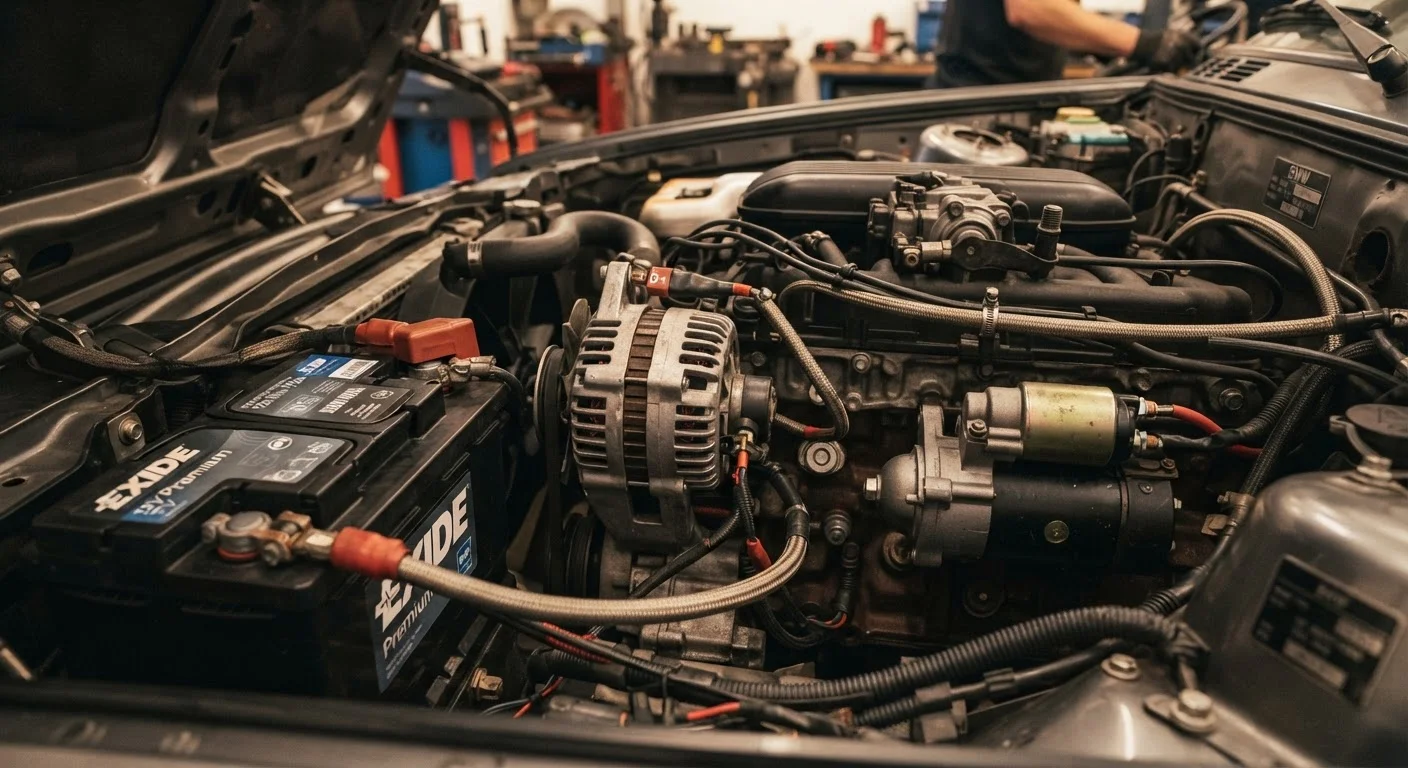
What Each Component Actually Does
Think of the electrical trio as a relay race. The battery fires the starting gun, the starter runs the first leg, and the alternator takes the baton and keeps things moving for the rest of the journey.
The battery is a rechargeable energy storage unit - typically 12 volts in gasoline-powered vehicles. Its primary job is supplying a short, powerful burst of electricity to the starter motor when you turn the key or press the ignition button. It also powers accessories like clocks, alarm systems, and infotainment when the engine is off.
The starter is a small but powerful electric motor that physically cranks the engine - spinning it fast enough for the combustion cycle to take over. Once the engine fires, the starter disengages automatically. Its entire working life happens in the first second or two of every start.
The alternator takes over the moment the engine is running. Driven by a belt connected to the engine, it generates electricity to power the vehicle's electrical systems - lights, climate control, infotainment - and simultaneously recharges the battery. Without a functioning alternator, a running engine will still eventually stall because the battery drains with no replenishment.
For a broader look at how mechanical systems interact under the hood, see our plain-English guide to your car's fluids.
3-5 yrs
Typical car battery lifespan
Industry guidance from automotive maintenance organizations suggests most conventional lead-acid batteries should be tested annually after three years of service.
~40%
Of roadside breakdowns involve the battery
Battery-related failures are consistently cited as the leading cause of roadside assistance calls, according to AAA's annual breakdown data.
13.5-14.5V
Healthy alternator output range
A properly functioning alternator should deliver between 13.5 and 14.5 volts DC at the battery terminals when the engine is running at idle.
Warning Signs You Should Not Ignore
Each component fails in recognizable ways. Knowing the symptoms can help you describe the problem clearly to a mechanic and avoid being caught off guard.
Battery Warnings
- Engine cranks slowly, especially in cold weather
- Electrical accessories behave erratically or dim
- Battery warning light illuminates on the dashboard
- Visible corrosion (white or blue-green crust) around the battery terminals
Alternator Warnings
- Battery warning light comes on while the engine is running
- Headlights flicker or grow noticeably dimmer at idle
- Whining or grinding noise from the engine bay (a worn alternator bearing)
- Multiple electrical accessories failing simultaneously
Starter Warnings
- A single loud click - not rapid clicking - when you turn the key
- Grinding noise during engine cranking
- Intermittent no-start: sometimes starts fine, sometimes nothing
- Starter continues spinning briefly after the engine fires
Many of these symptoms also trigger dashboard warning lights. Our guide to dashboard warning lights explains what those icons mean and how urgently to respond.
Test Before You Replace
Before spending money on a new battery, alternator, or starter, have the system load-tested at an auto parts store or repair shop. Many stores offer this service free of charge. A proper test takes the guesswork out of diagnosis and helps ensure you're only replacing what actually needs replacing.
Getting the Right Diagnosis and Next Steps
One of the most common and costly mistakes drivers make is replacing a battery when the real culprit is a failing alternator - or vice versa. A new battery installed with a bad alternator will simply drain and fail again within days.
Most auto parts stores will perform a free battery and alternator load test while you wait. A load test stresses the battery under simulated starting conditions and checks whether the alternator is producing adequate voltage output. This takes about 10 minutes and costs nothing, making it the logical first step before any purchase or repair.
If a repair is recommended, ask your mechanic to inspect all three components together. Because the starter, battery, and alternator interact so directly, a shop replacing one often has easy access to check the others - potentially saving you a return visit. Knowing how to communicate with your mechanic before authorizing work can make a real difference in the outcome.
This article is for general informational purposes only. For diagnosis, repair, or any work involving your vehicle's electrical system, consult a qualified mechanic.
Frequently Asked Questions
Most conventional lead-acid car batteries last three to five years, though climate plays a significant role. Extreme heat accelerates internal corrosion, while extreme cold reduces the battery's ability to deliver the cranking amps needed to start an engine. Having your battery tested annually after the three-year mark is a reasonable habit.
Only briefly. A failing alternator stops recharging the battery, so the car runs entirely on stored battery power. Depending on battery charge level, you may have as little as 20-30 minutes of driving before electrical systems begin failing. It is safer to pull over and call for service than to risk losing power steering or other critical systems mid-drive.
A single loud click when you turn the key - rather than the rapid clicking of a dead battery - often points to a failed starter. A grinding noise during cranking can indicate worn starter gear teeth. Intermittent no-start symptoms, where the car sometimes starts fine and other times does nothing, are also a classic starter warning sign.
A jump start will get the engine running, but if the alternator is the problem, the battery will quickly drain again once the jumper cables are removed. Jump-starting gives you a window to drive directly to a mechanic - it is not a fix. If your car dies shortly after a jump start, suspect the alternator rather than the battery.
Costs vary widely by vehicle make, model, and region, and labor rates differ significantly between independent shops and dealerships. As a general reference, starter and alternator replacements tend to be more labor-intensive - and therefore more expensive - than battery swaps. Getting two or three quotes and asking for an itemized estimate is always a sound approach.
The content on this site is for informational purposes only and is not a substitute for professional advice. Always consult a qualified professional for guidance specific to your situation.