

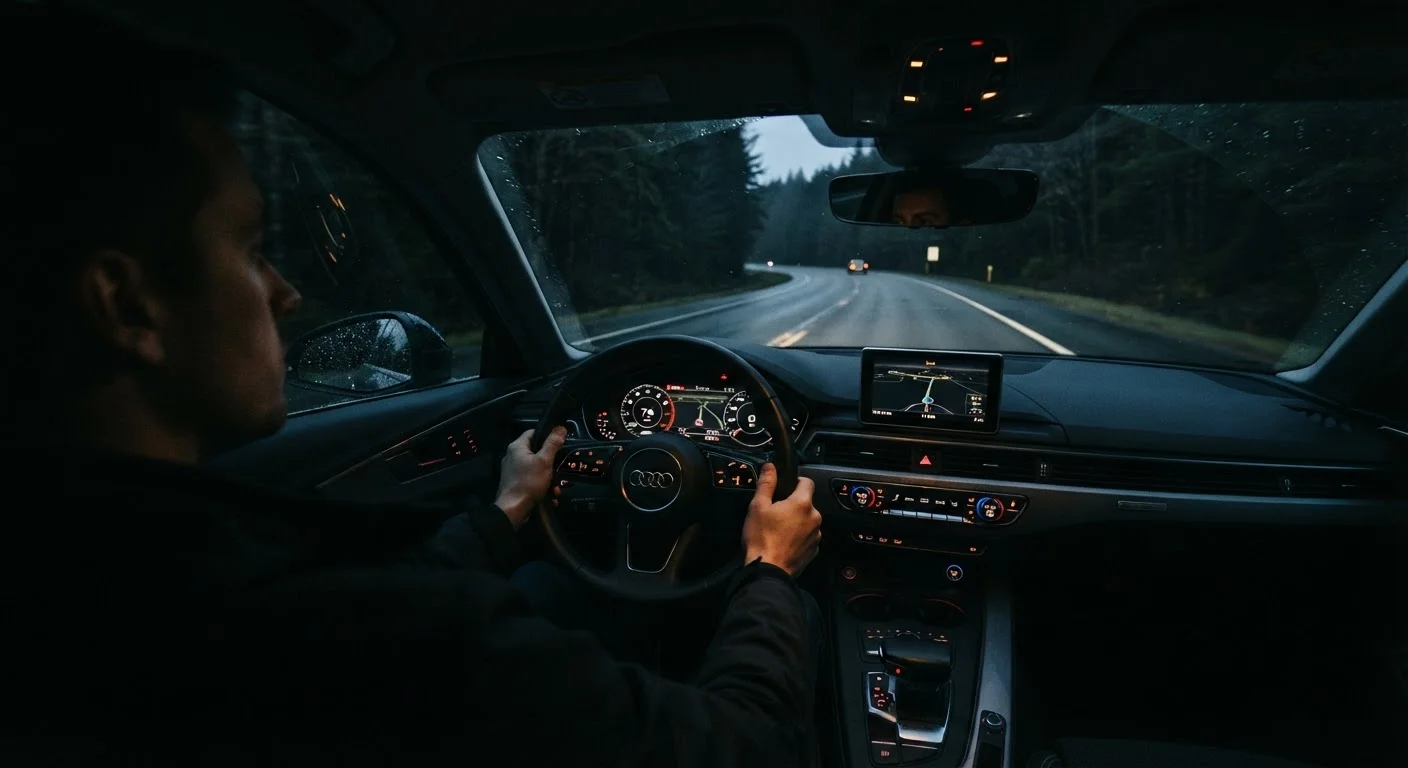
Why Night Driving Is Genuinely More Dangerous
Roughly 50% of traffic fatalities occur at night despite significantly fewer vehicles on the road during those hours, according to the National Safety Council. That imbalance isn't coincidence - it reflects real, measurable changes in driving conditions that most drivers underestimate.
The human eye relies on two types of photoreceptors: cones for color and detail in daylight, and rods for low-light and peripheral vision. After dark, you're largely dependent on rods, which are slower to respond to motion and offer no color discrimination. This means your ability to judge distance, detect hazards in your periphery, and process fast-moving objects all decline - even if your vision tests fine in daytime conditions.
Add in the effects of glare from oncoming headlights, potential wildlife crossings, unlit pedestrians, and the cumulative fatigue that comes with driving during your body's natural sleep window, and it becomes clear why nighttime driving deserves its own strategy. Understanding those differences is the first step toward adapting safely. For a broader look at how environment shapes driving risk, see our guide to road conditions that catch drivers off guard.
~50%
Of fatal crashes occur at night
The National Safety Council reports that roughly half of all U.S. traffic fatalities happen in darkness, despite far lower nighttime traffic volumes.
3x
Higher fatality rate per mile at night
Per mile driven, nighttime driving carries approximately three times the fatal crash risk of daytime driving, according to NHTSA data analysis.
Best Practices for Safer Night Driving
The habits below address the specific conditions that make darkness more hazardous. Each one is grounded in how nighttime conditions actually affect vision, reaction time, and vehicle dynamics.
Keep your headlights clean and properly aimed
Dirty or yellowed headlight lenses can reduce light output by more than 50%, dramatically shortening the distance at which you can spot hazards. Misaimed beams either fail to illuminate the road ahead or blind oncoming drivers. Both reduce your effective reaction window.
Use high beams strategically on unlit roads
High beams roughly double your forward visibility on dark rural roads, giving you significantly more time to react to animals, debris, or pedestrians. Most drivers underuse them out of habit rather than necessity.
Increase your following distance after dark
Your headlights reveal hazards later than daylight does. The standard three-second following distance assumes daytime visibility; at night, extending to four or five seconds gives your brain more time to process what the lights reveal and your foot more time to reach the brake.
Look slightly right when facing oncoming headlights
Staring directly at bright oncoming headlights causes temporary glare blindness - your pupils, adjusted for darkness, are overwhelmed. Shifting your gaze to the right edge of the lane keeps you oriented without the temporary vision loss.
Reduce speed to match your sight distance
"Overdriving your headlights" means traveling fast enough that your stopping distance exceeds how far your lights illuminate. At highway speeds in the dark, many drivers are functionally unable to stop in time for a stationary hazard they haven't yet seen.
Dim your interior and instrument lighting
Bright dashboard displays and interior lights cause your eyes to partially adapt toward brighter conditions, reducing their sensitivity to the dark road ahead. Most modern vehicles allow instrument brightness adjustment for exactly this reason.
Quick Actions You Can Take Tonight
Some nighttime safety improvements require zero cost and only minutes to implement. Start with these before your next after-dark drive.
For a broader framework of in-the-moment awareness skills that apply day and night, our guide to situational awareness behind the wheel covers scanning techniques, blind spot management, and traffic-reading habits worth building. And if your vehicle has driver-assist technology, understand what it can and can't do at night - our overview of driver-assist features explains what each system actually does in real conditions.
Schedule an Annual Headlight Check
Have a qualified mechanic inspect headlight aim and lens condition at least once a year - ideally before winter when nights are longest. Many shops can perform a quick aim adjustment during a routine service visit. Proper headlight maintenance is one of the most cost-effective safety investments available to any driver. See the car maintenance hub for related upkeep essentials.
Managing Fatigue on Nighttime Drives
Driver fatigue is one of the most underreported contributors to nighttime crashes. Your circadian rhythm naturally pushes your body toward sleep between midnight and 6 a.m., and again in mid-afternoon - meaning driving during those windows carries an elevated fatigue risk regardless of how rested you feel at departure.
“Drowsy driving is impaired driving. A driver who has been awake for 18 hours shows impairment similar to someone with a 0.05% blood alcohol concentration.”
— AAA Foundation for Traffic Safety, Road safety research organization
Practical fatigue management means planning longer drives to avoid peak drowsiness windows when possible, scheduling rest stops every 90-120 minutes on extended trips, and treating strong fatigue as a reason to stop - not something to push through. Caffeine can temporarily reduce sleepiness, but it isn't a substitute for rest, and its effects diminish with repeated use. Traveling with an alert co-driver who can share the wheel is one of the most reliable defenses on long night routes.
These habits integrate naturally with the defensive driving techniques that apply across all road types, and they're especially worth revisiting as part of a year-round driving habits review.
This article provides general driver education information. Always follow applicable traffic laws and consult a qualified professional for specific vehicle maintenance or safety concerns.
The content on this site is for informational purposes only and is not a substitute for professional advice. Always consult a qualified professional for guidance specific to your situation.