

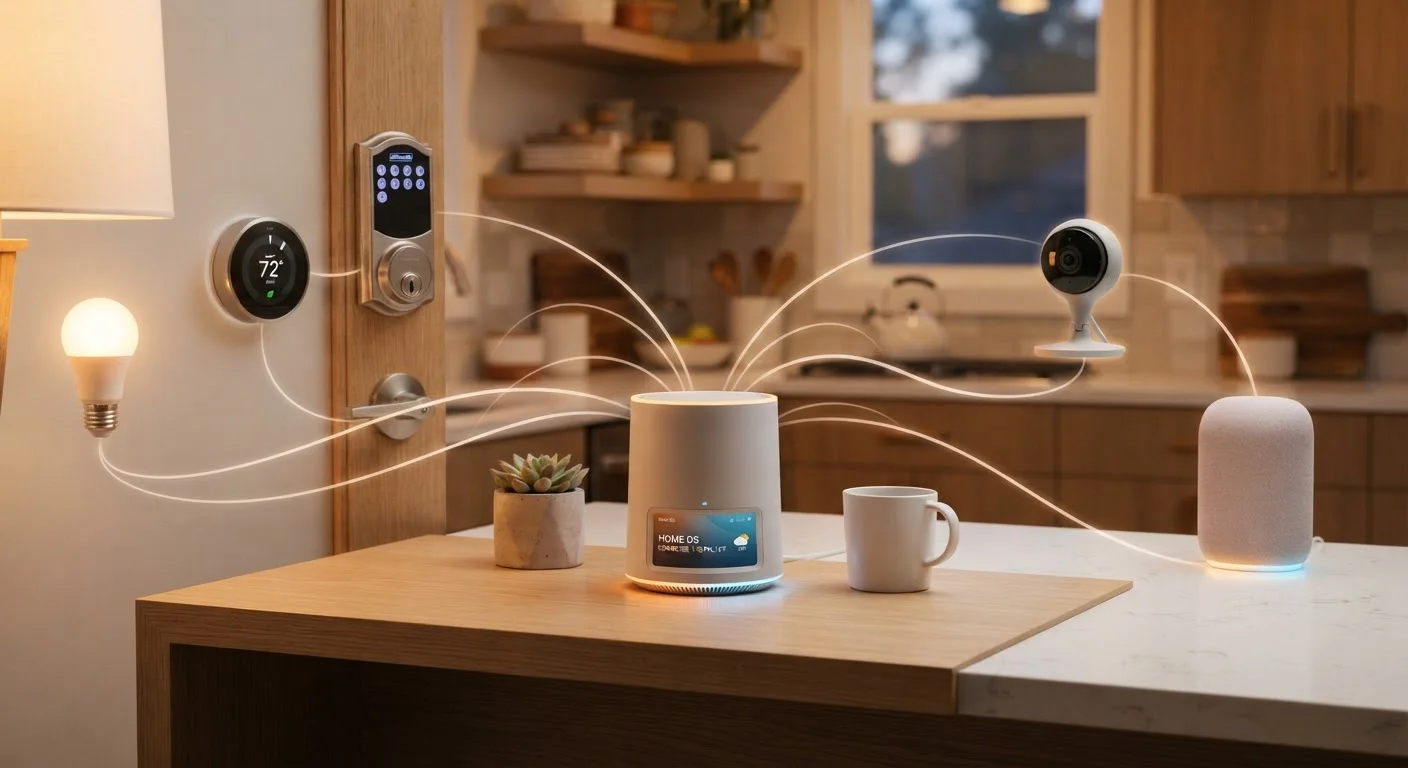
The Problem Matter Was Built to Solve
For years, buying a smart home device meant first checking whether it worked with your existing ecosystem - Google Home, Amazon Alexa, Apple HomeKit, or Samsung SmartThings. Buy the wrong one and it simply wouldn't integrate, leaving you managing multiple disconnected apps. This fragmentation was one of the biggest barriers to smart home adoption.
Matter was created specifically to dismantle those walls. Launched by the Connectivity Standards Alliance in late 2022, it establishes a shared application layer - a common language - that certified devices speak regardless of who made them. For everyday consumers, the practical upshot is that a light switch certified for Matter should work with your Google Nest speaker, your Amazon Echo, and your Apple HomePod, all at once.
For more background on how smart home devices connect in general, see this plain-language overview of how the technology works.
2022
Year Matter 1.0 specification launched
The Connectivity Standards Alliance released the first Matter specification in November 2022, with backing from Amazon, Apple, Google, and Samsung.
280+
Companies in the CSA backing Matter
The Connectivity Standards Alliance, which governs the Matter standard, includes over 280 member organizations across the tech and home automation industries.
Thread
Low-power mesh protocol used by Matter
Thread is a key networking layer for battery-powered Matter devices, enabling local communication without relying on a cloud connection.
What Matter Actually Changes - and What It Doesn't
Matter's most meaningful change is multi-admin support: a single device can be registered with multiple platforms simultaneously. That's genuinely new. Before Matter, adding a device to one ecosystem often meant it couldn't be controlled through another.
But Matter is not a magic wand. It defines a baseline feature set that all platforms must support, but manufacturers can still build proprietary features that only appear in their own apps. A smart thermostat's advanced scheduling or energy-use analytics might not surface through a third-party controller. The device will respond to basic commands - raise temperature, lower temperature - but the deeper functionality may remain locked to the original app.
Matter also doesn't address cloud dependency directly. Some Matter devices operate locally (communicating directly with your hub without an internet connection), which is a meaningful privacy and reliability improvement. Others still route commands through the manufacturer's cloud. It depends on the device and how the maker implemented the standard.
Check for the Matter Logo Before Buying
When shopping for smart home devices, look for the Matter certification mark on the packaging or product listing. This confirms the device has been tested against the standard - not just that the manufacturer claims compatibility. Also verify which specific ecosystems (Alexa, Google Home, Apple Home) are listed as supported, since not every Matter device supports every platform.
To understand how Matter fits within the broader landscape of protocols, this explainer on Matter, Zigbee, Z-Wave, and Wi-Fi walks through the differences clearly.
How Matter Works With Existing Devices
If you already have a smart home setup, Matter's impact depends on what hardware you own. Major platforms - Google Home, Amazon Alexa, Apple HomeKit, and Samsung SmartThings - have rolled out Matter controller support through firmware updates to existing smart speakers and hubs. So the controller side is largely in place for most households.
For your actual devices, the picture is more mixed. Some newer smart plugs, light bulbs, and sensors ship with native Matter support over Wi-Fi. Thread-based Matter devices (which use a low-power mesh network better suited to battery-operated sensors and locks) require a Thread Border Router - a piece of hardware that's built into select smart speakers and hubs but not universally available.
Older Zigbee and Z-Wave devices generally won't become Matter-native, but some hubs can act as Matter bridges, translating those older protocols so they appear as Matter devices in your chosen platforms. Whether your existing hub supports this depends on the manufacturer. See strategies for building a cross-brand smart home if you're trying to integrate hardware across ecosystems.
What to Expect Going Forward
Matter is a living standard. The CSA releases updated versions that expand the list of supported device categories and refine how features are expressed across platforms. Early versions focused on lighting, thermostats, locks, and plugs. Later releases have added robot vacuums, energy management, and more. The ecosystem will continue to grow.
That said, the pace of real-world adoption has been uneven. Certification takes time, and not every manufacturer treats Matter as a priority. Reading device packaging carefully - looking for the Matter logo and confirming which platforms are supported - remains important.
For consumers, the practical advice is straightforward: when buying new smart home devices, Matter certification is a meaningful signal of future flexibility. It doesn't guarantee a flawless experience, but it reduces the risk of ending up with hardware that's incompatible with your setup or becomes orphaned if a platform loses support. For broader planning guidance, setup principles that hold up as technology changes covers how to build a system that stays adaptable over time.
Matter Certification vs. Matter Compatibility
There's a distinction worth knowing: a device that is Matter-certified has gone through the CSA's testing process. A device marketed as 'Matter-compatible' may not have completed that certification. When in doubt, checking the CSA's official product registry can confirm a device's certification status before purchase.
Frequently Asked Questions
No. Matter is a separate standard that works alongside existing protocols. Some hubs can translate Zigbee or Z-Wave devices into the Matter ecosystem, but those older protocols continue to function independently. Matter is not a replacement - it's an additional layer of interoperability.
Some existing devices have received Matter support through firmware updates, particularly smart speakers and hubs from major platforms. However, many older devices - especially those using Zigbee or Z-Wave - will not gain native Matter support without a compatible hub acting as a bridge.
Not necessarily. Many Matter devices connect directly over Wi-Fi. However, Thread-based Matter devices require a Thread Border Router, which is built into some smart speakers and home hubs. Check whether your existing hardware already includes one.
Yes - all three major ecosystems have committed to Matter support. A single Matter-certified device can be added to multiple platforms simultaneously, meaning you're not forced to pick just one ecosystem.
Not quite. Matter defines a baseline for interoperability, but manufacturers still control which specific features are exposed through third-party platforms. Advanced or proprietary features may only be accessible through the device maker's own app.
As of the most recent specification releases, Matter covers lighting, plugs and switches, thermostats, door locks, window coverings, security sensors, robot vacuums, and more. The CSA continues to expand the supported device categories with each new version of the specification.
The content on this site is for informational purposes only and is not a substitute for professional advice. Always consult a qualified professional for guidance specific to your situation.