

Our Verdict
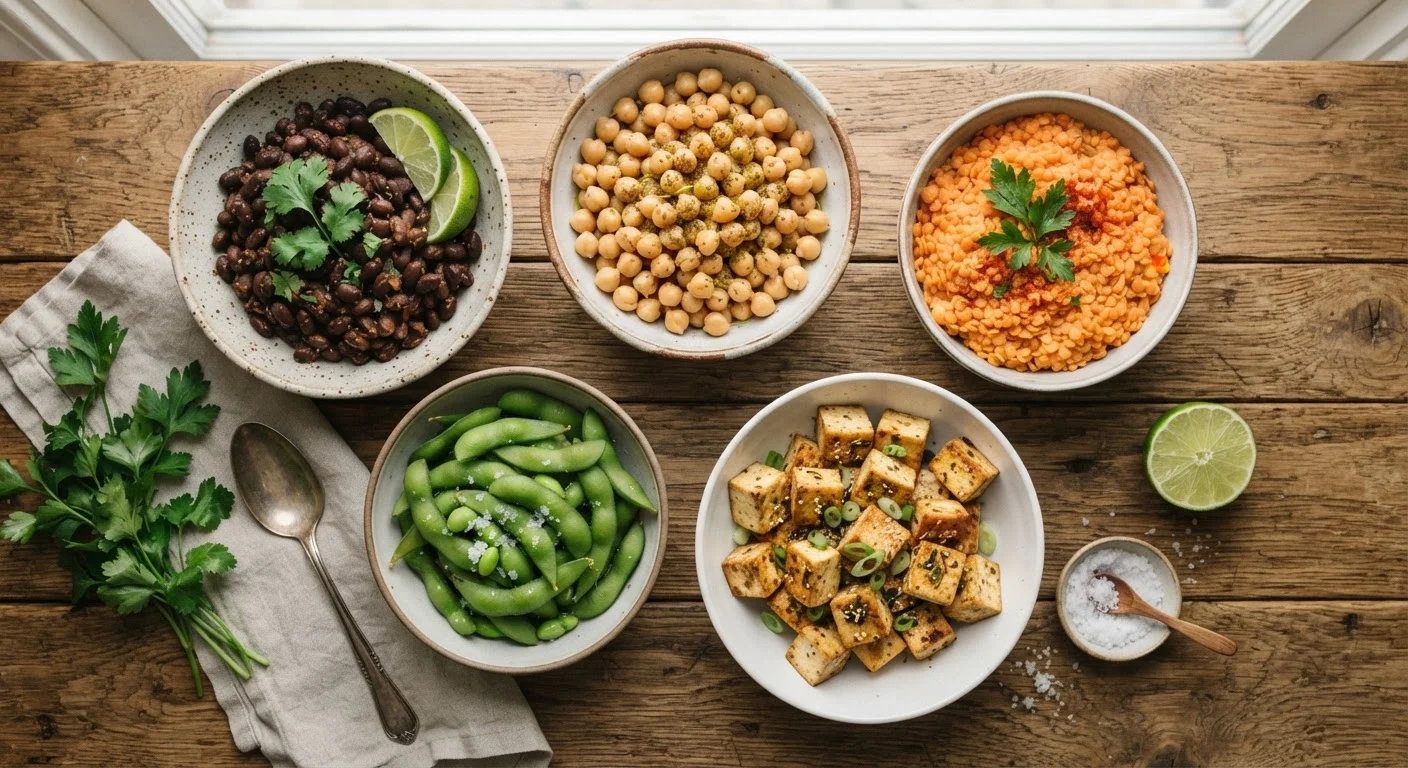
Each plant protein source has distinct strengths. Soy-based options like tofu and edamame offer the most complete amino acid profiles, while lentils and beans deliver exceptional fiber alongside solid protein content. Eating a variety of plant proteins throughout the day is a practical, well-supported strategy for meeting nutritional needs without relying on any single source.
| Best for | Recommended |
|---|---|
| Those wanting a complete amino acid profile from a single source | Tofu or Edamame |
| Those prioritizing protein plus high fiber intake | Lentils or Black Beans |
| Those seeking maximum cooking versatility | Tofu |
| Those looking for quick-cooking, budget-friendly staples | Red Lentils |
Why Plant Protein Variety Matters
Protein is made up of amino acids, nine of which are considered essential - meaning the body cannot produce them and must obtain them through food. Animal proteins typically contain all nine in adequate proportions. Most plant proteins do not, which is why understanding the differences between sources is genuinely useful rather than just academic.
The good news: research consistently shows that eating a varied plant-based diet across the day - not necessarily at every meal - allows most people to meet their full amino acid needs. If you're newer to thinking about this, a grounded nutrition overview is a useful starting point before diving into specifics.
| Black Beans | Lentils | Firm Tofu | Edamame | Chickpeas | |
|---|---|---|---|---|---|
| Protein per cooked cup (approx.) | ~15g | ~18g | ~20g | ~17g | ~15g |
| Complete protein? | No | No | Yes | Yes | No |
| Fiber content | Very High | Very High | Low | High | High |
| Digestibility (relative) | Moderate | Moderate | High | High | Moderate |
| Cook time (from dry/raw) | 45-90 min | 15-30 min | Ready to use | 5-10 min | 60-90 min |
| Culinary versatility | High | High | Very High | Moderate | High |
Breaking Down the Key Players
Beans (Black, Kidney, Chickpeas)
Cooked black beans deliver roughly 15 grams of protein per cup, alongside substantial fiber and iron. Chickpeas sit in a similar range and are particularly high in lysine - an amino acid often low in grains - making beans a natural complement to rice or bread. The main digestibility caveat: beans contain oligosaccharides (complex carbohydrates) that can cause gas in some people. Soaking dried beans and discarding the soaking water reduces this significantly.
Lentils
Red, green, and brown lentils offer approximately 18 grams of protein per cooked cup, one of the higher figures among plant sources. They cook faster than most dried beans, require no soaking, and absorb flavors readily. Lentils are particularly rich in folate and iron, though the iron is non-heme iron - pairing them with a vitamin C source (like tomatoes or lemon juice) improves absorption.
Tofu
Made from coagulated soy milk, firm tofu provides around 20 grams of protein per cup and is one of the few plant sources considered a complete protein. It's also highly versatile in cooking - it can be grilled, scrambled, baked, or blended. Digestibility is generally high, especially compared to whole legumes. Stocking your pantry with tofu alongside other staples makes varied meals much easier to pull off.
Edamame
Young, harvested soybeans (edamame) contain around 17 grams of protein per cup and, like tofu, supply all essential amino acids. They're also a meaningful source of omega-3 fatty acids and vitamin K. Edamame works well as a snack, salad topper, or quick stir-fry addition.
Hemp Seeds & Nutritional Yeast
Though used in smaller quantities, hemp seeds (~10 g protein per 3 tbsp) and nutritional yeast (~8 g per 2 tbsp) are complete proteins that integrate easily into smoothies, sauces, or grains to round out a meal's amino acid profile.
Combine Proteins Across the Day, Not Every Meal
You don't need to engineer every meal to be nutritionally complete. Eating a variety of plant proteins - beans, grains, seeds, soy - across the day is an approach well-supported by mainstream dietetics. This makes eating plant-forward considerably less complicated in practice.
Digestibility: The Often-Overlooked Factor
How much protein a food contains and how much your body actually absorbs are two different numbers. Nutritional scientists use a measure called DIVAS (or the older PDCAAS) to account for this. Soy protein scores near 1.0 - the maximum - while most legumes score lower, partly due to fiber content and naturally occurring compounds called antinutrients (phytates, tannins).
Practical steps that improve plant protein digestibility include: cooking thoroughly, soaking and rinsing dried legumes, sprouting lentils or chickpeas, and fermenting soy (as in tempeh or miso). These aren't requirements - they're options worth knowing about. When reading packaged plant protein foods, understanding nutrition label values helps you interpret the numbers more accurately.
~1.0
Soy protein digestibility score (PDCAAS)
Soy protein consistently achieves a near-perfect Protein Digestibility Corrected Amino Acid Score, comparable to animal proteins, according to FAO/WHO methodology.
29%
of U.S. adults eating more plant protein
A 2023 IFIC Food and Health Survey found nearly one-third of American adults reported actively trying to consume more plant-based protein.
Putting It Together Practically
A practical principle supported by mainstream nutrition science: if your meals across a day include a legume and a grain or seed, your essential amino acid coverage is likely solid. Examples include lentil soup with whole-grain bread, a rice-and-bean bowl, or tofu stir-fry over quinoa.
This doesn't require tracking or precision - it's more a matter of pattern than arithmetic. Understanding how minimally processed plant foods differ from heavily refined versions can also shape smarter choices, since whole lentils or beans deliver fiber and micronutrients that isolated protein powders do not.
This article is for general informational and educational purposes only and is not a substitute for personalized medical or dietary advice. Consult a registered dietitian or qualified healthcare provider for guidance tailored to your individual health needs.
The content on this site is for informational purposes only and is not a substitute for professional advice. Always consult a qualified professional for guidance specific to your situation.