

Summary
28 items · 20-40 minutes
Why Your Pantry Setup Shapes What You Actually Eat
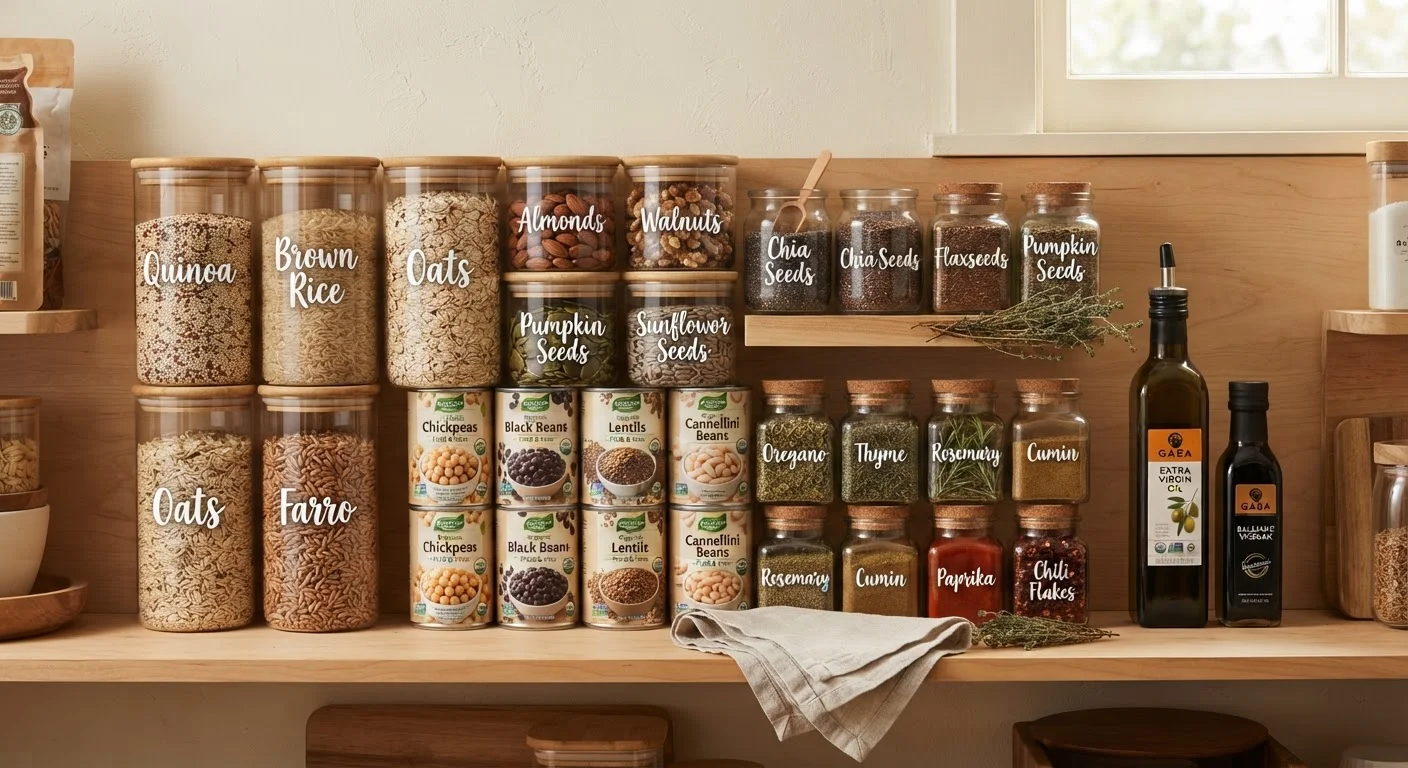
It's a simple truth backed by behavioral nutrition research: the foods that are most accessible at home are the foods you eat most often. A pantry stocked with versatile, minimally processed staples quietly makes balanced meals the path of least resistance - no willpower required.
This checklist is designed to help everyday cooks audit what they have, identify gaps, and stock up strategically. It isn't a rigid prescription - individual dietary needs, cultural food traditions, and budgets all vary. Think of it as a starting framework you can adapt. If you're newer to thinking about food and nutrition in general, the foundational overview for adults is a useful companion read before diving into stocking specifics.
One practical tip before you begin: cross-reference any packaged items against their nutrition labels. Our guide to reading a nutrition label without confusion can help you quickly evaluate sodium levels, ingredient lists, and serving sizes so you're making genuinely informed choices at the store.
Canned Goods: Watch the Sodium
Many canned staples - beans, vegetables, broth, tomatoes - are available in both regular and low-sodium versions. Opting for low-sodium or no-salt-added varieties gives you more control over your total daily sodium intake. Rinsing canned beans under water before use can also reduce their sodium content noticeably.
The Pantry Stocking Checklist
Work through each category below. Items marked must are broadly useful across a wide range of diets and cooking styles. Should items add meaningful nutritional variety. Nice-to-have items expand your cooking range without being essential.
Whole Grains & Starches
Proteins (Canned, Dried & Shelf-Stable)
Healthy Fats & Oils
Canned & Preserved Vegetables and Fruit
Flavor Foundations
Baking & Cooking Essentials
For a deeper look at the plant-based protein options in the list above - including how beans, lentils, and tofu compare on amino acid profiles and digestibility - see our plant-based protein comparison guide.
What to Keep in Mind While Shopping
Building a well-stocked pantry doesn't require a single massive haul. Adding two or three new staples per shopping trip is a more sustainable approach - financially and practically. If budget efficiency is a priority, the smart budgeting hub offers practical strategies for stretching grocery dollars without compromising on variety.
Pantry Stocking Is Not One-Size-Fits-All
Dietary needs vary considerably based on health conditions, allergies, cultural food practices, and personal preference. This checklist offers broadly applicable suggestions, not a personal dietary prescription. If you have a specific health condition - such as diabetes, kidney disease, or a food allergy - consult a registered dietitian before making significant changes to your regular grocery habits.
One common trap is buying pantry staples with good intentions and then not rotating them. A simple habit: when you unpack new items, move older ones to the front of the shelf. Check expiration dates every few months, particularly on oils (which can go rancid) and spices (which lose potency after about a year).
If weekday time pressure is the bigger obstacle, a stocked pantry pairs especially well with low-effort planning habits. Our article on eating well on a tight schedule outlines realistic approaches for busy adults that don't require elaborate meal prep. And if you've noticed that your grocery cart often works against your intentions before you even get home, understanding common shopping pitfalls is worth a read.
This article is for general informational and educational purposes only and is not a substitute for personalized nutrition or medical advice. Consult a qualified healthcare professional or registered dietitian for guidance tailored to your individual health needs.
The content on this site is for informational purposes only and is not a substitute for professional advice. Always consult a qualified professional for guidance specific to your situation.