

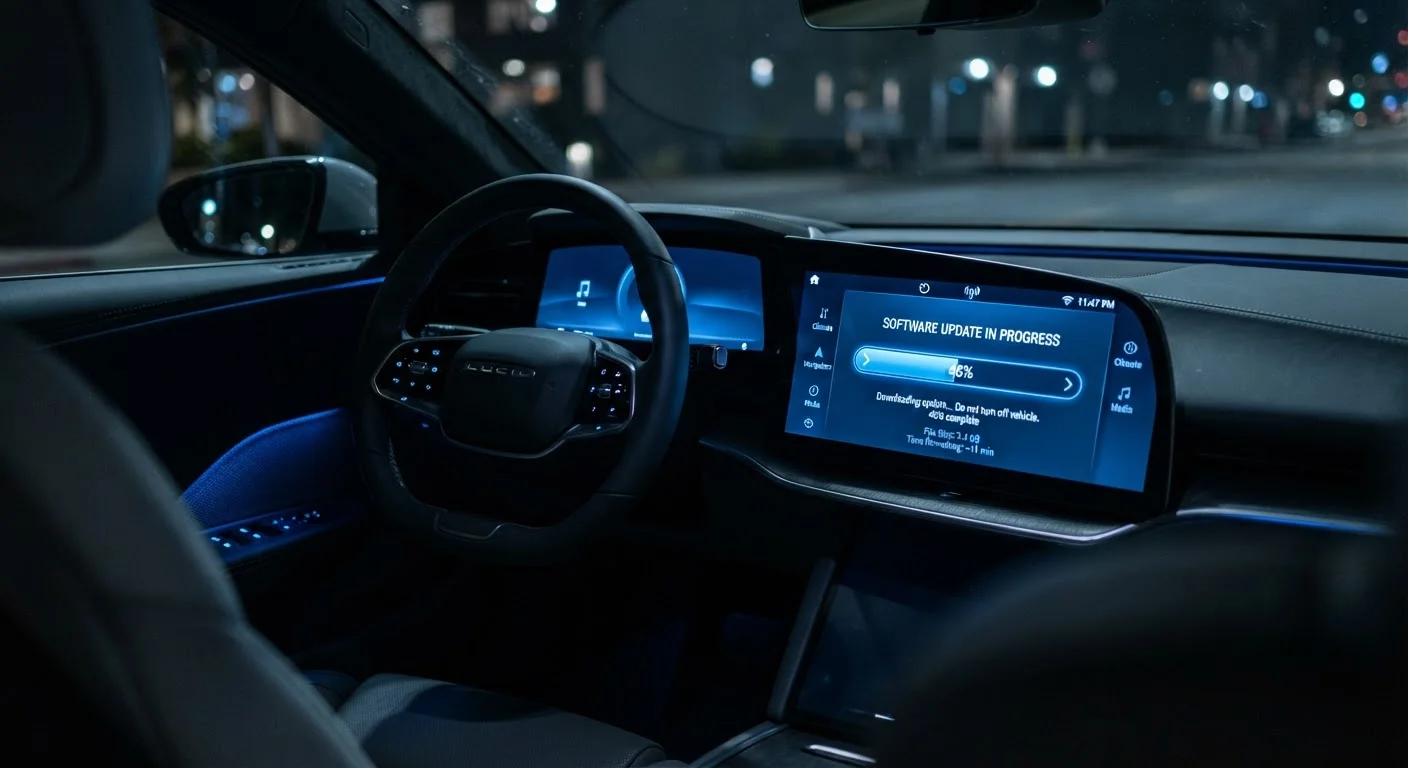
How OTA Updates Actually Work in a Car
Your car is no longer just a mechanical machine - it's a rolling network of computers. Modern vehicles contain dozens of software-driven modules controlling the engine, transmission, safety systems, and infotainment. Over-the-air updates give automakers the ability to modify that software remotely, the same way app developers push updates to your phone.
When an update is available, your vehicle's telematics system - a built-in cellular modem or a Wi-Fi connection - downloads the new software package. The vehicle typically validates the file's integrity before installing it, often during a scheduled window when the car is parked and the engine is off. For a deeper look at how this mirrors general software update behavior, see how software updates work and what happens when you skip them.
45M+
Vehicles capable of OTA updates globally
Industry analyst estimates suggest tens of millions of connected vehicles worldwide are already equipped to receive over-the-air software updates as of the mid-2020s.
$3.5B+
Estimated annual OTA update market value
Market research firms tracking automotive software project the OTA update sector will reach several billion dollars annually as connected vehicle adoption grows.
Up to 30%
Reduction in recall-related service visits
Automotive industry observers note that OTA-capable recalls can significantly reduce the volume of physical dealership visits required to resolve software-related safety issues.
What OTA Updates Can - and Cannot - Change
Understanding the boundaries of OTA updates helps set realistic expectations. On the software side, updates can adjust quite a lot: bug fixes in the infotainment system, recalibrations to driver-assist features like lane-keeping or adaptive cruise control, improvements to battery management in electric vehicles, and even new interface features. For more on how driver-assist systems function, the driver-assist features becoming standard equipment is worth reading alongside this article.
What OTA updates cannot do is equally important. They do not replace physical maintenance. Oil changes, brake inspections, tire rotations, cabin air filter replacements - none of these are touched by software. Your car's maintenance schedule remains as relevant as ever regardless of how many updates your vehicle receives.
Check Your Update Settings Before You Need Them
Take a few minutes to locate the software update section in your vehicle's settings menu or companion app before an update arrives. Knowing whether your car updates automatically or requires manual approval means you won't be caught off guard. Also confirm whether your vehicle is connected to Wi-Fi at home to ensure updates can download without using your cellular data allowance.
The Subscription Layer: Features That Come and Go
OTA updates have introduced a business model shift that every buyer should understand. Automakers can use software updates to activate features that are physically present in your vehicle but locked behind a paywall - heated seats, enhanced navigation, or extended range modes in some EVs. They can also deactivate features if a subscription lapses.
This means the capabilities of your car can change over time based on what you're paying for, not just what hardware came installed. It's a trend worth tracking closely, and one that has significant implications for resale value and long-term ownership costs. Our coverage of subscription features in new cars breaks down exactly how these arrangements work.
Cybersecurity and What Drivers Should Know
Wireless updates introduce a security surface that didn't exist in older vehicles. Automakers must ensure that update packages are cryptographically signed - meaning tamper-proof - so that malicious actors cannot push unauthorized software to your car. Regulatory pressure and industry standards, including ISO/SAE 21434, require manufacturers to address cybersecurity across a vehicle's entire lifecycle.
For everyday drivers, the practical implication is straightforward: keep your vehicle's software current, just as you would with any connected device. If your automaker notifies you of an available update - especially one described as a security patch - installing it promptly is generally the right call. Drivers curious about the broader language of connected-car technology will find the automotive acronym reference guide a useful companion resource.
“The software-defined vehicle is not a future concept - it's the present reality. The question for the industry is how to govern these systems responsibly so that updates genuinely serve drivers rather than simply serve business models.”
— Automotive cybersecurity researcher, Transportation technology policy analyst
Frequently Asked Questions
Most OTA updates download automatically when your car is connected to Wi-Fi or a cellular network. Some automakers send a notification to your phone or dashboard asking for your approval before installation begins. Check your owner's manual or automaker app to understand how your specific vehicle handles updates.
No. OTA updates only affect software - they cannot repair worn brake pads, replace fluids, or fix a faulty sensor hardware failure. Physical maintenance still requires hands-on service. Think of OTA updates as the digital side of upkeep, separate from <a href="/automobile/car-maintenance/your-cars-maintenance-schedule-decoded">your regular maintenance schedule</a>.
Reputable automakers test updates extensively before release. However, no software system is completely immune to errors - a poorly deployed update can theoretically cause temporary glitches. Automakers are required to report software-related safety defects to the NHTSA, and OTA updates can also be used to issue recalls remotely.
No. Your vehicle needs an active cellular or Wi-Fi connection to download an OTA update. Most connected cars use a built-in cellular modem, but some rely on your home Wi-Fi. If your vehicle lacks a data connection, you may need to visit a dealership for software updates instead.
The updates themselves are typically free, but automakers increasingly use them to manage paid subscription features. An update might unlock a feature you then need to subscribe to keep. For more on how this works, see <a href="/automobile/auto-trends/subscription-features-in-new-cars-what-drivers-are-being-asked-to-pay-for">subscription features in new cars</a>.
Most new electric vehicles and many late-model connected vehicles support OTA updates, though the depth of what can be updated varies by automaker. Older vehicles generally lack the hardware needed. Check your owner's manual or the automaker's connected-services portal to confirm your vehicle's capability.
The content on this site is for informational purposes only and is not a substitute for professional advice. Always consult a qualified professional for guidance specific to your situation.