

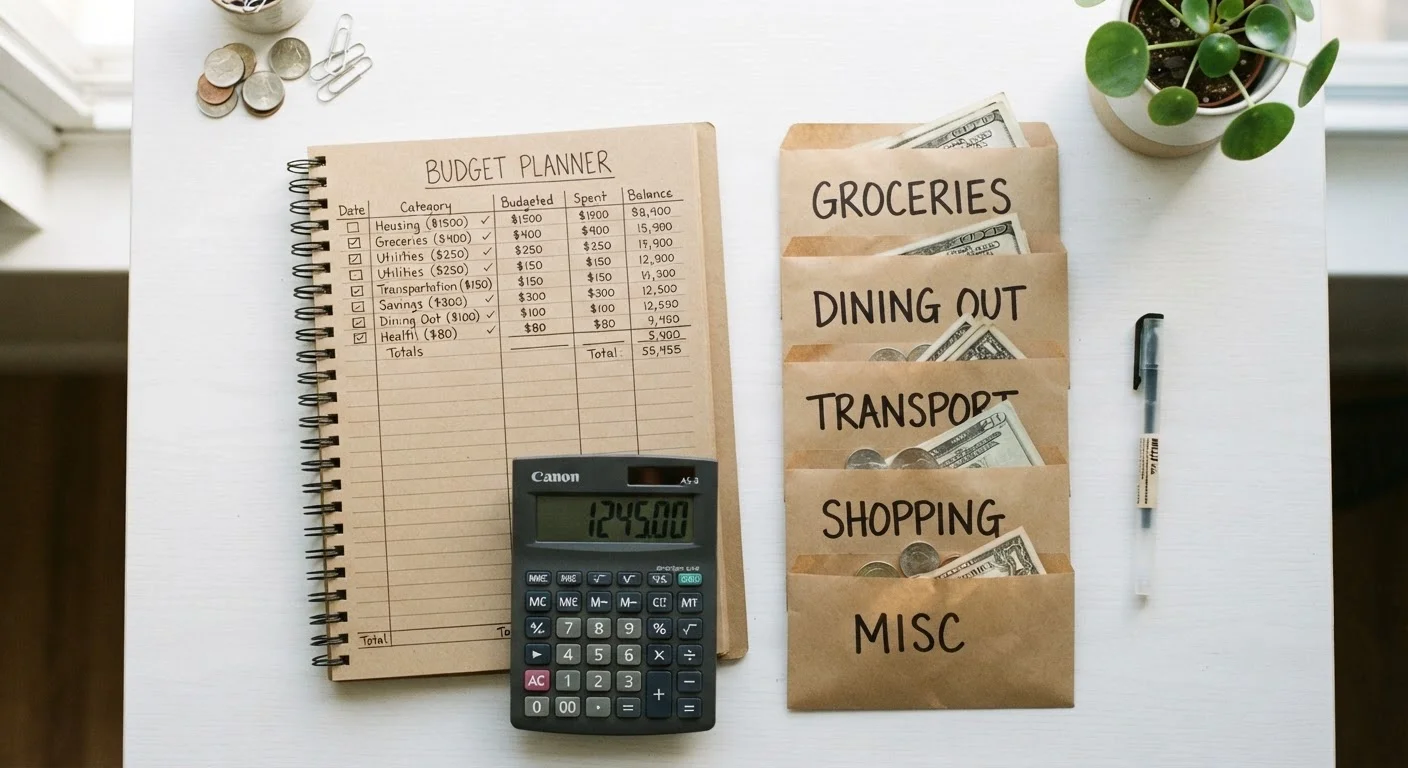
The Core Categories Most Shoppers Already Know
A functional shopping budget starts with the categories most people recognize: groceries, clothing, household supplies, and electronics. These are tangible, recurring, and relatively easy to recall. The problem isn't that people don't know these categories exist - it's that they don't track them with enough specificity to spot patterns.
For example, "groceries" is too broad if it includes specialty items, meal kit subscriptions, and bulk-store runs. Breaking it into subcategories - staples, perishables, prepared foods - gives you a clearer read on where overruns happen. The same logic applies to clothing: separating workwear from casual purchases helps you see if one area is consistently pushing you over budget.
If you're new to this kind of structured approach, the Shopping Budget Starter Kit walks through how to set category limits and build the tracking habit from scratch.
The Overlooked Categories That Cause Real Shortfalls
This is where most budgets break down. The categories below are widely skipped - not because people don't spend money in them, but because they're infrequent enough to feel exceptional each time they occur.
Discretionary spending
Purchases that are wanted but not essential to basic needs, such as entertainment, dining out, or hobby supplies. These are typically the first category adjusted when a budget needs tightening.
Fixed expense
A recurring cost that stays the same each billing period, such as a subscription fee or lease payment. Fixed expenses are predictable but can accumulate if not periodically reviewed.
Variable expense
A cost that fluctuates month to month, such as groceries or utility bills. Variable expenses require averaging across multiple months to estimate accurately.
Irregular expense
A cost that doesn't occur every month but is still predictable over the course of a year - vehicle registration, annual subscriptions, and holiday gifts are common examples. Budgeting for these requires setting aside a portion monthly even when no bill is due.
Sinking fund
A dedicated savings pool built gradually to cover a known future expense, such as car repairs or holiday shopping. By setting aside small amounts regularly, you avoid treating predictable costs as financial emergencies.
- Personal care and grooming: Haircuts, skincare, razors, and salon services add up monthly but rarely get their own budget line.
- Pet expenses: Food is often tracked; vet visits, grooming, and medications usually aren't.
- Subscriptions and memberships: Streaming, software, gym access, and club memberships frequently accumulate unnoticed. A full breakdown of commonly missed categories shows just how much this adds up to across a year.
- Vehicle maintenance: Oil changes, tires, registration, and unexpected repairs are irregular but significant. Many people treat these as emergencies rather than planned expenses.
- Gifts and celebrations: Birthdays, weddings, holidays, and graduations are predictable on a calendar but rarely budgeted in advance.
- Home maintenance and small repairs: Light bulbs, filters, batteries, caulk - these feel trivial individually but consistently eat into discretionary funds.
These are the categories most likely to produce end-of-month confusion. Recognizing them as recurring - even if irregular - is the first step toward accounting for them properly.
How to Build a Category System That Actually Works
The goal isn't an exhaustive list of every possible expense - that creates administrative overhead that most people abandon. Instead, aim for a category structure that's specific enough to surface patterns but simple enough to maintain consistently.
A practical approach: start with 8-12 categories, review your last two to three months of actual spending to verify they cover what you really buy, and add subcategories only where you consistently overspend. Avoid the temptation to create a "miscellaneous" category - it becomes a catch-all that hides the very patterns you're trying to see.
~$300
Typical monthly subscription spend per U.S. household
Consumer research has found that Americans frequently underestimate their monthly subscription costs by a significant margin when asked to self-report.
1 in 3
Budgeters who don't track irregular expenses
Surveys on household budgeting practices consistently show that categories like vehicle maintenance and gifts are among the least likely to have a dedicated budget line.
Different people track differently. Spreadsheets, apps, and pen-and-paper each have real trade-offs - the right method is the one you'll actually use week to week. And if you want to understand how spending habits gradually erode even carefully built budgets, the patterns that quietly derail well-intentioned budgets are worth reviewing before you finalize your category list.
Once you've tracked for three to six months, a full annual audit can sharpen your numbers considerably. The Annual Spending Review checklist is designed to help you do exactly that.
This article is for general informational purposes only and does not constitute financial advice. For guidance tailored to your specific circumstances, consult a qualified financial professional.
The content on this site is for informational purposes only and is not a substitute for professional advice. Always consult a qualified professional for guidance specific to your situation.