

Start here
Why Tracking Spending Changes Everything
Build your foundation
The Core Concepts You Need First
Set your limits
How to Set a Realistic Shopping Limit
Pick your tools
Choosing a Tracking Method That Sticks
Spend smarter
Prioritizing Purchases Without Sacrificing Quality
Make it last
Building the Habit Over Time
Why Tracking Spending Changes Everything
Most people who've never tracked their spending aren't undisciplined - they're just operating blind. Without a record, it's genuinely difficult to know where money is going. Surveys consistently show that people underestimate their discretionary spending by a significant margin when asked to recall it from memory.
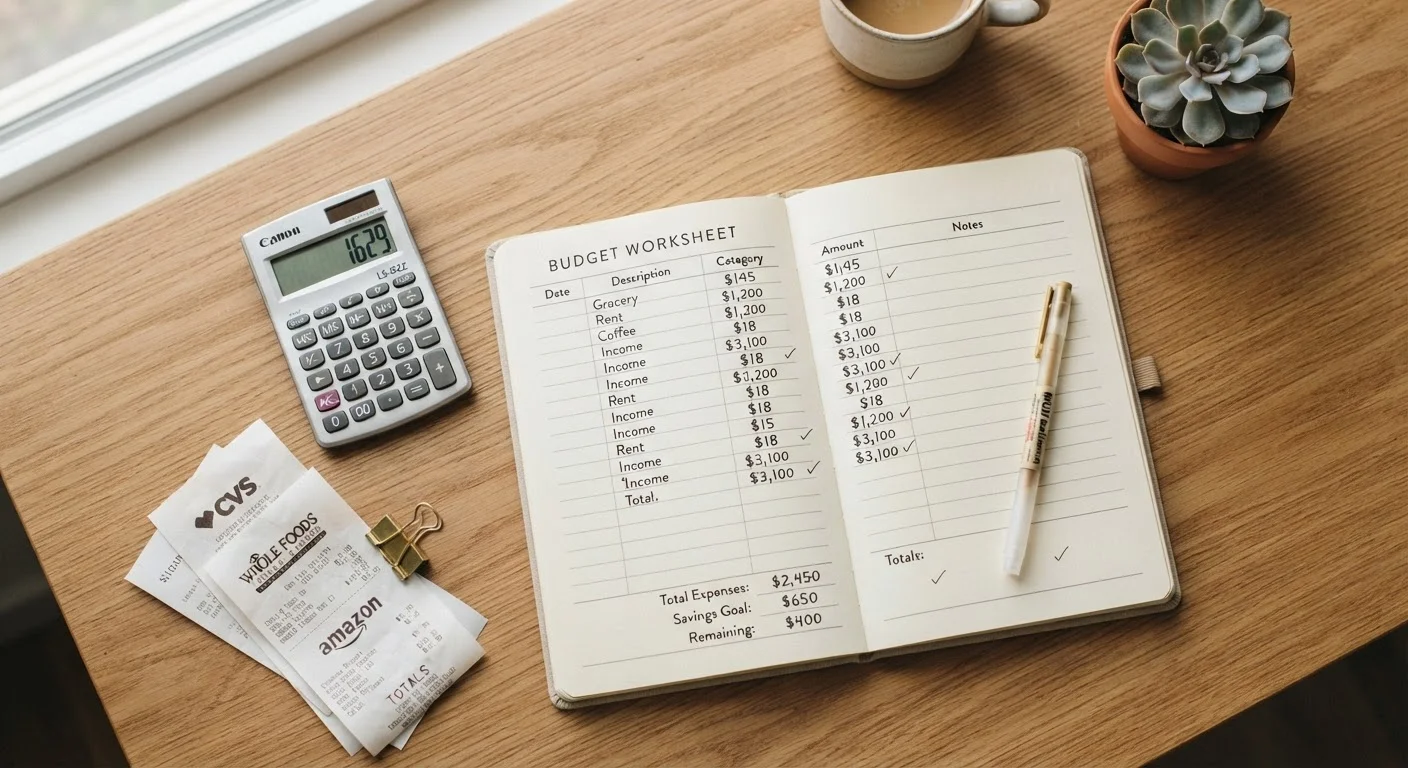
Tracking doesn't punish you for spending. It gives you accurate information so you can make choices that reflect what actually matters to you. That's the whole point of a budget: not restriction, but intention. For a broader view of how shopping budgets fit into your overall finances, the complete household budgeting guide covers the full picture.
Start With One Month of Honest Observation
Before setting any limits, track your actual spending for 30 days without trying to change it. This gives you a real baseline rather than an aspirational one. Budgets built on wishful thinking tend to fail within the first week.
The Core Concepts You Need First
Before setting any numbers, make sure these foundational ideas are clear:
Take-home income
The money deposited into your account after taxes and deductions are removed - what you actually have to spend.
Fixed expense
A recurring cost that stays roughly the same each month, like rent, a car payment, or an insurance premium.
Variable expense
A cost that changes month to month based on your choices and habits, such as groceries, clothing, or dining out.
Discretionary spending
Money spent on non-essential items - things you choose to buy beyond basic necessities.
Spending category
A labeled group for similar expenses (e.g., 'clothing' or 'household goods') that makes it easier to see where money is going.
Budget envelope
A set amount of money mentally (or physically) reserved for a specific spending category for the month.
Understanding these terms prevents the most common beginner mistake: setting a budget based on gross income (before taxes) rather than the money that actually lands in your account.
How to Set a Realistic Shopping Limit
A shopping limit you can keep is more useful than a perfect one you can't. Here's a straightforward process:
- Calculate your monthly take-home income. This is your starting point - not your salary, but what you actually receive after taxes and deductions.
- List your fixed expenses first. Rent or mortgage, utilities, insurance, minimum debt payments. These come off the top.
- Assign a savings amount before shopping. Even a small, consistent amount matters. What's left after fixed expenses and savings is your spending pool.
- Divide your spending pool into categories. Groceries, transportation, dining out, clothing, household goods. Keep the list simple at first. The key budget categories to track article is a useful reference here.
For a more structured walkthrough of this process, see setting a realistic monthly shopping budget.
Don't Set Limits Based on Hope
It's common to underestimate spending in categories like groceries or household goods when setting limits for the first time. If you skip the tracking step and go straight to setting numbers, you're likely to create a budget that doesn't reflect reality. Use actual data from at least two to four weeks of spending before you finalize any category limits.
Choosing a Tracking Method That Sticks
The right tracking system is the one you'll use consistently. Here are three practical options:
- Paper notebook or index cards
- Write down each purchase immediately. Simple, private, and requires no technology. Good for people who find apps distracting or overwhelming.
- Spreadsheet
- A basic two-column layout - date and amount, grouped by category - gives you a running total and makes monthly review easy. Most devices have a free spreadsheet app built in.
- Budgeting app
- Apps that link to bank accounts can auto-categorize transactions and show visual summaries. Useful once you've built the habit, but can feel like overkill in week one.
Whichever method you choose, set a recurring time each week - 10 minutes is enough - to review what you've logged. Consistency in reviewing matters more than the tool itself.
Prioritizing Purchases Without Sacrificing Quality
A budget doesn't mean choosing cheap over good. It means being deliberate about where quality spending is worth it and where it isn't.
A useful framework: before any non-routine purchase, ask three questions:
- Do I need this, or do I want it right now?
- Will I still use or value it in six months?
- Does buying this now crowd out something more important?
This isn't about self-denial - it's about protecting your spending for the things that genuinely matter to you. Pairing this habit with solid product research skills means you spend less time second-guessing purchases after the fact.
If you're working from a limited financial base, first steps toward financial stability can help you think through the bigger picture alongside your shopping habits.
Building the Habit Over Time
A budget only works if it becomes routine. In the first 30 days, focus on tracking - not optimizing. Get an accurate picture of where your money goes before making any big changes. Most people are surprised by at least one category.
After that first month, pick one area to adjust. Not everything at once. Small, sustained changes compound over time in ways that dramatic overhauls rarely do.
Review your limits every one to three months. Your income, expenses, and priorities shift - your budget should reflect that. For a structured way to approach those reviews, building your first household budget from scratch covers the process in plain language. The budgeting basics hub is also worth bookmarking as a reference as your knowledge grows.
This article is for general informational and educational purposes only and does not constitute personalized financial advice. Consult a qualified financial professional before making significant changes to your spending or financial plan.
Frequently Asked Questions
There's no universal rule, but a widely referenced framework allocates roughly 30% of take-home pay to all variable spending - which includes groceries, clothing, and personal items. Your actual number depends on your fixed expenses and savings goals. The key is to set a limit based on what's left after necessities and savings are accounted for, not before.
The easiest method is the one you'll actually use. For most beginners, a simple note in their phone or a small notebook works better than a complex app. Log every purchase immediately after making it. Once you've built the habit for a few weeks, you can upgrade to a spreadsheet or budgeting app if you want more visibility.
Going over once isn't failure - it's data. Review what caused the overspend: was it an unplanned need, a recurring category you underestimated, or an impulse buy? Adjust your limit or your habits accordingly. Budgets are meant to be revised as you learn more about your actual spending patterns.
Ideally yes, at first. Tracking everything for 30 days gives you an honest picture of where your money actually goes, which is usually different from where you think it goes. After that baseline period, many people find they can track by category rather than individual transaction without losing accuracy.
A household budget covers all income and expenses - rent, utilities, insurance, debt payments, and savings. A shopping budget is a subset that focuses specifically on discretionary purchases: clothing, household goods, electronics, and similar variable spending. Getting your shopping budget right is a practical entry point into managing the broader picture.
The content on this site is for informational purposes only and is not a substitute for professional advice. Always consult a qualified professional for guidance specific to your situation.