

Why a Single Number Can't Carry All That Weight
A 4.6-star average sounds reassuring. It signals that thousands of people were happy, and that feels like social proof you can bank on. But that number is an arithmetic mean - and means are notoriously easy to distort. A product with 800 five-star ratings and 200 one-star ratings will display roughly 4.2 stars, the same score a product with 1,000 middling three-and-four-star reviews might earn. The underlying realities are completely different.
The aggregate rating hides distribution, context, and intent. It doesn't tell you why people were satisfied or dissatisfied, whether the complaints cluster around a specific defect, or whether the five-star reviews were left during a promotional giveaway campaign. To shop smarter, you need to treat the star rating as a prompt to investigate, not a verdict to accept.
For a structured way to evaluate what review content actually signals quality, see The Anatomy of a Trustworthy Product Review.
Common Mistakes Shoppers Make with Star Ratings
Most errors follow predictable patterns. Recognizing them is the first step toward more disciplined product research.
Treating the average rating as a quality guarantee without looking at how the scores are distributed.
Why it happens: Platforms display the average prominently and the histogram obscurely, so most shoppers never scroll to see it.
Ignoring whether a review was left by a verified purchaser or an unverified account.
Why it happens: All reviews look visually similar on most platforms, and the verification badge is easy to overlook.
Relying on an overall rating without checking whether it's current - many high scores were earned years ago.
Why it happens: Ratings accumulate over a product's entire lifespan, so a well-reviewed older version can mask quality changes in a newer batch.
Assuming a high rating on one platform reflects universal satisfaction across all buyers.
Why it happens: Shoppers often research and purchase on the same site, creating an information bubble where only one platform's data shapes the decision.
Letting a high rating override specific concerns raised in the written reviews.
Why it happens: Numbers feel objective; individual reviews feel anecdotal. Shoppers instinctively trust aggregated data over individual testimony.
Once you've audited a rating more carefully, pairing user feedback with independent editorial analysis often closes remaining gaps. Verified Purchaser vs. Editorial Review: Which Source Should You Trust More? breaks down when each source type earns its credibility.
How to Build a More Reliable Picture
Improving your review literacy doesn't require hours of research - it requires asking better questions of the information already in front of you.
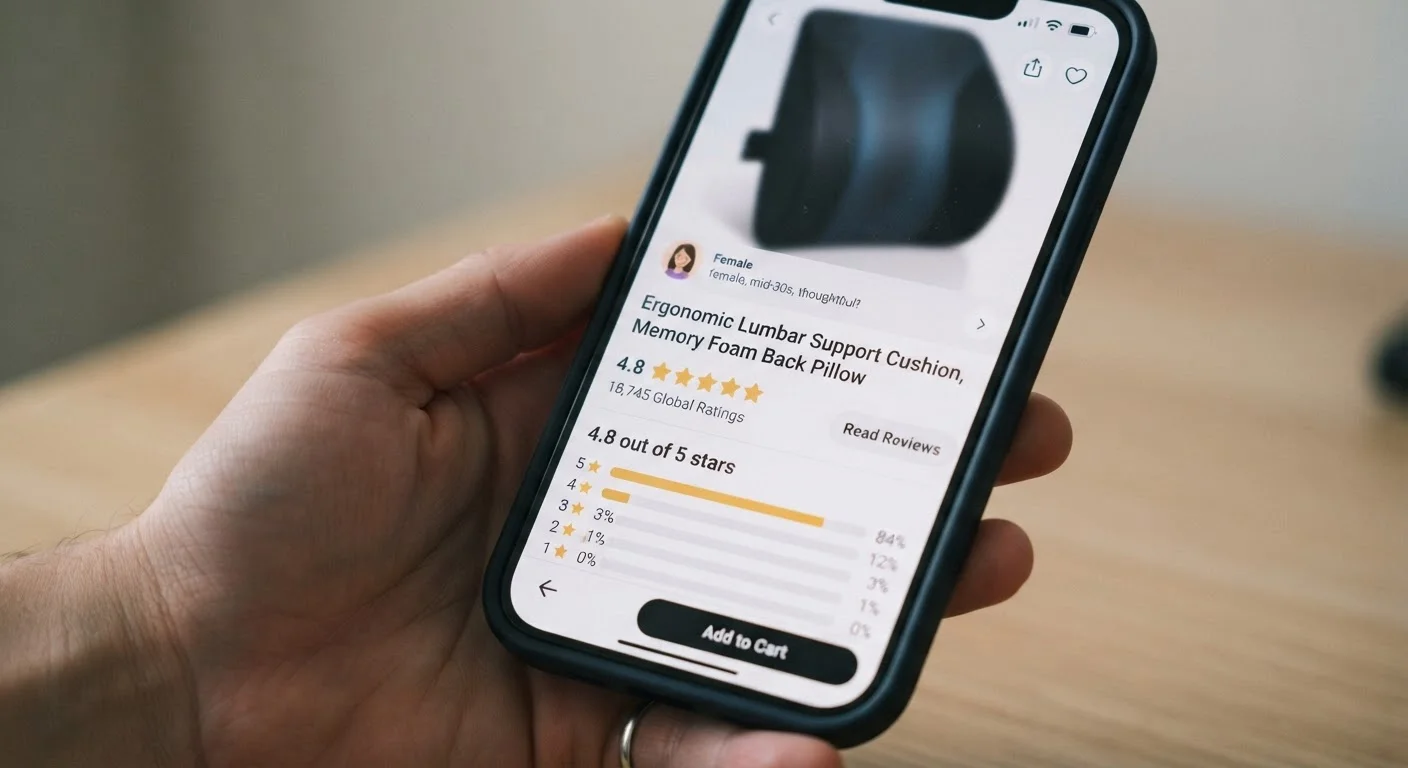
- Check the rating histogram. Most platforms show a breakdown of one- through five-star counts. Look for bimodal distributions (lots of fives and lots of ones) - these signal a product that works well for some use cases and fails badly in others.
- Filter by your lowest acceptable rating. Read the two- and three-star reviews first. They tend to be the most balanced and specific, written by people who wanted to like the product but ran into real problems.
- Sort by recency. A 4.7-star product that earned most of those ratings two years ago may have changed in quality, pricing, or manufacturing. Recent reviews reflect current reality.
- Cross-reference platforms. A product rated 4.5 on one marketplace and 3.1 on an independent review site is sending a signal worth heeding. See The Full Picture on User-Generated Reviews for a deeper look at what each source type can and can't tell you.
- Build a comparison baseline. Ratings only mean something relative to alternatives. Building a Side-by-Side Product Comparison You Can Actually Use helps you evaluate options on the dimensions that actually matter to your situation.
~30-40%
Estimated share of online reviews that may be unreliable
Academic research published in peer-reviewed marketing journals has estimated that a substantial minority of consumer reviews on major platforms exhibit markers of inauthenticity, including incentivized or fabricated submissions.
4.0+
Threshold where rating differences become perceptually invisible
Consumer behavior research suggests that once a product exceeds roughly a 4.0-star average, most shoppers stop meaningfully distinguishing between a 4.1 and a 4.7 - making fine-grained score differences less informative than review content.
The same skepticism applies beyond physical products. What App Store Ratings Don't Tell You - the principles of reading between the stars transfer directly.
The content on this site is for informational purposes only and is not a substitute for professional advice. Always consult a qualified professional for guidance specific to your situation.