

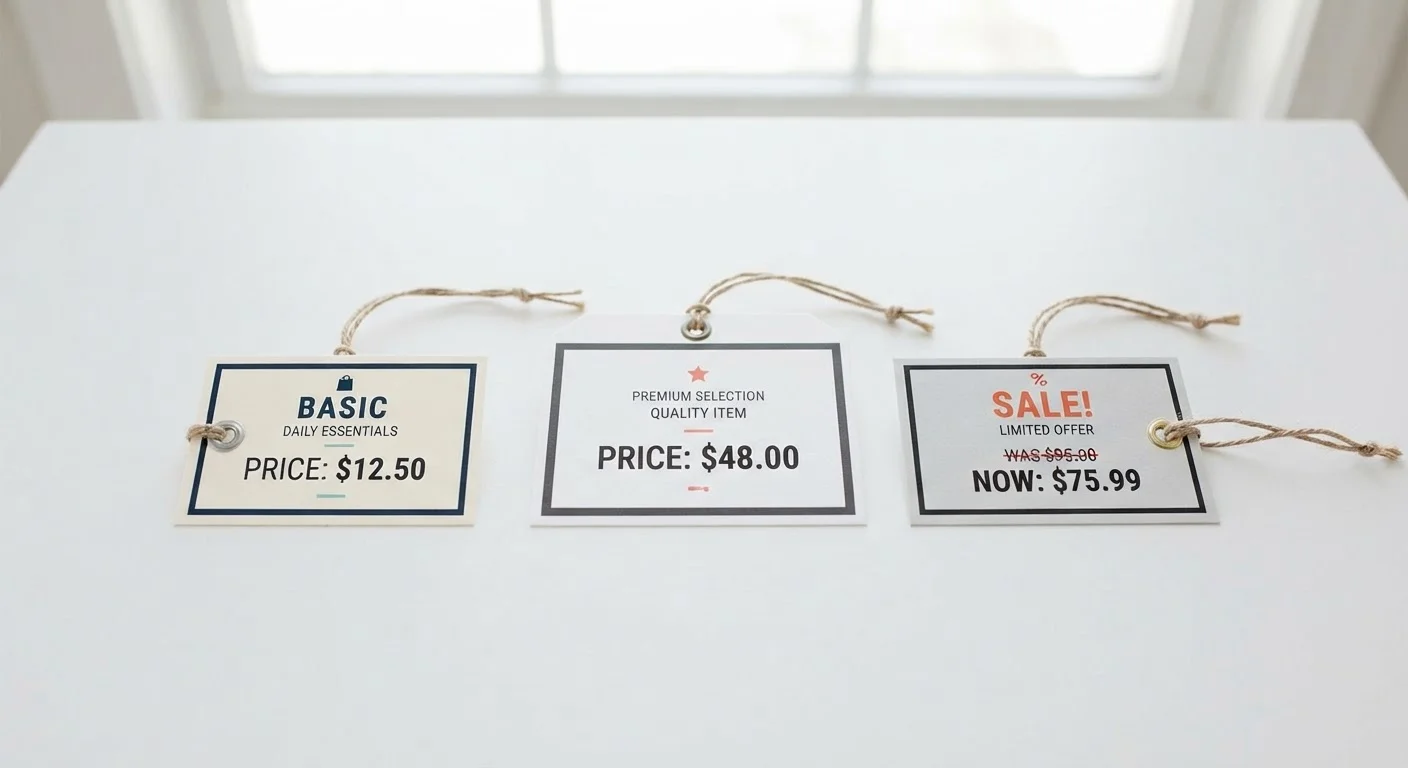
Why These Three Words Get Mixed Up
In everyday conversation, people use price, value, and cost almost interchangeably - but they measure three entirely different things. Conflating them is one of the most common reasons shoppers walk away from purchases they later regret or pass on deals that would have served them well.
The confusion isn't accidental. Retailers benefit when customers treat price as a proxy for value and ignore downstream costs. Breaking the habit of treating these terms as synonyms is a foundational skill for anyone trying to make smarter spending decisions.
These Concepts Apply Beyond Physical Goods
Price, value, and cost distinctions matter just as much for subscriptions, services, and digital products as they do for physical items. A monthly subscription has a price, delivers variable value depending on how often you use it, and carries a cumulative cost that compounds over time. Applying the same framework across all spending categories sharpens decision-making consistently.
Price: The Number on the Tag
Price is simply what a seller is asking for a product or service at the point of transaction. It reflects supply, demand, production costs, brand positioning, and market competition - not necessarily what the item is worth to you.
Price is the most visible variable in any purchase decision, which is why it tends to dominate the mental calculus. But visibility doesn't equal importance. A low price can be attached to something that costs far more to maintain, and a high price can belong to something that saves you money over time. See our breakdown of sale psychology for a deeper look at how promotional pricing can distort your perception of what you're actually spending.
Value: The Benefit You Actually Receive
Value is personal and contextual. It's the benefit you derive from something given your specific needs, preferences, and circumstances. Two people can buy the same product at the same price and experience completely different value - because their situations differ.
Thinking clearly about value means asking: Does this solve a real problem I have? Will I use it enough to justify the price? Does it do this better than alternatives I already own? A feature-packed product is only valuable if you'll actually use those features. Similarly, a premium material only delivers value if durability matters in your context.
“Price is what you pay. Value is what you get.”
— Warren Buffett, Investor and chairman of Berkshire Hathaway, frequently cited in consumer finance education contexts
Value is also where opportunity cost enters the picture. Every dollar spent on one thing is a dollar unavailable for another, so value judgments are always relative.
Cost: What You'll Really Pay Over Time
Cost - specifically total cost of ownership - is where most purchase decisions break down. It captures everything you'll spend on something across its useful life: purchase price, installation, consumables, maintenance, repairs, insurance, and disposal.
2-4×
Lifetime cost vs. purchase price for major appliances
Consumer research consistently shows that operating costs - energy, water, maintenance - often multiply the effective cost of home appliances well beyond the sticker price over a 10-year ownership period.
$1,200+
Annual average per-vehicle maintenance and repair cost
According to AAA's annual Your Driving Costs study, U.S. drivers pay an average of over $1,200 per year in maintenance and repair costs - a figure most consumers underestimate when evaluating vehicle purchase price.
For durable goods like appliances, vehicles, or electronics, ongoing costs can dwarf what you paid upfront. A lower-priced appliance with higher energy consumption and frequent repair needs may cost more over five years than a pricier, efficient model. The structure of how you pay adds another layer - installment plans and financing arrangements can quietly inflate total cost beyond the sticker price.
Freemium digital products are another area where this plays out. Something marketed as free can carry real costs in time, data, or eventually a paid upgrade. Our guide to freemium app economics explains how to evaluate those tradeoffs.
Putting All Three Together
Smart purchase evaluation runs through all three lenses in sequence. First: what is the price, and is it within range? Second: does the product's actual utility match my specific needs - does it have real value for me? Third: what will this cost me over its useful life, including everything beyond the purchase price?
This framework applies whether you're buying a $15 kitchen gadget or a $15,000 vehicle. The Smart Budgeting hub has more tools for building this kind of structured thinking into everyday shopping decisions. And if you want to understand how all of this fits into broader household financial planning, the concepts behind fixed and variable expenses offer a natural next step.
Build a Simple Total Cost Estimate
Before committing to any significant purchase, spend five minutes estimating ongoing costs: consumables, maintenance, energy use, and eventual replacement. A quick back-of-envelope TCO calculation often changes which option looks like the stronger choice - and it doesn't require a spreadsheet to be useful.
Frequently Asked Questions
Price is the amount a seller asks for a product or service. Value is the benefit you personally receive from it. Something can carry a high price with low value to you, or a modest price with tremendous value depending on your situation and needs.
Total cost of ownership (TCO) refers to all the expenses tied to a purchase over its lifespan - not just what you pay upfront. This includes maintenance, consumables, repairs, insurance, and eventual disposal costs. For big-ticket items, TCO can far exceed the sticker price.
Absolutely. A high price does not guarantee high value. If a product's features don't match your actual needs, or if ongoing costs are steep, you may be paying a premium for something that delivers little practical benefit in your specific situation.
A sale reduces price but doesn't automatically create value. If you wouldn't use the product at full price, a discount doesn't change that equation. Understanding value and cost helps you evaluate whether a "deal" is actually worth pursuing.
Marketing and social norms often link high price with high quality, making it easy to equate the two. In reality, price reflects what a seller can charge based on market conditions - not necessarily what an item is worth to any individual buyer.
The content on this site is for informational purposes only and is not a substitute for professional advice. Always consult a qualified professional for guidance specific to your situation.