

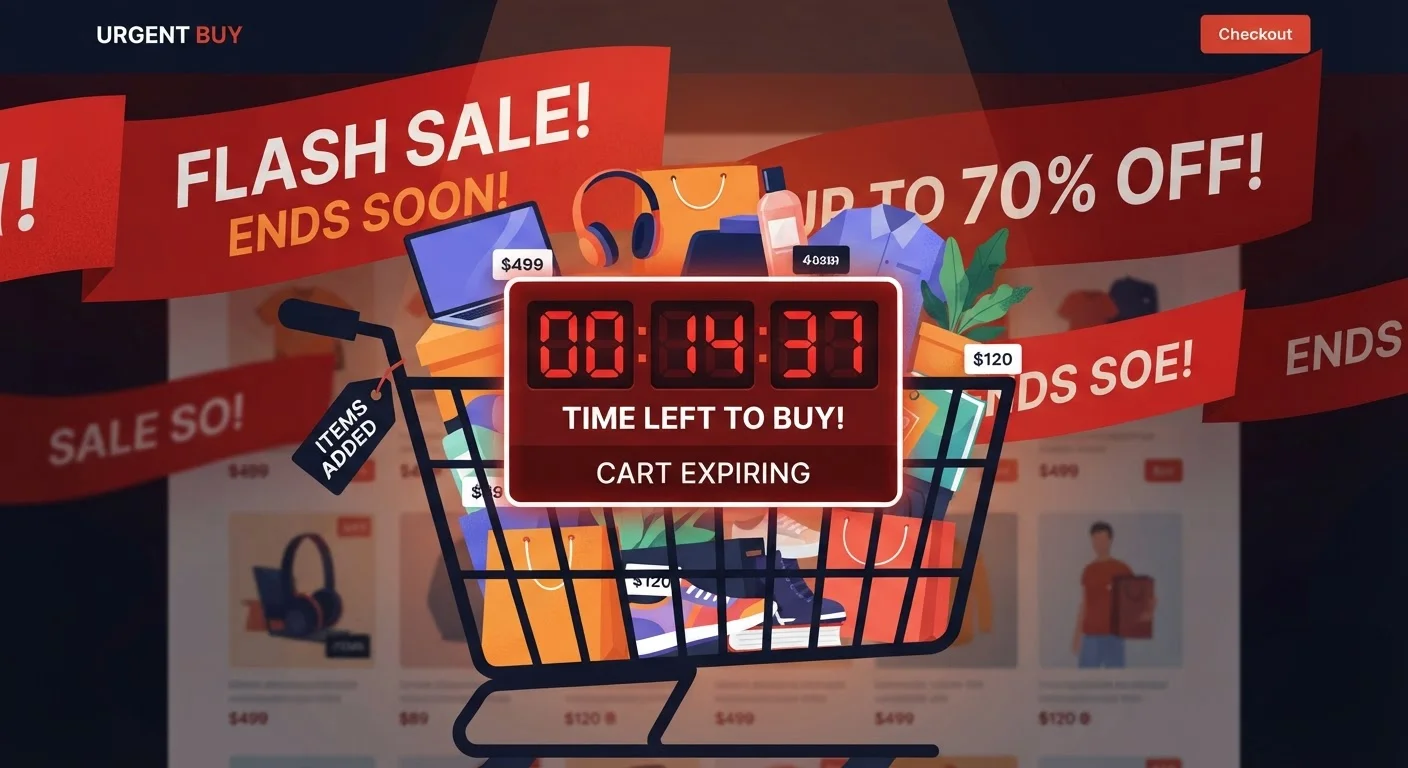
The Flash Sale Illusion
Flash sales feel like a windfall - a limited window to grab something at a price that won't last. But the urgency is often the point. Retailers know that time pressure short-circuits deliberate thinking, nudging shoppers to act before they compare. The result: many "flash" prices aren't actually the lowest that item has ever been.
This isn't speculation. Investigative reporting and consumer advocacy research have repeatedly documented the practice of reference price inflation - temporarily raising a product's listed price before a sale event so the markdown looks steeper than it really is. The tactic is widespread across major retail categories including electronics, apparel, and home goods.
Understanding how these promotions are engineered is the first step toward shopping around them rather than falling for them. See our guide to anchoring tactics for a deeper look at how crossed-out prices manipulate perception.
Myth
If a retailer says it's a flash sale, the price must be unusually low - they wouldn't run a sale on a normal price.
Fact
Retailers are not legally required to ensure flash sale prices represent a genuine reduction from a sustained prior price in all jurisdictions, and some commonly inflate reference prices beforehand.
The assumption that a labeled "sale" has a legal floor is understandable, but regulations governing reference pricing vary significantly by state and country, and enforcement is inconsistent. Consumer protection agencies in several U.S. states have taken action against retailers for deceptive reference pricing, but the practice remains common. The label alone carries no guarantee of genuine savings.
Myth
A countdown timer means the deal is truly expiring - if you don't buy now, you'll miss it.
Fact
Countdown timers are a psychological urgency tool. Many "limited-time" prices reset or recur, and the same item frequently returns at an identical or lower price within days.
Time-limited displays are one of the most well-documented techniques in retail psychology, designed to trigger loss aversion - the fear of missing out on a saving. Research in behavioral economics consistently shows that artificial scarcity increases purchase likelihood regardless of actual value. Stepping away and checking back in 48 hours often reveals the "expired" price is still available.
Myth
Major retail sale events like annual shopping holidays are the cheapest time to buy most products.
Fact
Price tracking data shows that for many product categories, prices during major sale events are no lower - and sometimes higher - than prices recorded in less-hyped periods.
Analysis of historical price data across consumer electronics, appliances, and apparel categories has repeatedly shown that high-profile sales events produce mixed results. Some items do hit genuine lows; many do not. The categories most likely to see authentic discounts shift year to year. Checking price history for each specific item rather than assuming the event delivers across-the-board value is the only reliable approach.
Myth
The 'original price' shown next to a sale price is what the item normally costs.
Fact
The crossed-out 'original' figure is set by the retailer and may reflect a price the item was listed at only briefly or never widely sold at.
This is a textbook anchoring technique: a high reference number is displayed alongside a lower price to make the gap feel like savings. Consumer advocates and regulatory bodies have challenged inflated reference prices in court, with some retailers settling cases over misleading markup-then-markdown practices. The figure shown as "original" is a framing device - the only meaningful comparison is to the item's actual price history over time.
What the Data Actually Shows
Price tracking tools - browser extensions and dedicated websites that log historical prices across major retailers - consistently reveal a pattern: prices often rise in the days or weeks before a major sale event, then drop to a figure that is positioned as a steep discount but may sit right at or above the item's average year-round price.
~60%
Flash sale prices not at a true low
Analysis of retail pricing data by consumer advocacy researchers has found that a substantial majority of items promoted during major sale events were available at the same or lower price at other points in the year.
2-3 weeks
Typical pre-sale price inflation window
Price tracking tools frequently show products experiencing a price increase in the two to three weeks leading up to a major promotional event before being marked down as a 'sale'.
A practical implication: an item listed at "40% off" during a flash sale may have been available at the same price - or lower - during an unremarkable Tuesday two months prior. Without a price history check, there's no way to know.
For a structured approach to verifying deals before committing, the Deal Hunter's Checklist walks through exactly how to confirm price history, evaluate return policies, and sidestep impulse traps.
Chasing Sales Can Cost More Than It Saves
Buying items specifically because they're on sale - rather than because you needed them - is one of the most common ways promotional events quietly drain budgets. Even a genuine discount on something you wouldn't have purchased otherwise is a net cost, not a saving. See Deal Hunting Habits That Cost More Than They Save for the specific patterns to watch for.
How to Spot a Genuine Deal
Separating real discounts from manufactured urgency comes down to a few repeatable habits:
- Check price history first. Before responding to any sale, look up the item's price history using a reputable tracking tool. If the current "sale" price matches or exceeds the historical average, the discount is largely cosmetic.
- Ignore the original price anchor. The crossed-out figure next to a sale price is a reference point chosen by the retailer - it may not reflect what anyone actually paid. Focus on the absolute price and compare it to historical data, not to the retailer's suggested original.
- Wait when you can. If an item isn't urgently needed, monitor its price across a few weeks. Many products cycle through genuine lows outside of high-profile events.
- Separate want from need. Flash sales frequently surface items you weren't already shopping for. Buying something you didn't need - even at a genuine discount - is still spending, not saving.
For a comprehensive framework covering timing, stacking, and verification strategies, The Complete Guide to Finding Genuine Deals Year-Round provides an end-to-end resource. And if you want to understand what a legitimately discounted price looks like at a structural level, The Anatomy of a Genuine Deal breaks down the mechanics of real markdowns versus promotional theater.
Flash sales will keep coming. The retailers running them have refined these techniques over many years. But with a price history check as a standing habit, the urgency becomes noise rather than signal - and the actual lowest price becomes something you can verify rather than guess at.
The content on this site is for informational purposes only and is not a substitute for professional advice. Always consult a qualified professional for guidance specific to your situation.