

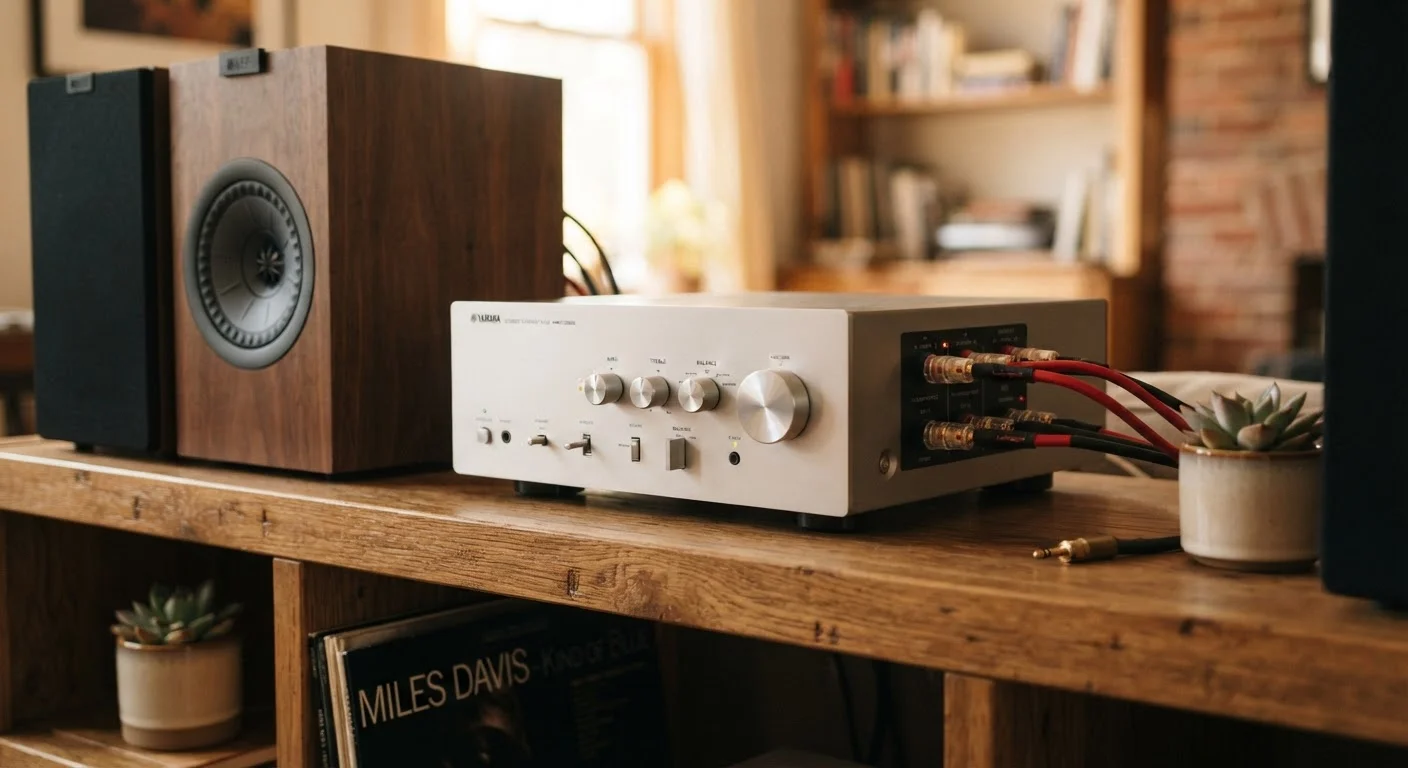
Why Audio Jargon Trips Up Even Experienced Shoppers
Shopping for speakers or a receiver means wading through spec sheets filled with terms like "impedance," "THD," and "sensitivity" - none of which come with built-in explanations. Even audiophile forums can leave newcomers more confused than informed.
This reference cuts through that noise. The terms below are the ones that come up most often when buying, setting up, or troubleshooting home audio gear. Whether you're starting from scratch or trying to make sense of a spec sheet, these definitions give you a working vocabulary without requiring an engineering degree.
For a broader orientation on how different systems compare, see how soundbars, bookshelf speakers, and home theater systems differ. And if you're newer to home audio overall, the beginner's guide to home audio walks through the full system picture before you spend anything.
Impedance
Measured in ohms (Ω), impedance is a speaker's resistance to electrical current from an amplifier. Common ratings are 4Ω, 6Ω, and 8Ω. Matching speaker impedance to your amplifier's rated output range is important - a mismatch can reduce sound quality or stress the amp.
Sensitivity
Expressed in decibels (dB), sensitivity measures how loud a speaker plays given one watt of power measured at one meter. A speaker rated at 90 dB is meaningfully louder per watt than one rated at 85 dB. Higher sensitivity speakers work well with lower-powered amplifiers.
Frequency Response
The range of sound frequencies a speaker or audio component can reproduce, stated in hertz (Hz) and kilohertz (kHz). Human hearing spans roughly 20 Hz to 20 kHz. A wider range doesn't automatically mean better sound - the consistency across that range matters just as much.
THD (Total Harmonic Distortion)
A percentage figure representing unwanted noise an amplifier or speaker adds to the original signal. Lower is better. Figures below 0.1% are generally considered inaudible under normal listening conditions.
Soundstage
A subjective term describing the perceived width, depth, and placement of instruments or voices in a stereo or surround mix. A wide soundstage makes audio feel spacious; a narrow one makes it feel compressed or flat.
Bi-wiring / Bi-amping
Bi-wiring uses two separate cable runs from one amplifier channel to a speaker's high- and low-frequency terminals. Bi-amping uses two separate amplifier channels to drive those terminals independently. Both techniques aim to reduce interference between the treble and bass circuits.
Crossover
A circuit - either inside a speaker (passive) or in an external component (active) - that splits an audio signal into frequency ranges and sends each to the appropriate driver: woofer for low frequencies, tweeter for high. Crossover quality significantly affects how coherent a speaker sounds.
Signal-to-Noise Ratio (SNR)
Measured in decibels, SNR describes how much louder the intended audio signal is compared to background noise. A higher SNR means cleaner, quieter audio. Figures above 90 dB are generally considered good for home audio use.
Stereo vs. Surround
Stereo systems use two channels (left and right) to create a front-focused listening field. Surround sound systems - such as 5.1 or 7.1 setups - add center, rear, and subwoofer channels to wrap sound around the listener, typically for home theater use.
Subwoofer
A dedicated speaker designed to reproduce very low frequencies, typically below 80-100 Hz. Adding a subwoofer to a system lets smaller satellite speakers focus on midrange and treble, often improving overall clarity as well as bass depth.
Room Acoustics
The way a room's size, shape, and surfaces - walls, floors, furniture - affect how sound behaves. Hard surfaces reflect sound and can cause echoes; soft furnishings absorb it. Room acoustics often influence perceived sound quality as much as the speakers themselves.
DAC (Digital-to-Analog Converter)
A DAC converts digital audio data - from a phone, streaming device, or computer - into the analog signal that amplifiers and speakers need to produce sound. Most receivers include a built-in DAC; dedicated external DACs are also available for those prioritizing audio quality from digital sources.
Key Specs You'll See on Every Speaker or Amp
Manufacturers list a core set of measurements on nearly every piece of audio equipment. Knowing what each one actually measures - and what it doesn't - keeps you from being misled by a single impressive-looking number.
| Typical speaker impedance range | 4Ω to 8Ω (Consumer electronics industry standard) |
| Average human hearing range | 20 Hz - 20 kHz (Established audiology reference) |
| Acceptable THD threshold (audibility) | Below 0.1% (General audio engineering benchmark) |
| Recommended minimum SNR for home audio | 90 dB or higher (Home audio industry convention) |
| Common subwoofer crossover point | 80 Hz (Dolby and THX reference standard) |
| Sensitivity difference that doubles perceived loudness | 10 dB (Psychoacoustics research consensus) |
A few things worth noting: sensitivity and impedance interact. A low-impedance speaker paired with an underpowered amplifier can sound thin or even damage the amp over time. Matching components thoughtfully matters more than chasing the highest wattage on paper.
Frequency response figures (e.g., "40 Hz - 20 kHz") describe the range a speaker can reproduce, but the flatness of that response - how evenly it handles frequencies across that range - is often more important than the range itself. Some manufacturers omit the tolerance figure (such as ±3 dB), which makes comparisons difficult. When in doubt, look for independent measurements from reputable audio review outlets rather than relying solely on manufacturer specs.
Once you're clear on these fundamentals, this planning checklist helps you apply them to your specific room and listening situation before committing to any gear.
The content on this site is for informational purposes only and is not a substitute for professional advice. Always consult a qualified professional for guidance specific to your situation.