

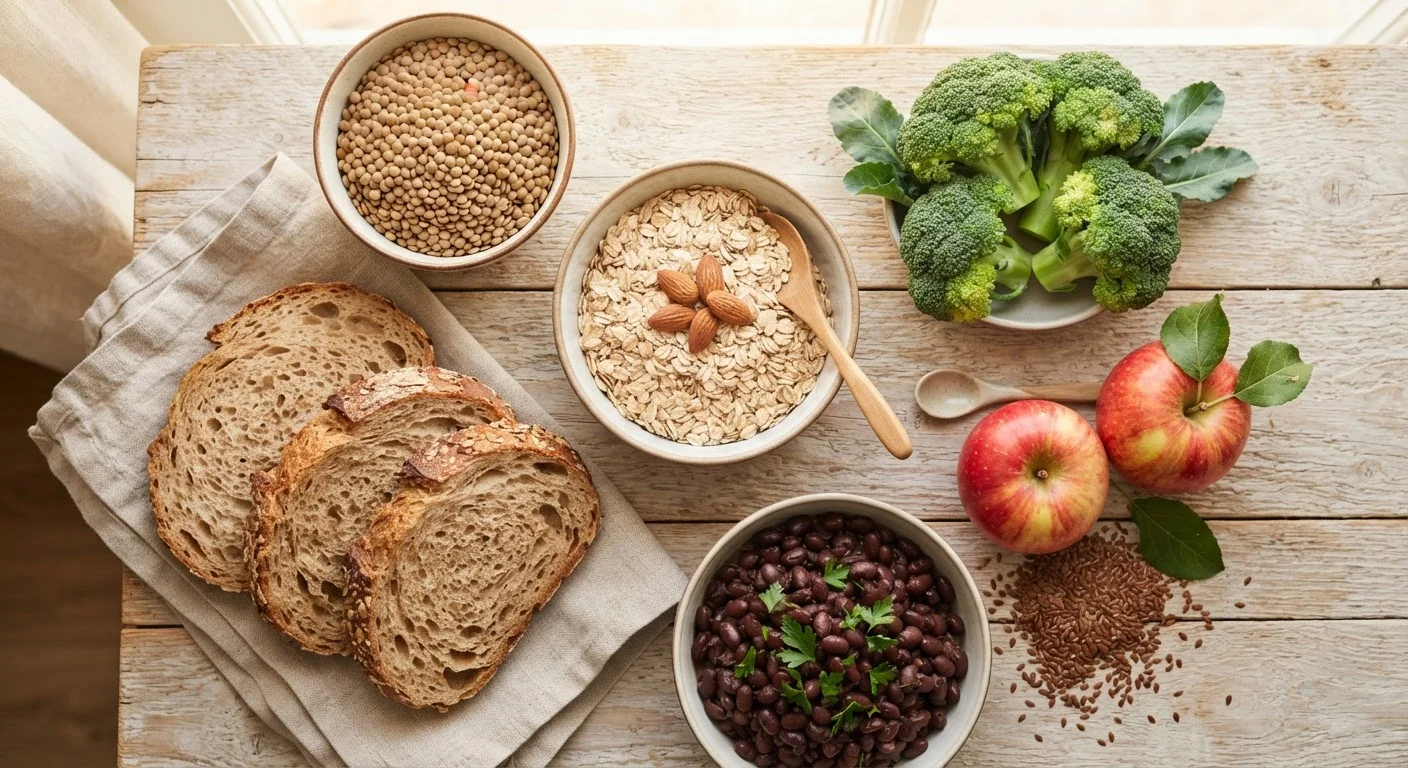
Why Most Americans Come Up Short
Dietary fiber is one of the most studied nutrients in nutrition science, and its benefits are well-established. Yet surveys consistently show that the average American adult consumes roughly half the daily amount health authorities recommend. The gap isn't due to a lack of fiber-rich foods - it reflects a food supply heavily weighted toward refined grains, processed snacks, and fast food, all of which strip away the fiber naturally present in whole ingredients.
~15g
Average daily fiber intake for U.S. adults
According to dietary intake data from the USDA, most American adults consume only about 15 grams of fiber per day - well below recommended levels.
25-38g
Recommended daily fiber intake for adults
The Dietary Guidelines for Americans and the Academy of Nutrition and Dietetics both recommend 25 grams per day for women and 38 grams for men.
~90%
Americans who fall short of fiber recommendations
Analyses of national dietary surveys suggest that the vast majority of Americans do not consistently meet recommended fiber intake levels.
Understanding what fiber actually does - and why both its types matter - is one of the more practical steps a person can take toward better long-term health. For a broader look at how nutrients like this appear on food packaging, see our guide to reading a nutrition label.
Soluble vs. Insoluble Fiber: Two Different Jobs
Fiber is not a single substance - it is a category that includes many different plant compounds. The two main classifications help explain why varied fiber intake matters:
- Soluble fiber dissolves in water and forms a gel-like material in the digestive tract. This slows the absorption of sugar and has been shown to help support healthy cholesterol levels. Good sources include oats, barley, apples, citrus fruits, beans, and flaxseeds.
- Insoluble fiber does not dissolve in water. It adds bulk to stool and speeds transit time through the colon, which supports regularity and may reduce the risk of constipation and related conditions. Whole wheat products, nuts, cauliflower, and the skins of many vegetables are rich sources.
Most whole plant foods deliver a combination of both types, which is one reason emphasizing whole foods over isolated fiber supplements tends to produce broader health benefits.
Start Low, Go Slow With Fiber
If your current diet is relatively low in fiber, adding large amounts too quickly can cause bloating, cramping, or excessive gas. Nutrition experts generally suggest increasing fiber intake gradually over several weeks. Pairing increased fiber with adequate water intake - typically at least 8 cups per day - helps the digestive system adjust comfortably.
The Health Evidence Behind Fiber
The research base connecting dietary fiber to health outcomes is among the most consistent in nutritional science. Higher fiber intakes are associated with reduced risk of cardiovascular disease, type 2 diabetes, colorectal cancer, and all-cause mortality across multiple large observational studies. While observational data cannot prove direct causation, the consistency and scale of this evidence has led major health organizations to recommend fiber-rich diets.
“Dietary fiber intake provides many health benefits. However, average fiber intakes for US children and adults are less than half of the recommended levels. Individuals with high intakes of dietary fiber appear to be at significantly lower risk for developing coronary heart disease, stroke, hypertension, diabetes, obesity, and certain gastrointestinal diseases.”
— James W. Anderson et al., Authors, peer-reviewed review published in Nutrition Reviews
Fiber also plays a direct role in gut health. Soluble fibers serve as a food source for beneficial gut bacteria - a process called fermentation that produces short-chain fatty acids with anti-inflammatory properties. For more on how fiber connects to the gut microbiome, see our article on the role of gut health in overall nutrition.
It's worth noting that fiber is just one piece of a broader nutrient picture. Understanding nutrient density can help frame why fiber-rich whole foods tend to outperform highly processed alternatives in nearly every category.
Practical Ways to Increase Fiber Intake
Closing the fiber gap doesn't require a diet overhaul. A few consistent swaps and additions across the day can meaningfully raise total intake:
- Choose whole grains over refined grains. Whole wheat bread, brown rice, and oats retain the fiber-rich bran and germ that processing removes.
- Add legumes regularly. Lentils, chickpeas, black beans, and kidney beans are among the most fiber-dense foods available and work in soups, salads, and grain bowls.
- Eat fruit whole rather than juiced. Juicing removes most of the insoluble fiber. A whole apple or pear delivers significantly more fiber than the same fruit in juice form.
- Leave skins on where appropriate. Potato skins, apple peels, and zucchini skins are legitimate fiber sources that often get discarded unnecessarily.
- Increase gradually. Adding large amounts of fiber too quickly can cause bloating or gas. Spacing increases over several weeks and drinking adequate water helps the digestive system adapt.
This article is for general informational and educational purposes only and is not a substitute for professional medical or dietary advice. Consult a qualified healthcare provider or registered dietitian for guidance tailored to your individual health needs.
Frequently Asked Questions
General dietary guidelines suggest adults need roughly 25 to 38 grams of fiber per day, depending on age and sex. Most Americans average around 15 grams daily - well below that target. Individual needs can vary, so speaking with a registered dietitian is helpful for personalized guidance.
Soluble fiber dissolves in water and forms a gel that can slow digestion, help manage blood sugar levels, and support healthy cholesterol. Insoluble fiber does not dissolve and adds bulk to stool, helping food move through the digestive tract more efficiently. Both types are important, and most fiber-rich foods contain a combination.
It is possible to experience discomfort - including bloating, gas, or cramping - if fiber intake increases too quickly or far exceeds typical amounts. Drinking adequate water and adding fiber gradually tends to reduce these effects. Extremely high fiber intake from supplements may interfere with absorption of certain nutrients, which is one reason food sources are generally preferred.
Fiber supplements typically contain isolated fibers such as psyllium husk or inulin, which can offer some of the same benefits as food fiber. However, whole plant foods deliver fiber alongside vitamins, minerals, and phytonutrients that supplements lack. Most nutrition authorities recommend prioritizing food sources first.
Cooking softens plant cell walls and can slightly reduce certain fiber components, but most dietary fiber survives typical cooking methods reasonably well. Steaming, boiling, or roasting vegetables still leaves meaningful amounts of fiber intact. Heavily processed or refined plant foods are the main source of fiber loss, not home cooking.
The content on this site is for informational purposes only and is not a substitute for professional advice. Always consult a qualified professional for guidance specific to your situation.