

The Purchase Price Is Just the Entry Fee
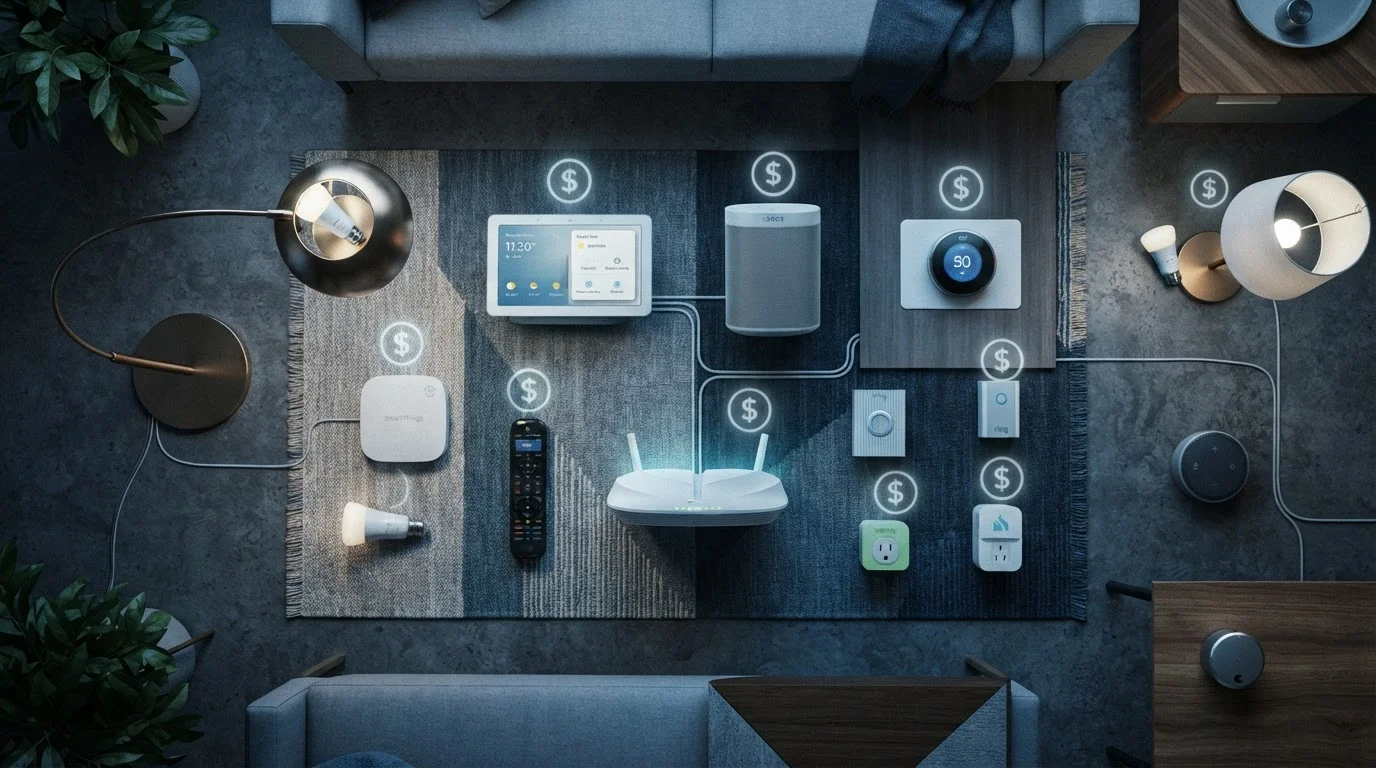
When most people budget for a smart home setup, they tally up device prices and call it done. That math is almost always wrong. The real cost of a connected home accumulates quietly - through monthly fees, idle electricity consumption, and hardware churn that manufacturers rarely advertise up front.
Understanding what you're actually signing up for financially is the first step toward building a smart home that doesn't quietly drain your budget. If you're still getting familiar with how these systems work, this plain-language overview of smart home technology is a solid starting point before diving into costs.
Ignoring standby power consumption from always-on devices.
Why it happens: Smart speakers, hubs, and bridges must stay connected to respond instantly, so they draw power continuously - a cost that's invisible until you see the electricity bill.
Underestimating how many features will eventually move behind a subscription paywall.
Why it happens: Manufacturers launch devices with full feature sets, then introduce subscription tiers later - often after you're already dependent on the platform.
Building an ecosystem around a hub or bridge that gets discontinued.
Why it happens: Smart home hardware has shorter support lifecycles than most buyers expect. A hub discontinued without a software update can render dozens of connected devices non-functional.
Failing to account for ecosystem lock-in when replacing a single device.
Why it happens: Smart home devices often communicate using proprietary protocols, meaning a new thermostat or hub from a different brand won't integrate cleanly with existing devices.
Overlooking the cumulative cost of multiple low-fee subscriptions across devices.
Why it happens: A $3/month video storage plan here, a $5/month security monitoring add-on there - each feels negligible, but five or six of these add up to meaningful annual spending.
The Numbers Behind the Habits
The costs outlined above aren't hypothetical - they reflect real patterns in how smart home ecosystems are designed and monetized. Manufacturers increasingly treat hardware sales as the beginning of a revenue relationship, not the end of it.
~$200/yr
Estimated standby electricity cost for a typical smart home
Lawrence Berkeley National Laboratory research has documented that always-on networked devices collectively contribute a significant share of residential electricity consumption.
3-5 years
Typical smart home hub software support window
Industry analysts generally observe that smart home hubs and bridges receive active firmware updates for roughly three to five years before being phased out by manufacturers.
$10-$30/mo
Average subscription spend for a multi-device smart home
Consumer surveys on connected home spending suggest households with cameras, smart security, and cloud-storage features commonly pay between $10 and $30 monthly in recurring fees.
This mirrors broader trends in consumer tech. The same subscription-creep dynamic plays out in freemium app models and even in automotive feature subscriptions - where access to capabilities you assumed you owned gets moved behind a paywall.
Before expanding your setup, it's worth auditing what you're already paying. Check your app store subscriptions, count how many smart plugs or hubs are drawing power around the clock, and confirm whether the platforms you rely on still receive software updates. The smart home devices hub covers a wide range of connected home categories if you're comparing options.
Platform Shutdowns Can Brick Your Devices
When a smart home platform shuts down or discontinues cloud services, devices that depend on it for core functions can stop working entirely - even locally. This has happened with several well-known platforms in recent years. Before building a large setup around any single ecosystem, verify that the platform supports local processing or open standards so your devices can function without an active cloud connection.
Renters face a version of this too - investing in a smart home setup only to discover certain devices can't be removed cleanly or lose functionality when you move. See what renters can install without permanent changes for practical guidance on portable setups.
A balanced look at whether smart home investment pays off overall - including energy and convenience benefits alongside costs - is covered in this honest assessment of smart home automation. And if you want to stretch your smart home budget further, these smart budgeting strategies apply directly to planning connected home purchases.
The content on this site is for informational purposes only and is not a substitute for professional advice. Always consult a qualified professional for guidance specific to your situation.