

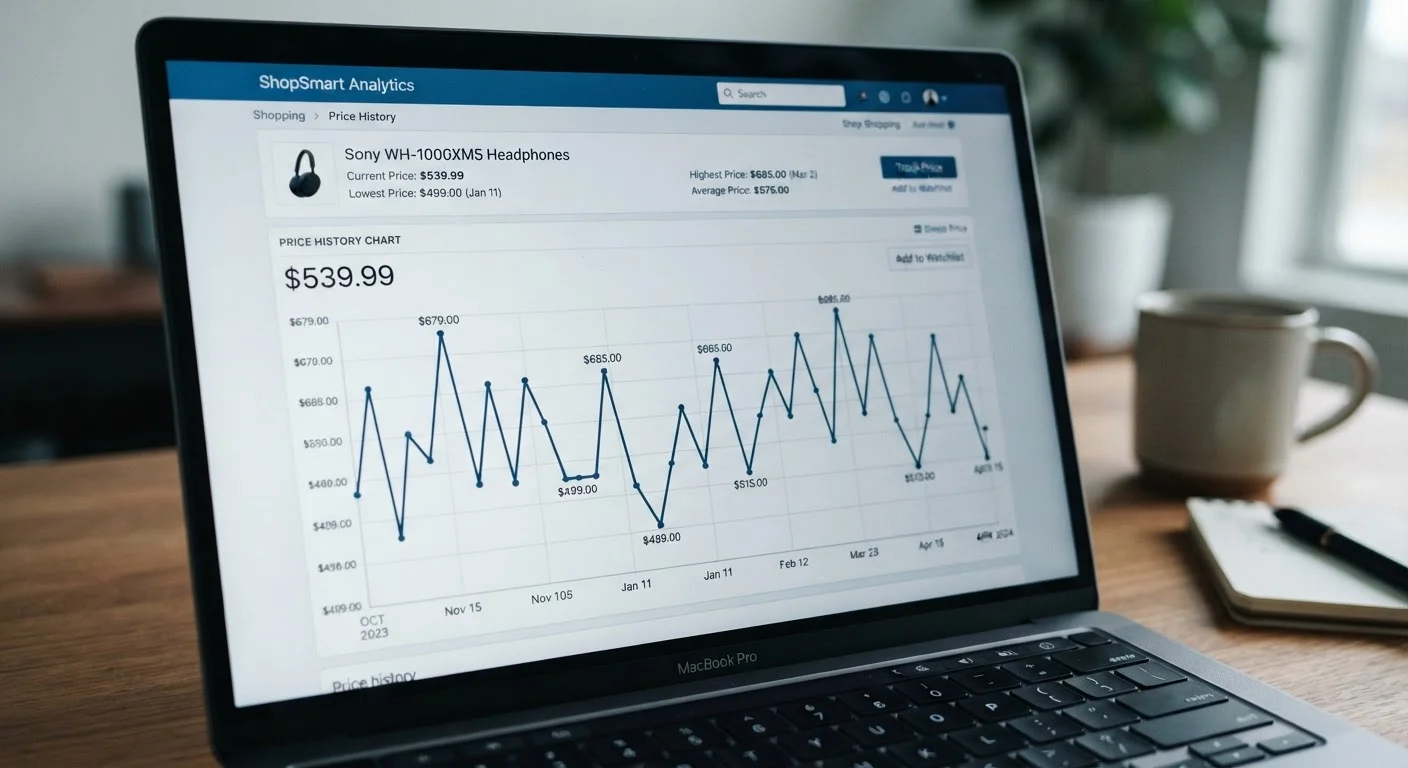
Why Price History Changes Everything
A retailer's current price tag tells you only what you'd pay today - it tells you nothing about whether that price is fair, inflated, or genuinely reduced. Price history charts fill that gap by showing how a product's price has moved over weeks, months, or years. That context transforms a gut-feel purchase decision into one grounded in data.
Understanding how to read these charts is a core skill for any shopper. It connects directly to the broader question of what actually makes a discount real, and it's foundational to confident product research before any significant purchase.
Inflated "Original" Prices Are Common
Retailers sometimes raise a product's listed price days or weeks before a sale, making the subsequent markdown appear larger than it really is. Price history data exposes this tactic immediately. If the "original" price is higher than anything recorded in the past six months, treat the claimed discount with skepticism.
The walkthrough below takes most shoppers under 15 minutes the first time and under two minutes once the habit is established.
Tools and Setup
You don't need paid software or a subscription. Free browser extensions and standalone price-tracking websites cover the vast majority of major U.S. retailers. Here's what to have ready before you start:
What you will need
Browser-based price tracker extension
Displays a price history chart directly on a retailer's product page so you can see trends without leaving the site.
Standalone price history website
Allows you to search any product across multiple retailers and compare historical pricing data side by side.
Retailer wishlist or cart
Saves the product so you can return quickly once price alerts fire or a seasonal dip arrives.
Step-by-Step: Reading the Chart
Set a Price Alert at the Floor, Not the Current Price
Most price-tracking tools let you configure alerts for a specific target price. Set yours at or just above the historical floor - the lowest recorded price - rather than a percentage off today's listing. That way you'll be notified when the product reaches a genuinely competitive price, not just any downward move.
Don't Rely on a Single Data Source
Different price-tracking tools pull data from different retailers and at different intervals. A chart from one tool may show gaps or miss a lower price found elsewhere. Cross-referencing two tools takes only a minute and gives you a more complete picture.
Putting It Into Practice
The goal isn't to hunt for the absolute lowest price that has ever existed - it's to avoid paying significantly above a product's fair market value. A price at or near the historical average is often perfectly reasonable, especially when timing, availability, or your personal need factor in.
For a broader framework on timing purchases by category and stacking this analysis with other deal-finding strategies, the Complete Guide to Finding Genuine Deals Year-Round is a useful next read. If you're working within a tighter budget, smart budgeting resources can help you decide when waiting for a price drop makes financial sense versus when buying now at a fair price is the smarter call.
The content on this site is for informational purposes only and is not a substitute for professional advice. Always consult a qualified professional for guidance specific to your situation.