

Our Verdict
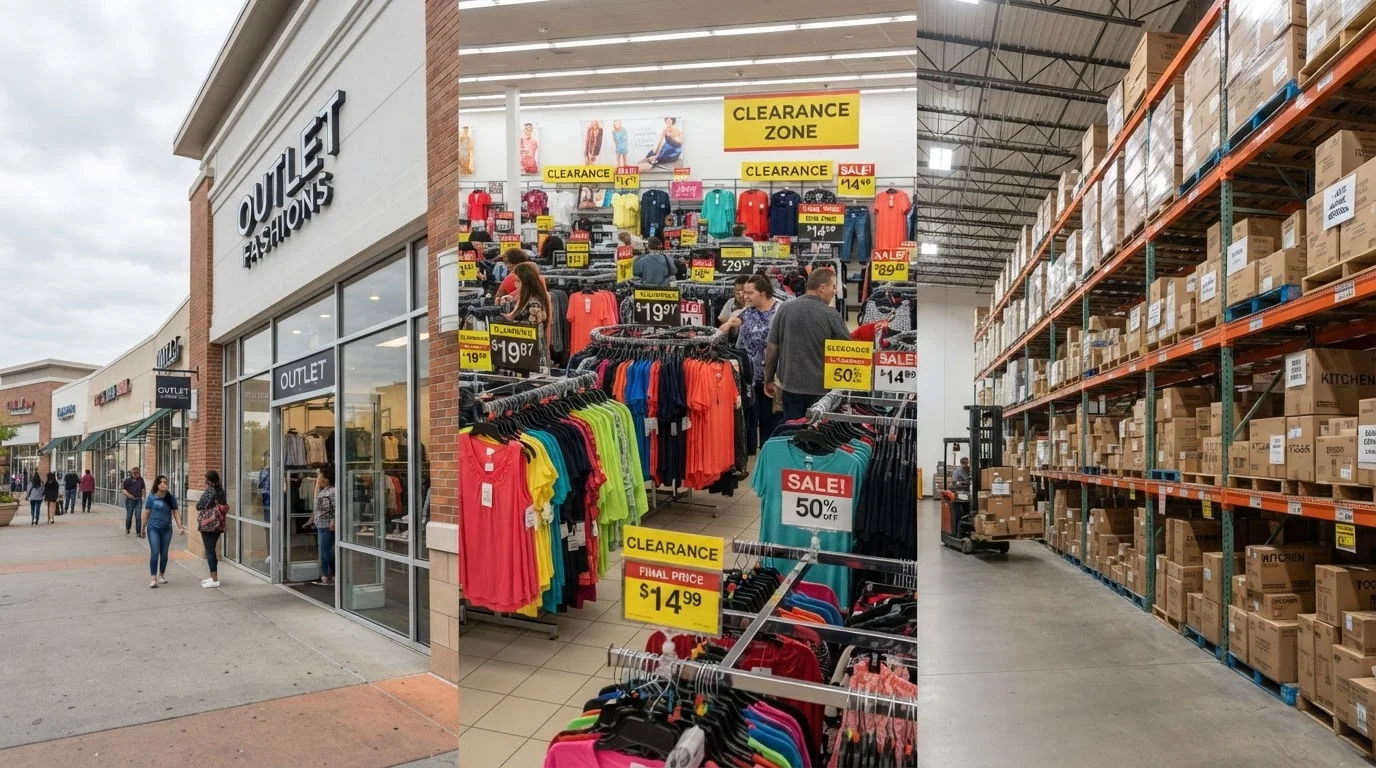
Clearance sections tend to offer the most straightforward value - you know exactly what the product is and what it originally sold for. Outlet stores can still deliver savings, but only if you verify whether the item is outlet-made or mainline inventory. Overstock sites require the most due diligence given variable product condition and sourcing opacity.
| Best for | Recommended |
|---|---|
| Shoppers who want confirmed retail merchandise at a reduced price | Clearance Sections |
| Brand-loyal buyers willing to inspect product origins carefully | Outlet Stores |
| Flexible buyers comfortable with variable condition and patient enough to research | Overstock Sites |
The Core Difference: Where the Inventory Comes From
All three channels advertise lower prices, but the merchandise behind those prices has very different histories - and that history determines both quality and actual value.
Outlet stores were originally a way for brands to move excess mainline inventory. That model largely shifted decades ago. Today, industry research and consumer reporting consistently show that a substantial portion of outlet merchandise - particularly in apparel and housewares - is manufactured specifically for outlet stores, with cost-engineered materials and construction. The item never existed in the full-price retail store. This isn't inherently bad, but it means the implied markdown from a "compare at" price can be misleading.
Clearance sections are the most transparent channel. These are items the retailer genuinely stocked, priced, and is now discounting to clear shelf or warehouse space - typically at the end of a season, after a product discontinuation, or when new inventory is arriving. The markdown reflects a real price reduction from a price that real customers paid.
Overstock sites source inventory through several routes: canceled wholesale orders, customer returns processed and resold, shelf pulls from retailers, and liquidation lots. The result is a highly mixed bag. Some items are brand-new in original packaging; others are open-box returns that may or may not have been inspected or refurbished. The discount is real, but so is the uncertainty.
Understanding these distinctions is step one. For a broader framework on evaluating whether any discount is genuine, see how to identify real markdowns vs. manufactured ones.
Comparing the Three Channels Side by Side
The table below summarizes how outlet stores, clearance sections, and overstock sites stack up across the criteria that matter most to a careful shopper.
| Outlet Stores | Clearance Sections | Overstock Sites | |
|---|---|---|---|
| Primary inventory source | Outlet-made or excess mainline stock | End-of-season or discontinued retail stock | Returns, canceled orders, liquidation lots |
| Discount authenticity | Variable; "compare at" often unverifiable | High; real price from same retailer | Real but context-dependent on condition |
| Product condition | New; outlet-made quality may differ | New; possible floor wear | Ranges from new to used or refurbished |
| Return policy reliability | Generally standard | Often stricter on clearance items | Frequently restrictive or has fees |
| Warranty coverage | Typically intact | Typically intact | Often limited or voided |
| Product consistency | Steady supply of outlet lines | Low; stock is finite and declining | Unpredictable; varies by listing |
| Research effort required | Moderate | Low | High |
A few of these rows deserve extra context. Return policy is where shoppers frequently get caught off guard - overstock sites in particular often have restrictive return windows or charge restocking fees. Always read the policy before purchasing.
Product consistency matters if you're buying multiples or replenishing something you already own. Clearance is the least consistent (by definition, stock is finite and shrinking), while outlet stores maintain steadier supply of their outlet-made lines.
One Quick Check That Pays Off
Before buying from any of these channels, search the exact product name or model number alongside the word "review" or "vs outlet version." Consumer forums and review sites frequently document differences between outlet-made and mainline products, or flag condition issues common to specific overstock listings. Two minutes of research can prevent a frustrating return.
Red Flags and What to Check Before You Buy
Each channel has its own set of pitfalls worth scanning for before committing.
At Outlet Stores
- Look for a label or tag indicating whether the item was made for the outlet or carried in full-price stores. Some brands print a small code or note on care labels.
- Compare construction details - stitching, hardware weight, fabric thickness - against the brand's mainline products if you have access to them.
- "Compare at" pricing is not regulated as a reference to any specific transaction and carries no legal guarantee that anyone paid that price.
At Clearance Sections
- Inspect the item carefully - clearance merchandise is often the last of its kind and may have handling wear from the sales floor.
- Verify the return policy, which sometimes differs from the store's standard policy for clearance items.
- Confirm the item isn't being discontinued due to a safety recall or quality issue, especially for electronics or juvenile products.
At Overstock Sites
- Read the condition description precisely: "new," "manufacturer refurbished," "seller refurbished," and "used" carry meaningfully different implications.
- Check whether the warranty (manufacturer or otherwise) is still valid - returns and liquidation items often fall outside the original warranty.
- Research the seller's ratings and return policy independently, particularly on marketplace-style overstock platforms.
For a structured pre-purchase routine that works across all these channels, the Deal Hunter's Checklist walks through each verification step before you click buy. And if you're navigating multiple platforms at once, adapting your strategy by shopping channel covers how to shift your approach depending on where you're looking.
Getting the Most Value From Each Channel
Knowing the channel's inventory logic tells you how to shop it more effectively.
For outlet stores, the value proposition improves when you focus on categories where outlet-made construction matters less - basics, accessories, home goods - rather than technical or performance products where the material difference between mainline and outlet versions is more consequential. Also, genuine overstock from mainline stores does appear at outlets; the key is learning to identify it.
For clearance sections, timing is everything. Early in a clearance cycle, selection is good but discounts are modest. Late in a cycle, discounts deepen but inventory is picked over. If you're flexible on color or size, waiting tends to reward you. Planning purchases around predictable clearance cycles is a practical budgeting tactic worth building into your routine.
For overstock sites, the channel rewards patience and specificity. Search for specific model numbers rather than browsing categories, and cross-reference the listed condition against the manufacturer's description of what refurbished or certified pre-owned actually means for that brand. The more research you do upfront - including checking specs carefully, since identical specs don't always mean identical products - the more likely you are to come away with genuine value rather than a headache.
This article is for general informational purposes only and does not constitute financial or purchasing advice tailored to your individual situation.
The content on this site is for informational purposes only and is not a substitute for professional advice. Always consult a qualified professional for guidance specific to your situation.