

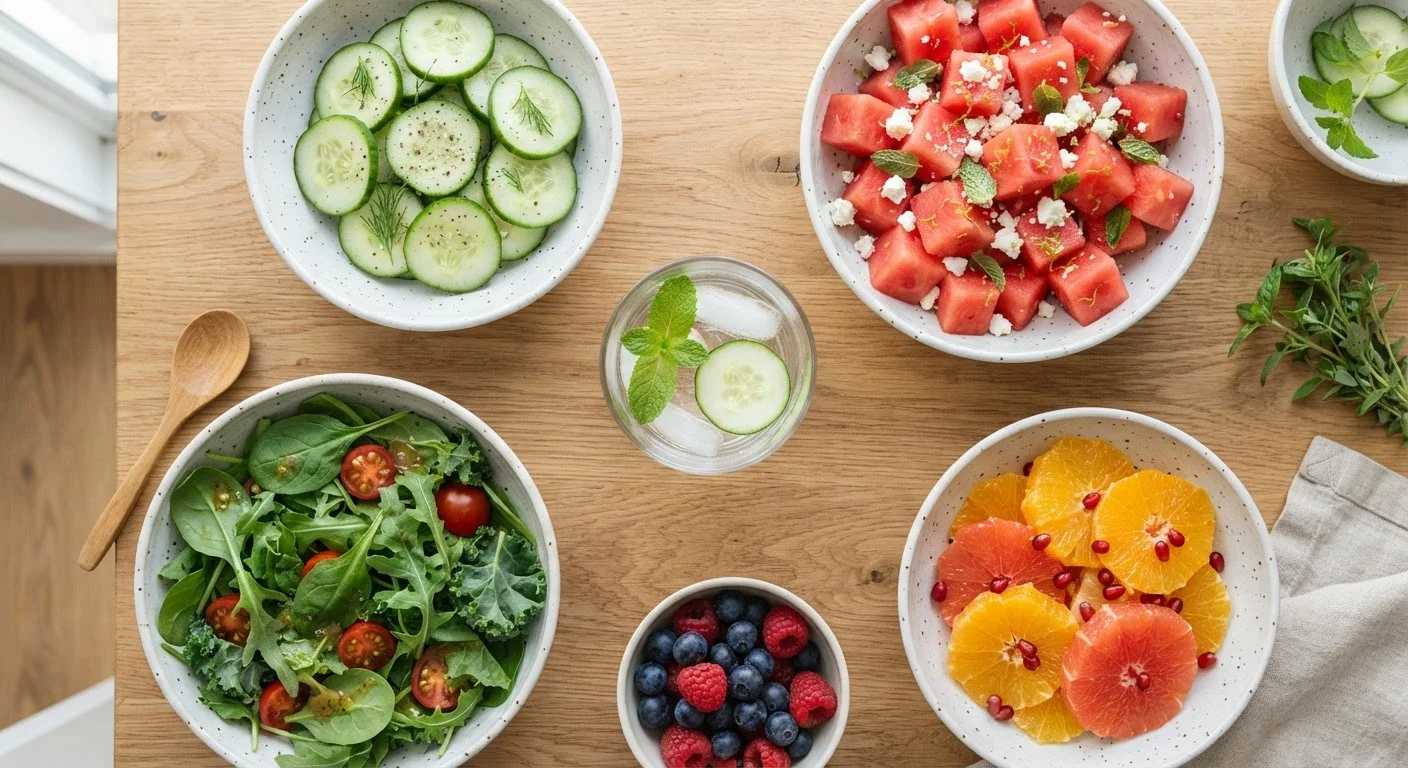
Your Plate Is Part of Your Water Supply
Most hydration advice centers on a single habit: drink more water. That guidance is sound, but it overlooks a significant source of daily fluid - the food on your plate. Research consistently shows that food accounts for roughly 20% of total daily fluid intake for most adults, with that proportion climbing higher when diets are rich in fruits and vegetables.
Some of the most water-dense foods are everyday staples. Cucumbers, iceberg lettuce, celery, and tomatoes are all more than 90% water by weight. Watermelon, strawberries, oranges, and cantaloupe aren't far behind. Even foods that don't taste particularly watery - like cooked oatmeal or yogurt - contribute meaningfully to your fluid total. Understanding this helps shift how you think about hydration: it's a dietary pattern, not just a drinking habit.
~20%
Daily fluid intake from food
According to the U.S. National Academies of Sciences, Engineering, and Medicine, roughly 20% of daily water intake comes from food for most adults.
96%
Water content of cucumber
Cucumbers are among the most water-dense foods available, making them an effective hydration-supporting snack.
3,400 mg
Average daily sodium intake for U.S. adults
The CDC estimates average American sodium intake significantly exceeds the 2,300 mg daily limit recommended in the Dietary Guidelines for Americans.
Sodium: The Hydration Disruptor Hidden in Processed Foods
Sodium is essential - it helps regulate fluid distribution across cells and supports nerve and muscle function. But the typical American diet delivers far more sodium than the body needs, largely through processed, packaged, and restaurant foods. When sodium intake is consistently high, fluid balance is disrupted in ways that aren't always obvious.
Here's the basic mechanism: sodium draws water out of cells through osmosis and triggers thirst to restore balance. The kidneys then work to excrete the excess, which increases urine output. Over time, habitual high-sodium eating can create a cycle of fluid retention followed by increased loss. For practical context, check the sodium content on packaged products - see our guide to reading nutrition labels for help decoding those numbers.
Pairing sodium awareness with adequate potassium intake matters here. Potassium - found in bananas, sweet potatoes, and leafy greens - works alongside sodium to maintain proper cell fluid balance. Diets low in potassium and high in sodium tend to stress this system the most. If you're managing blood pressure, this relationship is especially relevant; sodium and fluid balance connect directly to hypertension risk.
Simple Swap to Reduce Sodium Impact
When grocery shopping, compare sodium levels across similar products - many brands vary widely. Choosing lower-sodium versions of canned goods, soups, and condiments can meaningfully reduce your daily sodium load without requiring major recipe changes. Rinsing canned beans and vegetables under water before cooking also removes a portion of added sodium.
Caffeine, Alcohol, and What They Actually Do to Fluid Levels
Two of the most widely consumed beverages in the U.S. - coffee and alcohol - raise frequent questions about dehydration. The evidence on each is more nuanced than popular belief suggests.
Caffeine: It does have a mild diuretic effect, meaning it prompts the kidneys to excrete slightly more fluid. However, multiple studies have found that moderate caffeine intake does not cause meaningful net fluid loss. The water content in a cup of coffee or tea largely compensates for any diuretic action. Problems are more likely with very high intake - well beyond typical daily consumption.
Alcohol: The picture is less forgiving here. Alcohol suppresses antidiuretic hormone (ADH), which normally tells kidneys to retain water. With less ADH, the kidneys excrete more fluid than they take in, contributing to the dehydration associated with alcohol consumption. Alternating alcoholic drinks with water is a practical mitigation strategy.
Hydration Needs Vary by Individual
Fluid requirements differ based on body size, activity level, climate, age, and health status. Pregnant and breastfeeding individuals, older adults, and people with certain medical conditions have specific hydration considerations that general guidance may not fully address. Always consult a healthcare provider if you have questions about your personal fluid needs.
Practical Ways to Let Food Boost Your Hydration
Once you understand how food and fluid balance interact, small, sustainable dietary shifts can improve your hydration without requiring constant water-tracking. Consider these evidence-grounded approaches:
- Anchor meals with produce. Vegetables and fruits at each meal contribute fluid as well as electrolytes like potassium and magnesium - both key to hydration at the cellular level.
- Favor broth-based soups. Soups are an underrated hydration vehicle, especially in colder months when cold water feels less appealing.
- Limit ultra-processed food frequency. These products tend to be high in sodium and low in water content - a combination that works against fluid balance.
- Monitor urine color as a simple check. Pale yellow indicates good hydration; dark yellow or amber suggests you need more fluid, from either food or drink.
If you follow patterns like intermittent fasting, it's worth considering how compressed eating windows affect fluid intake from food - our overview of intermittent fasting covers relevant hydration considerations. And because gut function affects how nutrients and fluids are absorbed, gut health plays a quieter but real role in hydration.
This article is for general informational and educational purposes only and does not constitute medical advice. Consult a qualified healthcare professional for guidance specific to your health needs.
Frequently Asked Questions
Foods can meaningfully supplement your fluid intake - some, like cucumbers and watermelon, are over 90% water. However, food alone cannot fully replace drinking water. A balanced approach using both food and beverages is the most practical way to stay hydrated.
Caffeine has a mild diuretic effect, meaning it can slightly increase urine output. However, research suggests that moderate caffeine intake - roughly 1 to 3 cups of coffee per day - does not cause net dehydration in most healthy adults. The fluid in caffeinated drinks largely offsets any diuretic effect.
Sodium draws water out of cells and signals the kidneys to retain or excrete fluid. Regularly consuming high-sodium foods can increase fluid needs and contribute to a cycle of thirst and water retention. Balancing sodium with adequate water and potassium-rich foods helps maintain equilibrium.
Fruits and vegetables with high water content - such as cucumbers, strawberries, lettuce, celery, and citrus - are among the most hydrating food choices. Soups and broths also contribute significantly to daily fluid intake. Prioritizing these as part of an overall balanced diet supports steady hydration.
Thirst is a useful signal, but it tends to appear after mild dehydration has already begun. Urine color is a more reliable day-to-day indicator - pale yellow generally suggests adequate hydration, while dark yellow or amber may indicate a need for more fluids. Consult a healthcare provider if you have persistent concerns.
The content on this site is for informational purposes only and is not a substitute for professional advice. Always consult a qualified professional for guidance specific to your situation.