

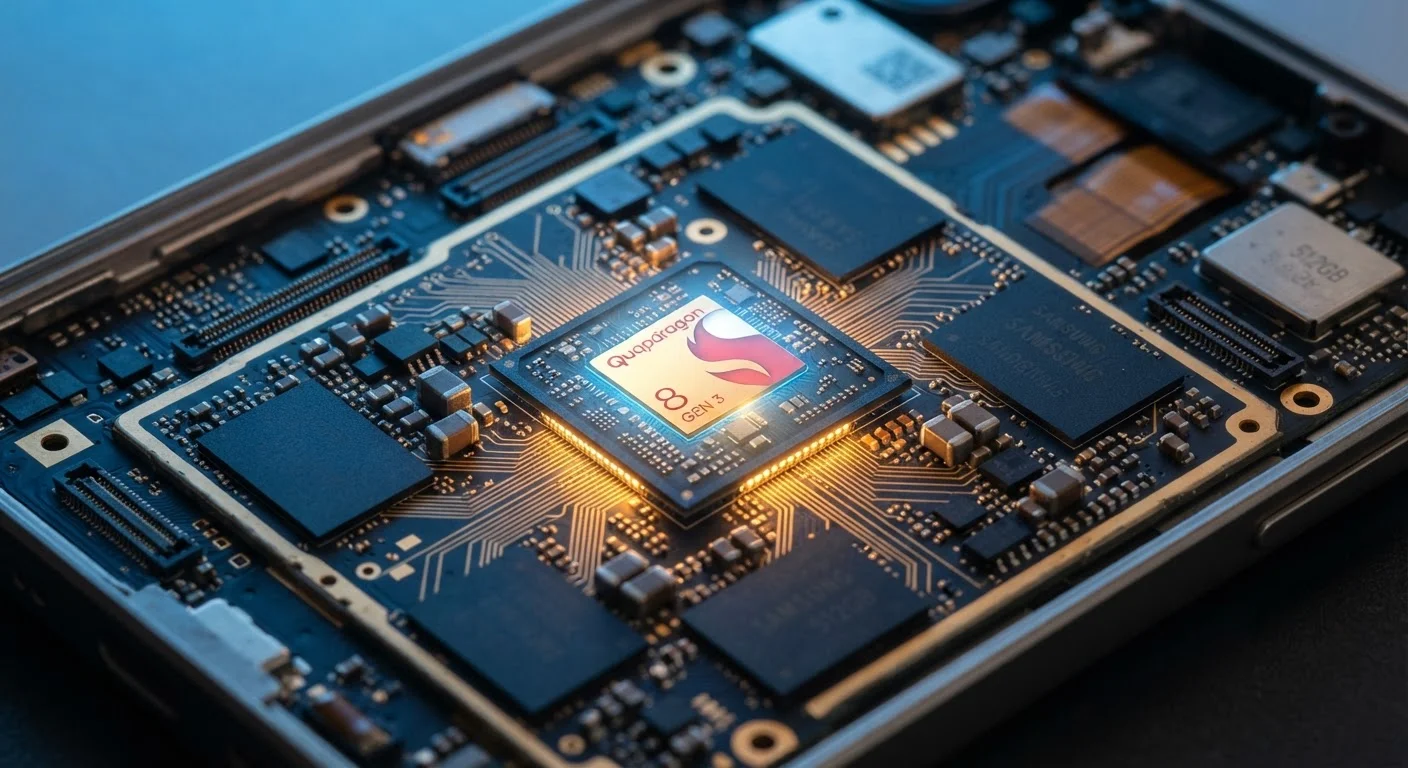
The GHz Number Is Just a Starting Point
When you see a processor listed as "3.2 GHz octa-core," you're getting a raw clock speed and a core count - but almost no context for what those numbers mean in your pocket. Clock speed (GHz) tells you how many instruction cycles a core completes per second. More cycles can mean more work done, but only if the chip's architecture is efficient enough to use those cycles productively.
Think of it like engine RPM in a car: high RPM doesn't guarantee fast acceleration if the transmission is inefficient. Two chips with identical GHz ratings but different designs can produce dramatically different results in real use.
For a broader look at how spec-sheet numbers translate to real-world value, see our guide to decoding product specifications.
~2-4
Cores actively used during typical tasks
Performance research consistently shows that common smartphone tasks like web browsing and messaging rarely engage more than a fraction of available cores simultaneously.
<7nm
Process node for most flagship mobile chips
Chips built on smaller process nodes (measured in nanometers) generally deliver better performance-per-watt, meaning more speed for less battery drain.
Core Count and Core Types: What Actually Distributes the Work
"Octa-core" means eight cores, but not all eight are created equal. Most modern mobile chips use a big.LITTLE or equivalent design: a cluster of high-performance cores handles demanding tasks, while a cluster of efficiency cores manages lighter work like checking notifications or playing music. The phone's software decides which cores handle which task automatically.
This design matters for two reasons. First, it extends battery life - your phone isn't spinning up its most powerful cores to load a text message. Second, it means a chip's peak GHz figure only applies to the performance cores, which activate only when truly needed.
Look for Sustained Performance, Not Just Peak Speed
When evaluating a phone's chip, look for independent benchmark results that test performance under sustained load - not just peak burst scores. A chip that maintains 90% of its peak speed after 15 minutes of gaming is more useful than one that peaks higher but drops sharply. Review sites that test thermal throttling give a more honest picture than spec sheets alone.
For most daily tasks - scrolling social feeds, watching video, sending emails - even mid-range chips are sitting largely idle. The performance gap between mid-range and flagship processors becomes tangible mainly in sustained gaming, 4K video recording, or running complex AI features.
Why Architecture and Efficiency Trump Raw Clock Speed
Chip architecture refers to how transistors and circuits are physically organized inside the processor. A newer architecture can accomplish more work per cycle than an older one running at higher clock speeds. This is why a chip built on a newer manufacturing process (measured in nanometers - smaller is generally more efficient) can outperform a larger, faster-clocked predecessor while using less power and generating less heat.
Heat is a critical, often overlooked factor. When a processor runs hot, it throttles - automatically lowering its speed to prevent damage. A chip that advertises 3.2 GHz might sustain only 2.5 GHz under a heavy gaming session. Phones with better thermal design (larger heat spreaders, vapor chambers) sustain peak performance longer, but this is rarely mentioned on a spec sheet.
What This Means When You're Choosing a Phone
Rather than fixating on GHz, consider what you actually do with a phone. Heavy tasks like video editing, high-frame-rate gaming, or running on-device AI tools genuinely benefit from a more powerful chip. Everyday use - browsing, streaming, navigation, photography - is well-served by processors that were considered mid-range just a generation ago.
Battery life and sustained performance are more meaningful everyday metrics than peak clock speed. A chip that runs cooler and more efficiently will feel snappier over a full day than a technically faster chip that throttles after 20 minutes of intensive use.
You might also consider how other components interact with the processor - how storage is being used affects how quickly apps load, since a processor waiting on slow storage can't perform at its rated speed regardless of its GHz rating.
This article is for general informational purposes. Performance experiences vary by device, software, and use case.
Frequently Asked Questions
Not necessarily. A chip with a slightly lower GHz rating but a newer architecture can outperform an older, higher-clocked chip. Efficiency, core design, and memory bandwidth all influence real-world speed.
Most everyday tasks - browsing, texting, streaming - use only one or two cores at a time. Additional cores matter most for multitasking, video editing, and gaming, where multiple processes run simultaneously.
Throttling is when a processor automatically reduces its speed to manage heat or preserve battery life. Even a chip rated for high clock speeds may throttle during sustained heavy use, resulting in lower actual performance.
For basic tasks like social media, calls, and email, mid-range chips perform nearly identically to flagship ones. The gap becomes more noticeable with demanding apps, gaming, or processing large files.
It's a processor layout that combines fast, power-hungry cores for demanding tasks with slower, efficient cores for light work. The phone automatically routes tasks to the appropriate cores, balancing performance and battery life.
The content on this site is for informational purposes only and is not a substitute for professional advice. Always consult a qualified professional for guidance specific to your situation.