

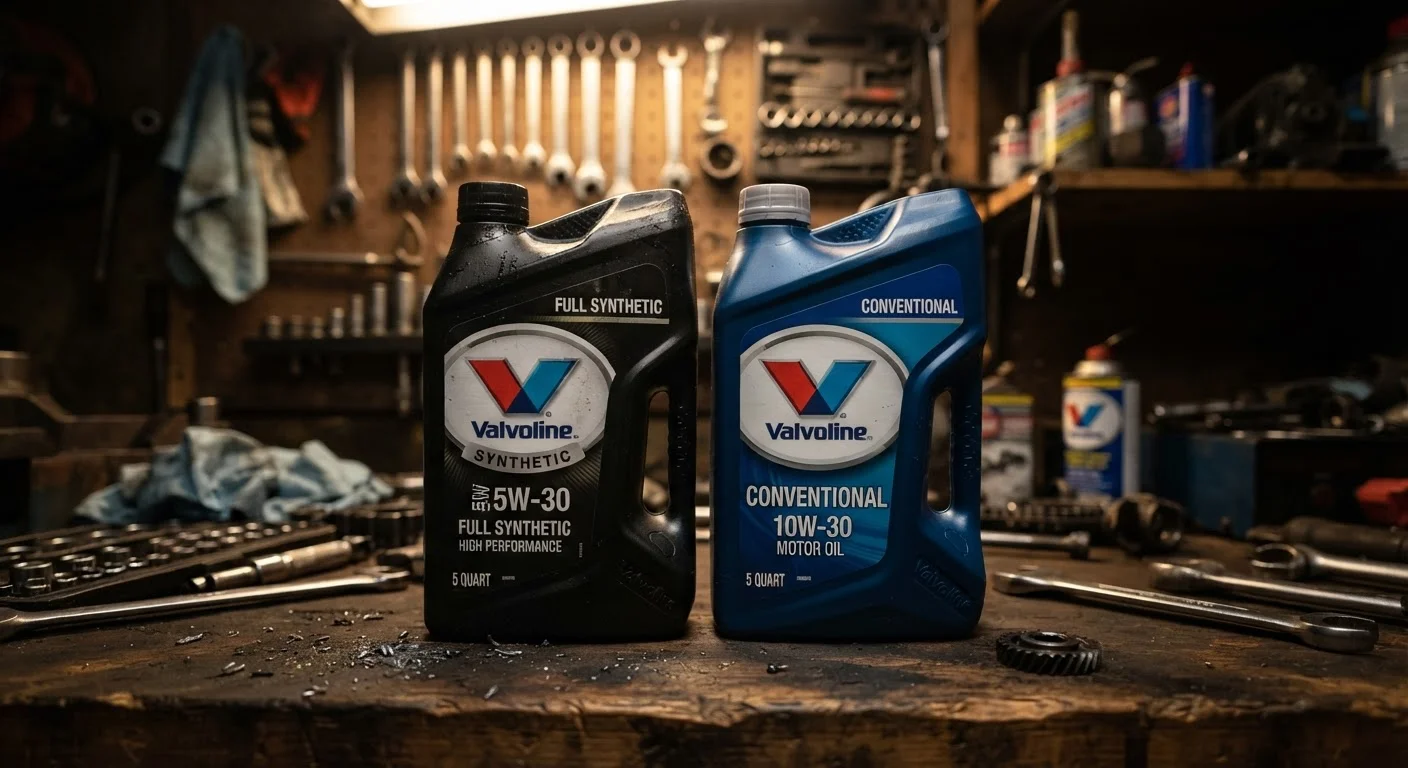
Option A
Synthetic Motor Oil
The engineered, high-performance choice.
Best for: Drivers with newer vehicles, turbocharged engines, extreme climates, or long intervals between oil changes.
Option B
Conventional Motor Oil
The time-tested, straightforward standard.
Best for: Owners of older vehicles with simple engines who follow frequent, regular oil change intervals.
How These Two Oils Are Actually Made
The fundamental difference between synthetic and conventional oil is how each is produced. Conventional motor oil is refined directly from crude petroleum. That refining process removes many impurities, but some irregular molecules remain - molecules that can break down under heat and pressure over time.
Synthetic oil, by contrast, is chemically engineered from the ground up. Base stocks are either synthesized from natural gas components or heavily processed crude, then built into uniform, highly stable molecules. The result is an oil with fewer impurities, more consistent viscosity behavior, and greater resistance to thermal breakdown.
There is also a middle category - synthetic blends - that mix conventional base stocks with synthetic compounds. These offer some performance advantages over full conventional oil at a lower price point than full synthetic.
For a broader look at all the fluids running through your vehicle, see this plain-English guide to your car's fluids.
| Criterion | Synthetic Oil | Conventional Oil |
|---|---|---|
| Base material | Chemically engineered molecules | Refined crude petroleum |
| Cold-weather flow | Excellent - flows quickly at startup | Slower - thickens in cold temperatures |
| Heat resistance | High - resists breakdown under stress | Moderate - degrades faster under heat |
| Typical change interval | 7,500-10,000+ miles (per manufacturer) | 3,000-5,000 miles |
| Cost per quart | Higher upfront cost | Lower upfront cost |
| Turbo engine suitability | Strongly recommended or required | Generally not recommended |
| Older/high-mileage engines | Often fine; consult a mechanic | Traditionally used; may still be specified |
Where the Performance Differences Show Up
In everyday driving, the gap between synthetic and conventional oil becomes most apparent in specific situations rather than across the board.
Cold starts: On a frigid morning, conventional oil thickens and flows more sluggishly through engine passages. Synthetic oil flows more readily at low temperatures, providing lubrication to critical components faster after startup - when most engine wear actually occurs.
High heat and turbocharged engines: Turbochargers spin at extremely high RPMs and generate intense heat. When you shut off a turbocharged engine, oil sitting in the turbo housing continues absorbing that heat without coolant flow. This can cause conventional oil to oxidize and form deposits - a phenomenon called coking. Synthetic oil's superior thermal stability resists this breakdown.
~90%
New U.S. vehicles recommending synthetic oil
Industry estimates suggest the large majority of new passenger vehicles sold in the U.S. now call for synthetic or synthetic-blend oil per manufacturer specifications.
5x
Faster engine wear at cold start vs. operating temp
Automotive engineering research consistently identifies the first seconds after a cold start - before oil fully circulates - as the period of greatest engine wear.
Long drain intervals: Because synthetic oil resists oxidation longer, it supports extended oil change intervals - commonly 7,500 to 10,000 miles or more, depending on the vehicle and manufacturer specifications. Conventional oil typically calls for changes in the 3,000-5,000 mile range, though the old blanket 3,000-mile rule is now widely considered outdated for most modern engines. See common car maintenance myths that cost drivers real money for more on that.
What Your Owner's Manual Actually Says
No marketing claim, shop recommendation, or general rule should override what your vehicle manufacturer specifies. Your owner's manual lists the oil viscosity grade (such as 5W-30 or 0W-20) and, for many newer vehicles, explicitly calls for full synthetic. Using the wrong type - particularly conventional oil where synthetic is required - can void warranty coverage and accelerate engine wear.
If your manual is missing, most automakers publish the information online by year, make, and model. When in doubt, a qualified mechanic can confirm the correct specification for your engine.
Don't Confuse Oil Type with Oil Condition
Even the best synthetic oil degrades over time and with use. Extended intervals are only appropriate when paired with the correct filter and when driving conditions match normal use. Severe driving - frequent short trips, towing, dusty environments - can shorten any oil's effective life. Always monitor your oil level and condition between changes, regardless of oil type. For a detailed look at what neglecting this service actually does to an engine, see what happens when you skip oil changes.
Switching from conventional to synthetic in a high-mileage engine warrants some care. Older seals may have adapted to conventional oil's properties, and a switch can occasionally surface pre-existing leaks. This doesn't mean synthetic is harmful to older engines - it means any switch should be considered thoughtfully, ideally with input from a trusted mechanic familiar with your vehicle.
For a full look at where oil changes fit into your broader service schedule, your car's maintenance schedule, decoded is a practical reference.
The content on this site is for informational purposes only and is not a substitute for professional advice. Always consult a qualified professional for guidance specific to your situation.