

Our Verdict
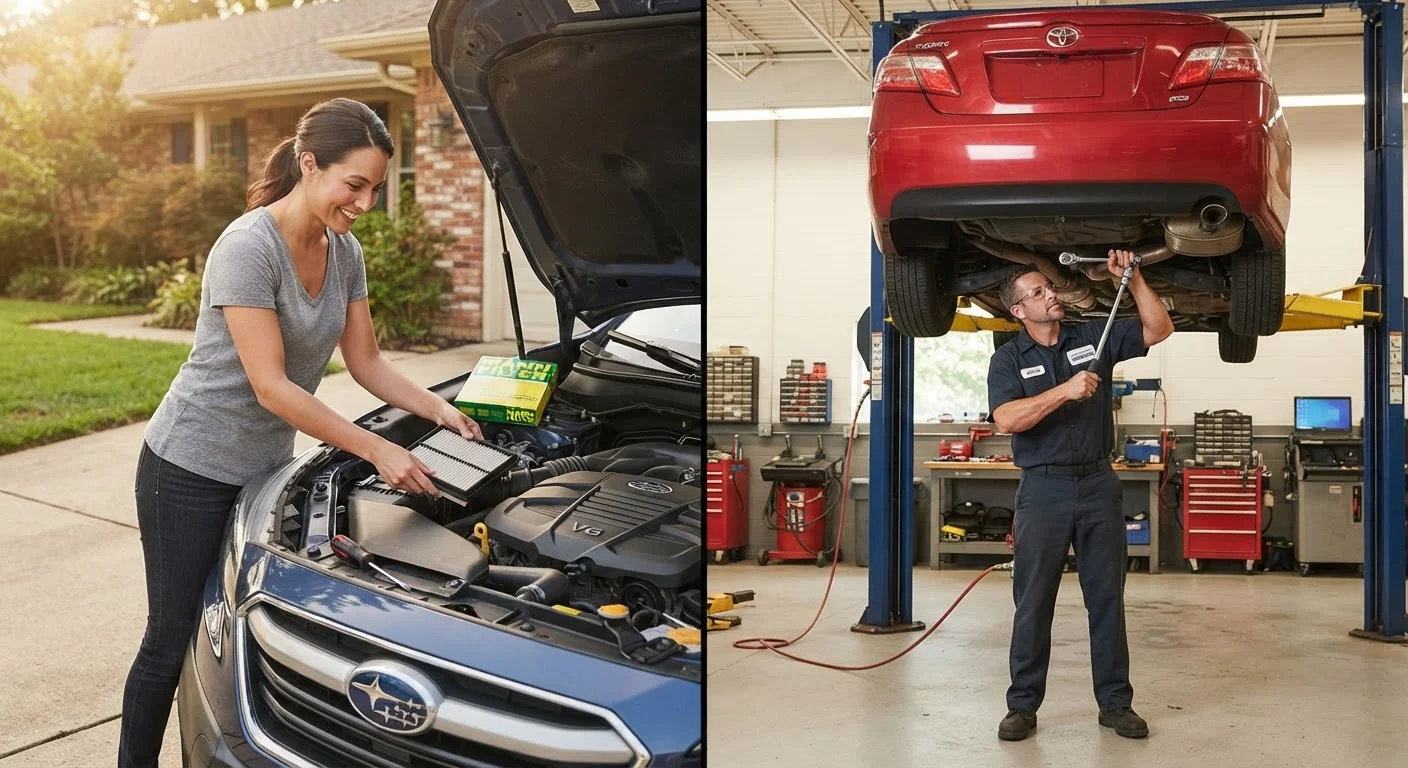
Most car owners can safely handle a handful of simple maintenance tasks with basic tools and a little patience. But anything involving braking performance, steering, fuel systems, or complex electronics carries real consequences if done incorrectly - and those jobs belong in the hands of a qualified mechanic. Knowing the line between the two is one of the most valuable skills an everyday driver can develop.
| Best for | Recommended |
|---|---|
| Confident beginners with basic tools and patience | DIY maintenance for simple tasks |
| Safety-critical systems or unfamiliar repairs | Professional mechanic service |
| High-mileage vehicles with complex needs | Professional mechanic service |
| Routine upkeep on a tight budget with clear instructions | DIY maintenance for simple tasks |
The Case for Doing It Yourself - Carefully
A growing number of car owners handle basic maintenance at home, and for good reason: some tasks are genuinely straightforward, require minimal tools, and carry little risk when done correctly. Knowing which jobs fall into this category can trim your annual maintenance costs without compromising safety.
The following tasks are widely considered DIY-friendly for most passenger vehicles:
- Engine air filter replacement: Usually accessed by unclipping a housing under the hood. No tools required on most vehicles. Consult your owner's manual for the correct filter type and replacement interval.
- Cabin air filter replacement: Typically located behind the glove box or under the dashboard. A straightforward swap that improves interior air quality.
- Windshield wiper blades: Most blades clip on and off without tools. Follow the packaging instructions specific to your vehicle's wiper arm style.
- Checking and topping off fluids: Coolant reservoir, windshield washer fluid, and power steering fluid (where applicable) can be visually checked and topped off safely. Note: Never open a radiator cap on a hot engine.
- Replacing a battery: Possible for many drivers, though some modern vehicles require a computer reset after battery replacement - check your owner's manual or a repair guide for your specific model first.
Before attempting any DIY task, consult your vehicle's owner's manual and a reputable repair guide for your specific make, model, and year. What's straightforward on one car may be complicated on another. See our maintenance schedule guide for a full breakdown of service intervals and what each one involves.
Start with Your Owner's Manual
Your vehicle's owner's manual is the most reliable reference for maintenance intervals, fluid specifications, and which tasks your manufacturer considers owner-serviceable. Many are available as free PDFs on manufacturer websites if you've misplaced the original. A repair manual specific to your make, model, and year - available at most public libraries or through reputable automotive reference services - adds another layer of reliable guidance before you pick up a wrench.
Jobs That Belong in a Professional's Hands
Some repairs look deceptively simple but carry serious consequences if performed incorrectly. The following categories should generally be left to a qualified mechanic unless you have verified technical training and the right tools.
- Brake system work: Replacing brake pads is sometimes framed as a beginner task, but incorrect installation - improper torque on caliper bolts, a mis-seated pad, or a disturbed brake line - can cause brake failure. This is a safety-critical system with zero margin for error.
- Suspension and steering components: Ball joints, tie rods, and control arm bushings require precise alignment after replacement. Incorrect installation affects handling stability and tire wear, and can make a vehicle dangerous at highway speeds.
- Timing belt or timing chain service: On interference engines (where pistons and valves share the same space), a mistimed replacement can destroy an engine within seconds of starting. This is a job for professionals with the right tools and experience.
- Fuel system repairs: Fuel lines, injectors, and fuel pump work involve flammable materials under pressure. Improper handling creates fire and explosion risk.
- Advanced electrical and computer systems: Modern vehicles rely on interconnected control modules. Incorrect wiring or module replacement can trigger cascading faults and disable critical safety systems including airbags and ABS.
If your car is past 100,000 miles, professional inspections become even more valuable - our high-mileage vehicle guide covers what changes in upkeep as vehicles age.
Don't Let Cost Drive Safety Decisions
It's understandable to want to save money on car repairs, but cutting corners on safety-critical systems can turn a modest repair bill into a serious accident or a much larger mechanical failure. If cost is a concern, ask a mechanic to prioritize repairs by urgency - many shops will give you a written estimate and flag what genuinely can't wait versus what can be scheduled for a later visit.
How to Make the Call
When you're unsure whether a repair is within your reach, a few honest questions can help guide the decision:
- Is a safety-critical system involved? Brakes, steering, suspension, airbags - if yes, default to a professional unless you have specific training.
- Do you have the right tools? Some jobs require torque wrenches, specialty sockets, or diagnostic scan tools that most home garages don't have.
- What's the consequence of getting it wrong? A misaligned wiper blade is annoying. A poorly installed brake caliper is dangerous. Weigh the stakes.
- Is your vehicle under warranty? Certain DIY repairs can void a manufacturer or extended warranty. Check the terms before you proceed.
When you do bring a car to a shop, clear communication makes a real difference. Our guide on talking to your mechanic walks through how to describe symptoms clearly and evaluate recommended repairs before you pay.
It's also worth remembering that skipping maintenance - whether DIY or professional - carries its own financial risks. Deferred maintenance has a way of compounding into far larger repair bills over time.
| Task | DIY-Friendly | Leave to a Mechanic | |
|---|---|---|---|
| Air filter (engine & cabin) | Yes - simple clip-in replacement | Not necessary | |
| Windshield wiper blades | Yes - no tools required | Not necessary | |
| Fluid top-offs (washer, coolant reservoir) | Yes - visual check and fill | Not necessary | |
| Battery replacement | Often yes - check model first | If reset required or inaccessible | |
| Brake pad/rotor replacement | Generally not recommended | Yes - safety-critical system | |
| Timing belt/chain service | No - high engine damage risk | Yes - specialist job | |
| Suspension & steering components | No - alignment required | Yes - affects handling safety | |
| Fuel system repairs | No - fire/explosion hazard | Yes - requires certified training |
The content on this site is for informational purposes only and is not a substitute for professional advice. Always consult a qualified professional for guidance specific to your situation.