

The Sticker Price Is Just the Starting Point
Electric vehicles typically carry a higher purchase price than gasoline-powered counterparts in the same segment. That gap has narrowed in recent years, and federal tax credits - up to $7,500 for qualifying new vehicles under current U.S. law - can offset a meaningful share of the cost. State-level rebates vary widely, so researching programs in your specific state before purchase is worthwhile.
Financing an EV also means factoring in the interest you'll pay over the loan term. Because base prices are often higher, monthly payments can exceed what you'd pay for a comparable gas vehicle even when factoring in fuel savings. If you're weighing powertrain options, understanding how each powertrain type works is a useful first step before committing.
$7,500
Maximum federal EV tax credit (new vehicles)
The Inflation Reduction Act established eligibility criteria including income caps, vehicle MSRP limits, and North American assembly requirements.
~$0.16/kWh
Average U.S. residential electricity rate
According to the U.S. Energy Information Administration; rates vary significantly by state and time-of-use billing plan.
8 years / 100k mi
Minimum federal EV battery warranty standard
The U.S. EPA requires automakers to warranty EV battery packs for at least 8 years or 100,000 miles against significant capacity loss.
Charging: Your New Fuel Budget
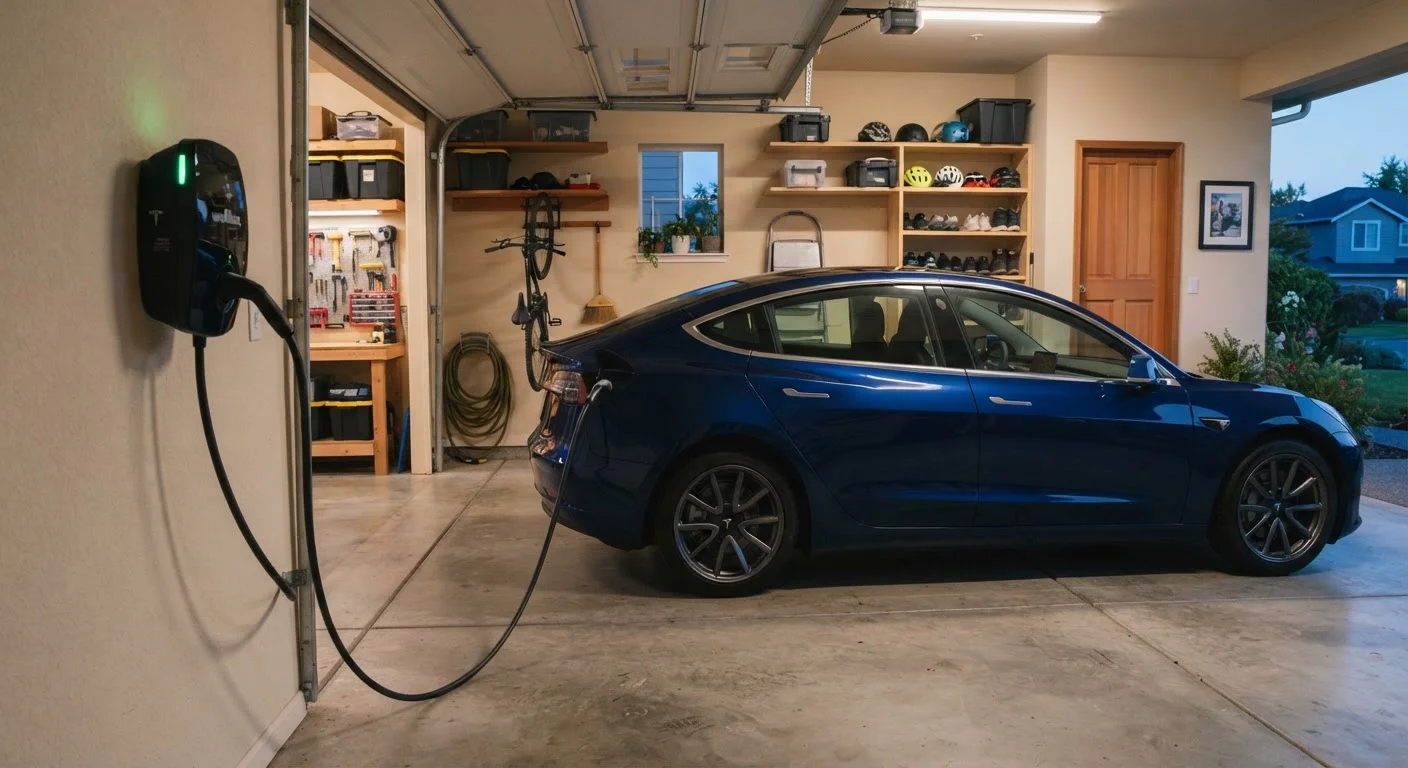
Electricity replaces gasoline as your primary fuel expense, and the cost difference is significant - but it's not free. Home charging on a standard Level 2 charger (240V) is the most economical option for most drivers. At average U.S. electricity rates, fueling an EV at home typically costs the equivalent of paying well under $2 per gallon of gasoline.
Public DC fast-charging is convenient for road trips but priced considerably higher - often comparable to or exceeding gas costs per mile, depending on the network and your vehicle's efficiency. If you rely heavily on public chargers, your savings shrink considerably. For a detailed look at how the two options compare, see our home charging vs. public charging breakdown.
Home charger installation - typically a Level 2 unit hardwired by a licensed electrician - can run between $500 and $2,000 depending on your home's electrical panel and local labor rates. This is a one-time cost that pays back over years of cheaper fill-ups.
Use Time-of-Use Rates to Cut Charging Costs
Many utilities offer time-of-use (TOU) electricity plans that charge lower rates during off-peak hours - typically late at night or early morning. Scheduling your home charger to run during these windows can meaningfully reduce your monthly electricity bill. Check with your utility provider to see if a TOU plan is available in your area.
Maintenance: Lower, but Not Zero
One of the most-cited financial advantages of EV ownership is reduced maintenance. Without an internal combustion engine, you eliminate oil changes, spark plugs, timing belts, and exhaust system repairs. Regenerative braking - which recovers energy during deceleration - also reduces brake pad wear noticeably.
That said, EVs still require routine upkeep: tire rotations and replacements (EVs are heavier and can wear tires faster), brake fluid flushes, cabin air filter replacements, and coolant system checks for the battery thermal management system. Over a five-year ownership window, maintenance costs across powertrain types differ more than many buyers expect.
Battery health is the wildcard. Most manufacturers provide an 8-year/100,000-mile battery warranty, which covers significant capacity loss. Replacement outside warranty coverage can be expensive, though battery longevity has improved substantially across newer model generations.
Battery Warranty vs. Battery Replacement Cost
The federal minimum requires automakers to cover battery packs for 8 years or 100,000 miles, but warranty terms vary by manufacturer - some offer more coverage. Outside of warranty, out-of-pocket battery replacement is a significant expense that can run into the thousands of dollars. Researching a specific model's battery track record before purchasing is a sound step for long-term financial planning.
Insurance and Depreciation: The Costs People Forget
Insurance premiums for EVs run higher than for comparable gas vehicles on average, according to insurance industry data. Repair costs, specialized parts, and the complexity of high-voltage systems all contribute to elevated claims costs - which insurers price into your premium. Shopping multiple carriers and comparing quotes before you buy can surface meaningful differences in annual cost.
Depreciation - the rate at which a vehicle loses value - has historically been a concern for EVs, though the picture is improving as the market matures. Some models have shown strong residual values; others have depreciated quickly as newer versions launched at lower prices. This matters most if you plan to sell or trade in the vehicle within a few years.
Buyers who underestimate these costs sometimes find the EV experience doesn't match expectations. Our piece on common EV assumptions that lead to poor decisions walks through several of the most frequent misjudgments.
Frequently Asked Questions
In most cases, yes - electricity costs less per mile than gasoline for comparable vehicles. However, the savings depend on local electricity rates, how often you use public fast-charging (which is pricier), and your driving patterns.
The average U.S. household electricity rate is roughly 16 cents per kilowatt-hour. Charging a typical 75 kWh battery from empty to full costs around $12. Actual costs vary by region and time-of-use electricity plans.
Generally, yes. EVs tend to carry higher insurance premiums than equivalent gas vehicles, largely because repair costs and parts can be more expensive. Getting multiple quotes is advisable before purchasing.
EVs skip oil changes, spark plugs, and transmission service. Routine costs include tire rotations, brake fluid checks, cabin air filters, and windshield wiper replacement. Brake wear is often reduced due to regenerative braking.
Most manufacturers warranty their battery packs for 8 years or 100,000 miles, whichever comes first. Real-world data suggests many packs retain strong capacity well beyond that threshold, though degradation rates vary by model and usage.
Federal and state-level incentives exist for eligible EV purchases, but income caps, vehicle price limits, and assembly requirements apply. Consult a tax professional or the IRS website to determine what you may qualify for.
The content on this site is for informational purposes only and is not a substitute for professional advice. Always consult a qualified professional for guidance specific to your situation.