

Our Verdict
A balance transfer can meaningfully reduce the interest cost of paying down credit card debt - if you qualify for favorable terms, commit to paying off the balance within the promotional window, and avoid adding new charges. It works best as part of a deliberate paydown plan, not as a short-term financial pressure valve.
Best for households with a steady income, a clear monthly paydown budget, and existing high-interest credit card debt they realistically can eliminate within 12 to 21 months.
What a Balance Transfer Actually Does
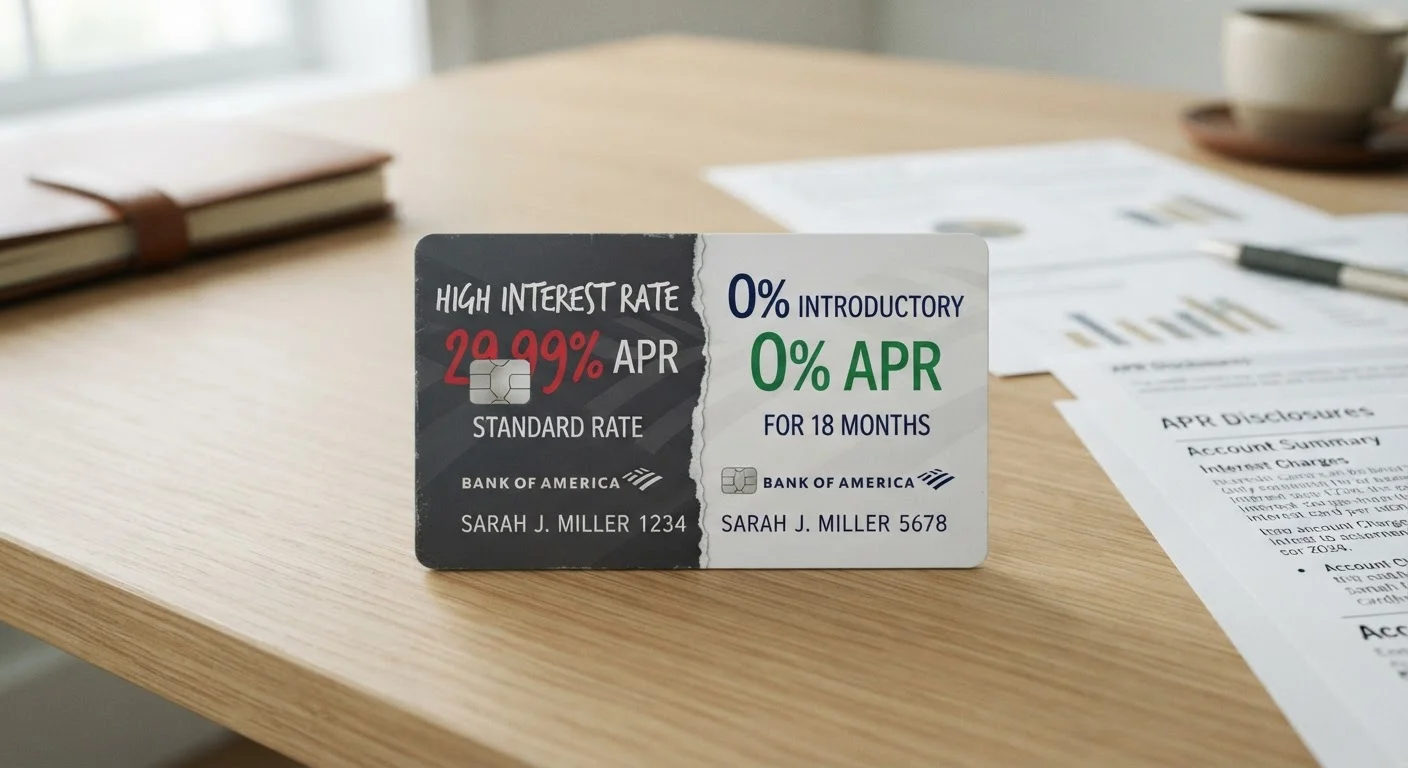
A balance transfer moves outstanding debt from one or more credit cards to a new card - typically one offering a low or 0% introductory APR for a set period. During that window, your payments reduce principal rather than disappearing into interest charges. The goal is straightforward: pay less in interest while eliminating the underlying debt faster.
What the marketing doesn't always emphasize is that this is a structured agreement with specific deadlines, fees, and conditions. Understanding those details before transferring is essential. For households already weighing debt paydown versus savings priorities, a balance transfer adds another layer of calculation to the decision.
Balance Transfers Are Not Debt Elimination
Moving debt to a new card does not reduce the amount you owe - it changes the terms under which you repay it. The promotional period is an opportunity to pay down principal faster, but it requires consistent monthly payments to be effective. If the balance isn't paid off before the promotional rate expires, the remaining amount will be subject to the card's standard APR, which can be as high as or higher than the card you transferred from.
The Advantages Worth Considering
Used strategically, a balance transfer offers real financial benefits that go beyond surface-level interest savings.
Potential to eliminate interest during promotional period
A 0% introductory APR - commonly lasting 12 to 21 months - means every dollar of your payment reduces principal. On a $5,000 balance at 22% APR, the interest savings over 18 months can be substantial.
Consolidates multiple balances into one payment
Transferring balances from several cards to one simplifies repayment logistics. Fewer due dates reduce the risk of missed payments and the mental overhead of tracking multiple accounts.
Creates a structured payoff deadline
The promotional window functions as a built-in urgency mechanism. Many people find that a clear, fixed endpoint motivates more consistent and aggressive debt repayment than an open-ended plan.
Can lower your overall debt cost significantly
Even after accounting for the transfer fee, the total cost of repayment is typically lower than continuing to carry the balance at a high variable rate over the same period.
3%-5%
Typical balance transfer fee range
Most issuers charge between 3% and 5% of the transferred balance as an upfront fee, according to publicly available card terms from major U.S. issuers.
12-21 months
Common promotional APR window length
Introductory 0% APR periods on balance transfer cards generally range from 12 to 21 months depending on the issuer and the applicant's credit profile.
The Risks and Costs You Shouldn't Overlook
The potential savings from a balance transfer come attached to conditions that, if missed, can leave you worse off than when you started.
Transfer fees add immediate cost to the move
Most balance transfer cards charge a fee of 3% to 5% of the transferred amount. On a $8,000 balance, that's $240 to $400 added to your debt from day one before you've made a single payment.
Promotional rate expires - sometimes with retroactive interest
Some cards apply deferred interest, meaning if any balance remains at the end of the promotional period, interest is charged retroactively on the original amount. Reading the terms carefully is non-negotiable.
Qualifying requires good credit
Cards with the most favorable promotional terms typically require good to excellent credit. Borrowers with lower scores may receive shorter promotional periods, higher fees, or may not qualify at all.
Risk of accumulating new debt on old cards
Once existing balances are transferred, the original cards have restored credit availability. Without deliberate restraint, it's easy to begin accumulating new charges - compounding the debt problem rather than solving it.
New purchases may not carry the promotional rate
Many balance transfer cards apply the 0% rate only to transferred balances, not new purchases. Charges made on the new card may accrue interest at a separate, often high, standard rate immediately.
For couples managing shared finances, the stakes are higher still. Misaligned expectations about spending during the promotional period can undermine the plan entirely. Approaching debt paydown as a household requires explicit agreement on what's off-limits while the clock is running.
How to Evaluate Whether It Makes Sense for You
Start with the math. Divide the total balance you'd transfer by the number of months in the promotional period. That's the monthly payment required to clear the debt before interest kicks in. If that figure doesn't fit your actual budget, the transfer may create more pressure than relief.
Next, factor in the transfer fee. A 3% fee on a $6,000 balance is $180 added upfront. Compare that to the interest you'd pay staying on your current card at its existing rate. In many cases, the fee is still worth it - but running the numbers matters.
Also consider your spending behavior honestly. A balance transfer doesn't reduce debt; it restructures it. If the underlying habits that created the balance haven't changed, a new card with available credit can easily become additional debt. The fundamentals of budgeting still apply - a promotional rate is only useful if it buys time for a real paydown, not a temporary reprieve.
Finally, check your credit profile before applying. A hard inquiry will temporarily affect your score, and approval - along with the credit limit offered - depends heavily on your creditworthiness. Applying for a card you're unlikely to qualify for costs you a credit inquiry with no benefit in return.
This article is for general informational and educational purposes only and does not constitute personalized financial or legal advice. Consult a qualified financial professional before making decisions about your specific debt situation.
The content on this site is for informational purposes only and is not a substitute for professional advice. Always consult a qualified professional for guidance specific to your situation.