

The Basic Mechanics of Compounding
At its core, compound interest means you earn (or owe) interest on interest. Each period, any accumulated interest is added to your balance - and that larger balance becomes the new base for the next period's interest calculation.
A simple example: Deposit $1,000 at 5% annual interest, compounded annually. After year one, you have $1,050. In year two, you earn 5% on $1,050 - not the original $1,000 - giving you $1,102.50. That extra $2.50 might seem trivial, but stretch this over 20 or 30 years and the difference between compound and simple interest becomes substantial.
For a broader look at how this principle applies to wealth-building, compound growth explained without the math jargon is a useful companion read.
72
Rule of 72: years to double your money
Divide 72 by your annual interest rate to estimate how many years it takes for a balance to double - a widely referenced rule of thumb in personal finance education.
20%+
Average credit card APR in the U.S.
According to the Federal Reserve, average credit card interest rates in the U.S. have exceeded 20% APR in recent periods, making unpaid balances especially costly when compounding monthly.
When Compound Interest Works For You
Savings accounts, money market accounts, and investment accounts all use compounding in your favor. The longer money stays invested or deposited, the more compounding magnifies returns. This is why financial guidance consistently emphasizes starting early - even small amounts benefit from extended compounding periods.
Compounding frequency also matters. An account that compounds daily will grow slightly faster than one that compounds monthly at the same stated rate. When comparing savings products, look for the Annual Percentage Yield (APY) - this number already accounts for compounding frequency, making it easier to compare accounts on equal terms.
Use APY, Not APR, to Compare Savings Accounts
When evaluating savings options, focus on the Annual Percentage Yield (APY) rather than the stated interest rate. APY incorporates how often interest compounds, giving you a true apples-to-apples comparison. A higher APY on a daily-compounding account can outperform a slightly higher APR that compounds less frequently.
It's worth noting that compounding on investments involves risk - past returns don't guarantee future performance. General savings accounts with federally insured institutions carry different risk profiles than market-based investments. Always consider your full financial picture, and consult a financial adviser for guidance specific to your situation.
When Compound Interest Works Against You
The same mechanics that grow savings can devastate borrowers. Credit cards are the most common example: carry a balance month to month, and interest compounds on whatever unpaid amount remains. Miss a payment, and fees get added to that compounding base as well.
Consider a $3,000 credit card balance at 20% APR, compounded monthly. Paying only the minimum each month could take well over a decade to pay off and cost thousands in interest - often more than the original balance. The balance does not just stay flat while you make payments; it continues to grow on itself.
Auto loans and personal loans typically use simple interest (calculated on the remaining principal), which is less punishing. But mortgages and student loans may behave differently depending on their structure, so it's worth reading the terms carefully.
Student Loan Compounding: Watch for Capitalization
Federal student loans can capitalize unpaid interest - meaning accumulated interest gets added to the principal balance, which then becomes the new base for future interest. This is a form of compounding that can significantly increase total repayment costs, particularly during periods of deferment or income-driven repayment plans. Always check your loan servicer's terms.
For a plain-language overview of the terms you'll encounter when dealing with interest-bearing accounts and loans, see common saving and debt terms every American should know.
Putting It Together: Saving and Debt at the Same Time
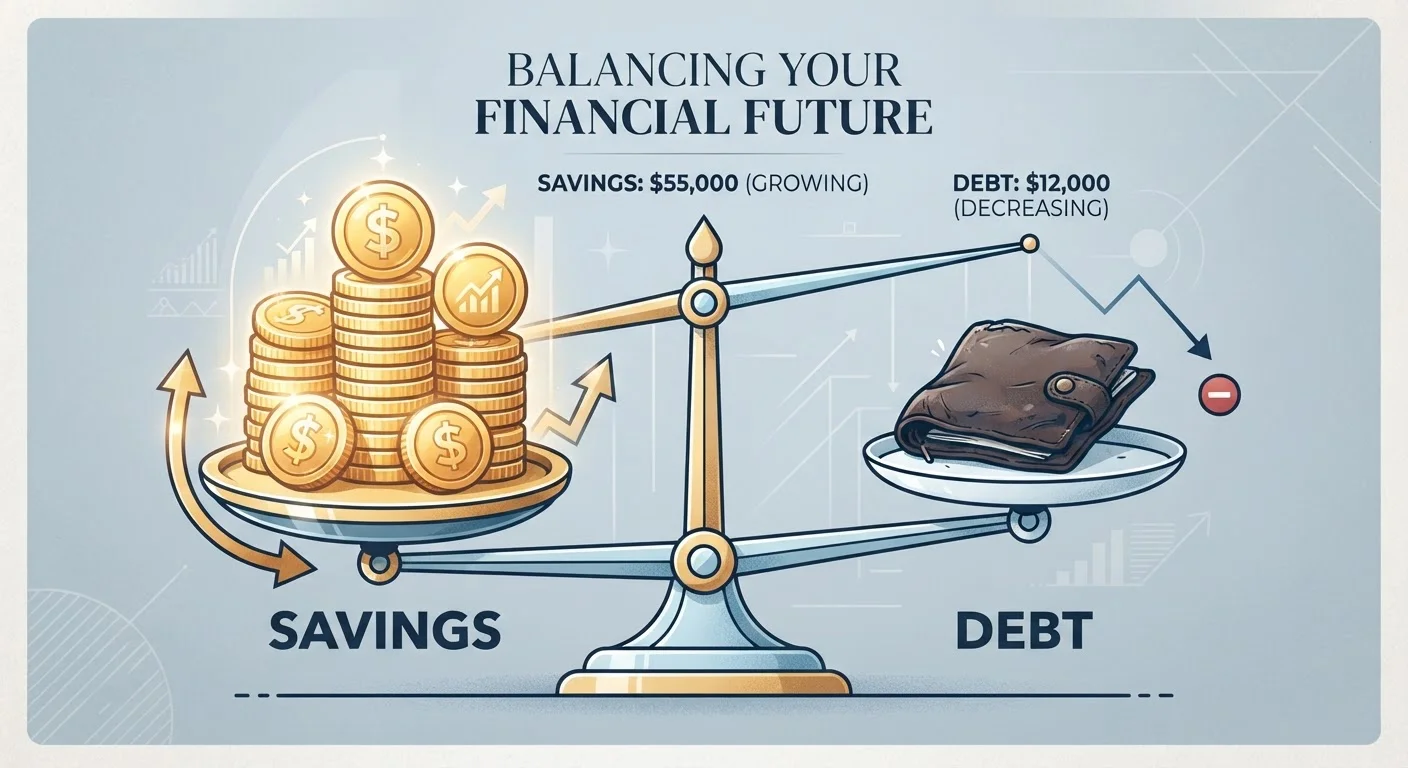
Most American households carry some debt while also trying to save - and compound interest affects both sides simultaneously. A dollar left in high-interest debt continues to compound against you, while a dollar invested or saved compounds in your favor.
The practical implication: the gap between your debt's interest rate and your savings rate matters enormously. If credit card debt costs 22% and a savings account returns 4.5%, the math strongly favors accelerating debt repayment first. If a mortgage carries 3.5% interest and a retirement account has historically returned more than that, the calculus shifts.
This isn't a one-size-fits-all answer. Paying off debt vs. building savings breaks down the factors households should weigh when deciding where each dollar goes. And if you want to rethink common assumptions about how much you need to save, savings rate myths that may be holding your finances back is worth a read.
This article is for general informational purposes only and does not constitute personalized financial advice. Consult a licensed financial adviser before making decisions based on your individual circumstances.
Frequently Asked Questions
Simple interest is calculated only on your original principal. Compound interest is calculated on the principal plus any interest that has already accumulated. Over time, compound interest grows balances much faster than simple interest.
It depends on the account or loan. Savings accounts often compound daily or monthly, while many loans compound monthly. The more frequently interest compounds, the faster the balance grows.
The math is the same, but the outcome is reversed. On savings, compounding grows your wealth. On debt, it grows what you owe. Carrying a credit card balance is a common example where compounding can rapidly inflate what you owe.
Yes. Paying only the minimum leaves most of your balance intact, and interest continues to compound on that remaining amount each billing cycle. This is why balances can grow even when you make regular payments.
It depends on the interest rates. If your debt carries a higher rate than expected investment returns, paying it off first often makes more financial sense. This is a personal decision worth discussing with a financial adviser. See our <a href="/personal-finance/saving-and-debt/paying-off-debt-vs-building-savings-when-to-prioritize-which">guide on prioritizing debt vs. savings</a> for more detail.
Starting earlier gives interest more time to compound, which dramatically increases the ending balance. Even modest contributions made earlier in life can outpace larger contributions made later because of the additional years of compounding.
The content on this site is for informational purposes only and is not a substitute for professional advice. Always consult a qualified professional for guidance specific to your situation.