

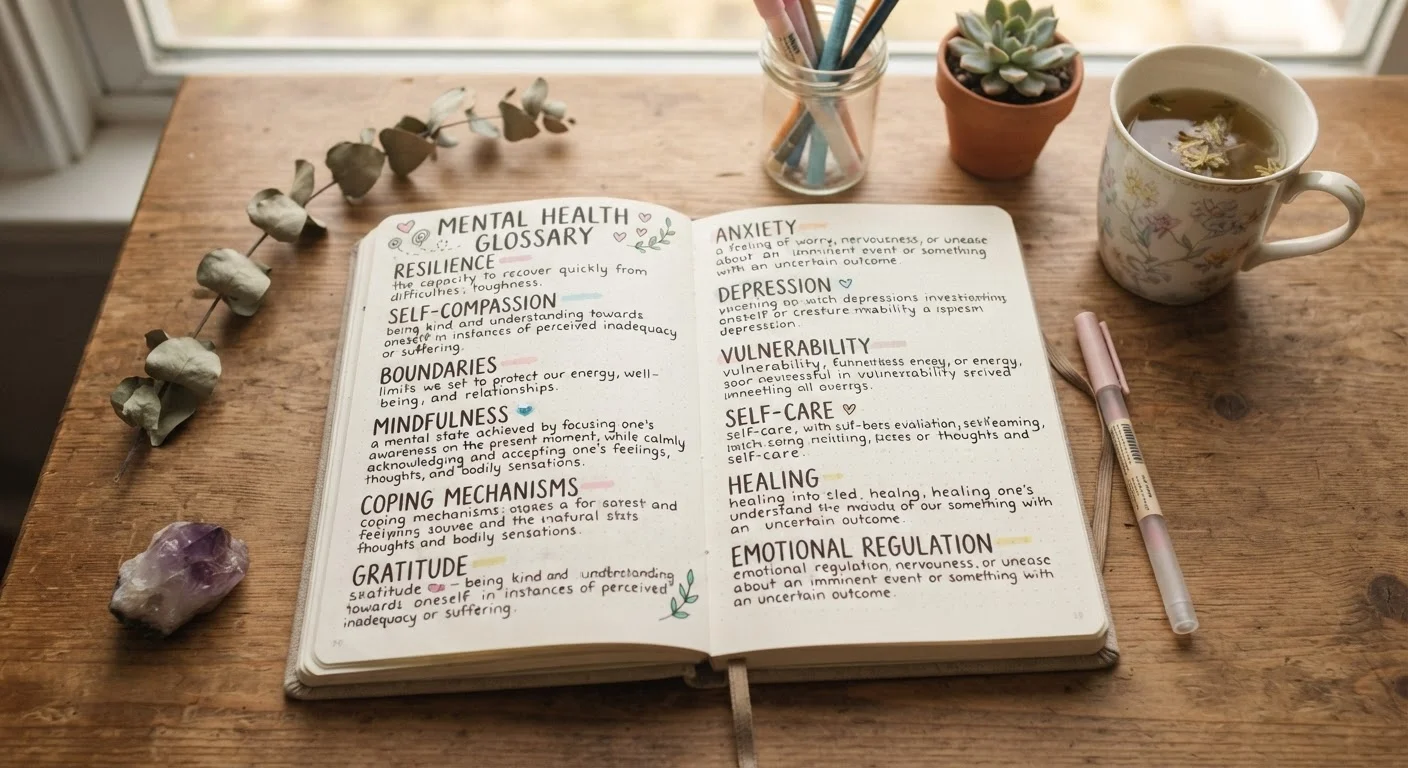
Why Mental Health Vocabulary Matters
Mental health conversations are happening everywhere - in workplaces, schools, social media, and doctors' offices. But the terminology can feel overwhelming or clinical, creating distance between people and the support they need. When you understand what a word actually means, you are better equipped to recognize experiences in yourself or others, communicate clearly with healthcare providers, and push back against common mental health misconceptions that still circulate widely.
This reference is not a diagnostic tool. It is a starting point for clearer conversations - with professionals, loved ones, and yourself.
This Is General Information, Not Medical Advice
The definitions in this guide are educational and informational. They are not intended to diagnose any condition or substitute for guidance from a licensed mental health professional. If you are experiencing persistent distress, please consult a qualified clinician who can evaluate your individual situation.
Core Terms at a Glance
The glossary below covers the terms you are most likely to encounter in everyday mental health discussions, therapy contexts, and health media. Each definition reflects established clinical or research consensus rather than popular usage, which sometimes drifts from precise meaning.
If you are exploring digital tools alongside these concepts, it helps to understand what mental health apps can and cannot do before relying on them for support.
Key Statistics and Context
Placing mental health terms in a real-world context makes them more meaningful. The data below reflects population-level findings from national health bodies - not predictions about any individual's experience.
1 in 5
U.S. adults experience mental illness each year
According to the National Institute of Mental Health, this figure underscores how common mental health challenges are across the general population.
11 years
Average delay from symptoms to treatment
The National Alliance on Mental Illness reports this gap is largely driven by stigma, lack of awareness, and limited access to care.
| Adults affected by mental illness annually (U.S.) | Approximately 1 in 5 (National Institute of Mental Health (NIMH)) |
| Most common mental health conditions | Anxiety disorders, depression (NIMH prevalence data) |
| Average delay between symptom onset and treatment | 11 years (National Alliance on Mental Illness (NAMI)) |
| Therapy approaches with strong evidence base | CBT, DBT, ACT, EMDR (American Psychological Association (APA)) |
| Primary barrier to mental health care | Stigma and lack of awareness (NAMI) |
These figures illustrate why building a shared vocabulary matters: the more accurately people can describe their experiences, the shorter the path to appropriate care tends to be.
Further Learning and Support
Language is a starting point, not a destination. If reading these definitions raised questions about your own mental health or someone you care about, the most important next step is speaking with a qualified mental health professional. No glossary - however thorough - can replace an individualized assessment.
For those interested in expanding their health literacy across related areas, our fitness vocabulary reference applies the same plain-English approach to exercise terminology, since physical and mental wellbeing are closely linked.
National Institute of Mental Health (NIMH)
The NIMH offers authoritative, free educational resources on virtually every recognized mental health condition, including statistics, treatment overviews, and research summaries written for the general public.
NAMI HelpLine
The National Alliance on Mental Illness operates a free helpline staffed by trained volunteers who provide information, referrals, and support - not crisis counseling - to individuals and families navigating mental health questions.
This article is for general informational and educational purposes only. It does not constitute medical advice, diagnosis, or treatment. Always seek guidance from a licensed mental health professional regarding any concerns about your mental health.
The content on this site is for informational purposes only and is not a substitute for professional advice. Always consult a qualified professional for guidance specific to your situation.