

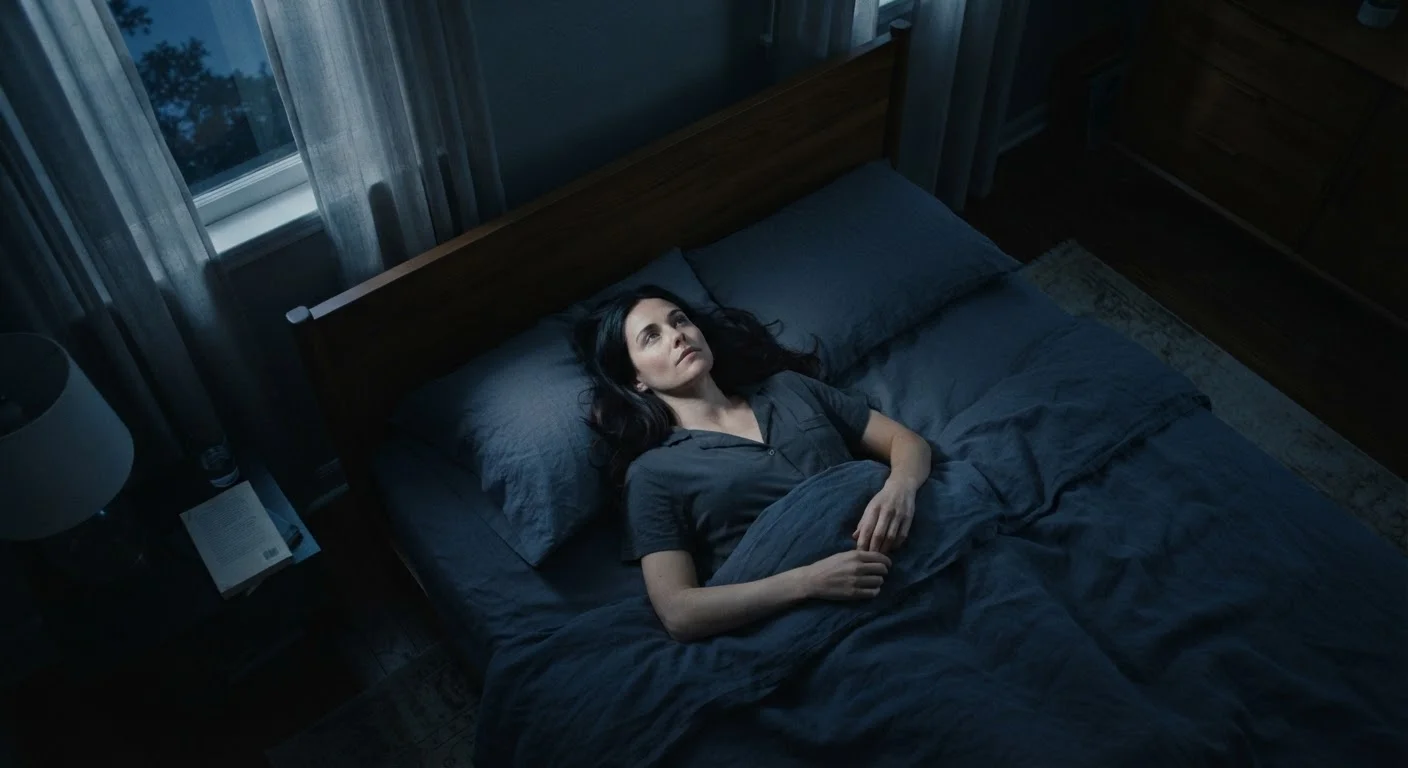
How Sleep Shapes Your Emotional Brain
Sleep is far more than physical rest. During sleep - particularly during REM (rapid eye movement) stages - the brain processes emotional memories, consolidates learning, and essentially resets its stress-response systems. When this process is cut short, the consequences show up quickly in mood and cognition.
Research using neuroimaging has shown that sleep-deprived individuals display significantly heightened reactivity in the amygdala, the brain region most associated with fear and emotional alarm. At the same time, the prefrontal cortex - which governs rational thinking and impulse control - becomes less effective at moderating those signals. The practical result: ordinary stressors feel more threatening, and emotional reactions become harder to regulate.
Even a single night of poor sleep can leave people feeling more irritable, less patient, and less able to cope with daily frustrations. Chronic sleep loss compounds these effects, gradually eroding emotional resilience and increasing vulnerability to anxiety and low mood.
“Sleep is not a luxury - it is a biological necessity, and the mental health consequences of neglecting it are as real as any physical injury.”
— Matthew Walker, Neuroscientist and sleep researcher, author of widely cited work on sleep science
How Mental Health Disrupts Sleep
The relationship doesn't flow only one way. Mental health conditions are among the most common drivers of sleep disturbance - and the mechanisms are well understood.
In anxiety disorders, a hyperactive stress-response system keeps the body in a state of physiological alertness even when rest is needed. Racing thoughts, physical tension, and a heightened startle response make it difficult to fall asleep or return to sleep after waking. In depression, sleep architecture is often fundamentally altered: people may enter REM sleep earlier and more intensely than usual, spend less time in deep, restorative slow-wave sleep, and wake repeatedly throughout the night.
~75%
People with depression reporting sleep problems
Research consistently finds that the majority of people with major depressive disorder experience significant sleep disturbances, including insomnia or hypersomnia.
2×
Approximate increase in depression risk from chronic insomnia
Multiple longitudinal studies suggest that individuals with persistent insomnia face roughly double the risk of developing depression compared to those without sleep difficulties.
7-9 hrs
Recommended nightly sleep for most adults
Sleep medicine organizations broadly recommend this range for adults to support cognitive function, mood regulation, and overall health.
Conditions including post-traumatic stress disorder (PTSD), bipolar disorder, and obsessive-compulsive disorder also carry high rates of sleep disruption, each through distinct neurobiological pathways. This is not incidental - sleep disturbance is a recognized symptom, not just a side effect, of many psychiatric diagnoses.
Breaking the Cycle: What the Evidence Suggests
Because sleep and mental health influence each other, improvements in one domain tend to benefit the other. Several well-studied interventions work on both sides of the equation.
Cognitive Behavioral Therapy for Insomnia (CBT-I) is currently considered a first-line treatment for chronic insomnia by sleep medicine specialists. It addresses the thought patterns and behaviors that perpetuate poor sleep - and studies show it can also reduce symptoms of depression and anxiety in people who have both conditions simultaneously.
Consistent sleep scheduling - going to bed and waking at the same time each day - helps stabilize the body's internal clock, known as the circadian rhythm. This consistency supports both sleep quality and mood regulation. Limiting alcohol (which fragments sleep architecture despite its sedative effect) and reducing caffeine in the afternoon are similarly evidence-backed steps.
Protect Sleep as Part of Mental Health Care
If you are working with a therapist or counselor on anxiety, depression, or stress, bring up your sleep patterns explicitly. Sleep quality is a clinically meaningful data point that can inform your treatment. Tracking your sleep for a week - noting bedtime, wake time, and any nighttime awakenings - gives your provider valuable context.
For people managing diagnosed mental health conditions, sleep should be treated as an integral part of the overall care plan. Discussing sleep quality with a therapist or psychiatrist - not just a primary care doctor - can reveal important clinical information and open additional treatment avenues.
See our small daily habits guide for more on how modest behavioral changes can support emotional well-being alongside sleep improvements. You may also find useful guidance in our morning routine explainer, which examines how the first hour of the day can set a healthier emotional tone.
For broader context on what sleep does for the body, our piece on sleep and illness recovery explores the physical dimensions of restorative rest.
This article is for general informational and educational purposes only and does not constitute medical or mental health advice. If you are experiencing persistent sleep difficulties or mental health symptoms, please consult a qualified healthcare professional.
Frequently Asked Questions
Chronic sleep deprivation is consistently associated with elevated risk of developing depression and anxiety disorders, though it doesn't guarantee either. Research suggests that insomnia roughly doubles the risk of developing depression. Addressing sleep issues early may help reduce that risk, but it is not a substitute for professional mental health care.
Most adults need between 7 and 9 hours of sleep per night, according to guidance from sleep medicine organizations. Individual needs vary, but regularly sleeping fewer than 7 hours is associated with worsened mood, impaired decision-making, and higher stress reactivity. Quality matters as much as quantity.
Often, yes. Many people with depression report improved sleep quality when their condition is treated - whether through therapy, medication, or lifestyle changes. However, some antidepressants can initially affect sleep, so outcomes vary. Always work with a healthcare provider to find the right approach.
Sleep hygiene refers to a set of behavioral habits that support consistent, restorative sleep - such as maintaining a regular sleep schedule, limiting screen exposure before bed, and keeping the bedroom cool and dark. Evidence supports these practices as helpful adjuncts to managing both sleep problems and mild mood disturbances.
If sleep difficulties last more than a few weeks, significantly affect your daily functioning, or accompany persistent low mood, anxiety, or other mental health symptoms, it's worth speaking with a healthcare professional. Both insomnia and mental health conditions respond well to timely, appropriate treatment.
The content on this site is for informational purposes only and is not a substitute for professional advice. Always consult a qualified professional for guidance specific to your situation.