

Option A
Heartburn
The occasional, familiar burning sensation most adults experience.
Best for: Understanding as a temporary symptom triggered by food, drink, or position - not a diagnosis on its own.
Option B
GERD (Gastroesophageal Reflux Disease)
A chronic digestive condition requiring ongoing medical attention.
Best for: Recognizing as a diagnosable disease when acid reflux symptoms become frequent, persistent, or damaging.
What Is Heartburn, Exactly?
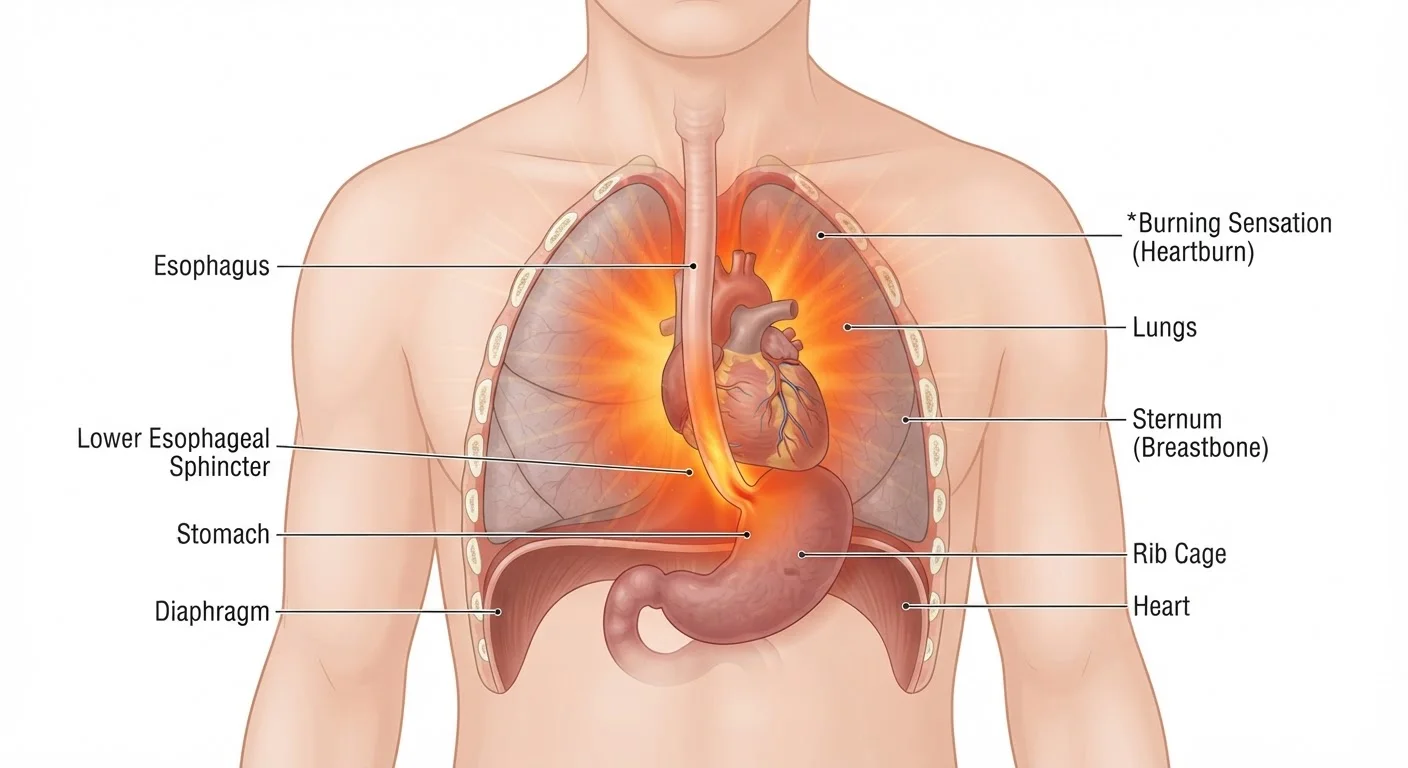
Heartburn is a symptom - a burning discomfort that rises from the stomach into the chest or throat. It occurs when stomach acid temporarily flows back into the esophagus, the tube connecting the mouth to the stomach. This backflow, called acid reflux, irritates the esophageal lining, producing that familiar fiery sensation.
Almost everyone experiences heartburn at some point. Common triggers include fatty or spicy foods, caffeine, alcohol, chocolate, large meals, lying down shortly after eating, or pregnancy. The discomfort usually passes within a few hours and responds to lifestyle changes or occasional use of antacids.
Importantly, heartburn is not a disease. It is one possible sign among several that acid reflux has occurred - much like how a fever is a symptom rather than an illness itself. Just as not all sore throats signal the same underlying cause, a single bout of heartburn doesn't automatically indicate a serious or chronic problem.
What Makes GERD Different?
GERD - Gastroesophageal Reflux Disease - is a diagnosable chronic condition in which acid reflux occurs repeatedly, typically defined as two or more times per week. Unlike occasional heartburn, GERD involves a structural or functional problem: the lower esophageal sphincter (LES), the muscular valve separating the stomach from the esophagus, doesn't close properly or relaxes too frequently, allowing acid to back up consistently.
Over time, repeated acid exposure can damage the esophageal lining, leading to complications including esophagitis (inflammation), esophageal strictures (narrowing), and in some cases Barrett's esophagus - a condition in which the lining cells change, increasing the risk of esophageal cancer.
| Criterion | Heartburn | GERD |
|---|---|---|
| Classification | A symptom | A chronic disease |
| Frequency | Occasional or situational | Twice a week or more |
| Root cause | Temporary acid backflow | Dysfunctional lower esophageal sphincter |
| Potential complications | Typically none | Esophagitis, strictures, Barrett's esophagus |
| Primary management | Lifestyle changes, antacids | Medical diagnosis, prescription treatment |
| Requires doctor visit? | Not usually for rare episodes | Yes - diagnosis and monitoring essential |
GERD symptoms can extend beyond heartburn. Many people experience regurgitation of sour liquid, chronic cough, hoarseness, a sensation of a lump in the throat, or disrupted sleep. Some individuals - particularly older adults - develop what clinicians call "silent GERD," where esophageal damage occurs without obvious burning sensations.
Frequency, Severity, and What's at Stake
The key distinction comes down to frequency and consequence. Heartburn that happens once after a rich holiday meal is very different from heartburn that interrupts sleep three nights a week. The latter pattern is a red flag for GERD and should be evaluated by a healthcare provider.
~20%
U.S. adults with weekly GERD symptoms
Gastroenterology research consistently estimates approximately one in five American adults experiences GERD-level symptoms at least once a week.
Up to 40%
Americans experiencing heartburn monthly
Population surveys suggest a large share of U.S. adults report heartburn at least once a month, most of which does not meet criteria for GERD.
10-15%
GERD patients who develop Barrett's esophagus
Medical literature estimates that a meaningful minority of people with chronic, untreated GERD develop Barrett's esophagus, a precancerous cell change.
GERD is one of the most common gastrointestinal disorders in the United States. Research published in gastroenterology literature consistently estimates that roughly 20% of American adults experience GERD symptoms weekly. Yet many people self-treat with antacids for years without realizing their esophagus may be sustaining ongoing damage.
This gap between perceived severity and actual impact is part of why the heartburn-versus-GERD distinction matters so much. Symptoms that feel "manageable" can still warrant medical assessment, particularly if they've been ongoing for months or are accompanied by difficulty swallowing, unexplained weight loss, or blood in the stool - any of which should prompt immediate medical attention.
Management: Where the Approaches Diverge
For occasional heartburn, evidence-based lifestyle strategies are often effective: eating smaller meals, avoiding trigger foods, waiting at least two to three hours before lying down, elevating the head of the bed, and maintaining a healthy weight. Over-the-counter antacids can neutralize stomach acid for short-term relief.
For GERD, management is more structured. A physician may recommend prescription-strength acid-suppressing medications, behavioral modifications tailored to the individual, and periodic monitoring for esophageal changes. In some cases, surgical or procedural interventions are considered when medication and lifestyle changes don't provide adequate control.
It's worth noting that even within GERD, not every case looks the same - similar symptoms can have meaningfully different causes and severity levels. A gastroenterologist can conduct evaluations such as endoscopy or pH monitoring to determine the extent of reflux and guide the most appropriate care plan.
When to Seek Medical Attention Promptly
Certain symptoms alongside reflux should never be self-managed: difficulty or pain when swallowing, persistent vomiting, unexplained weight loss, chest pain that could indicate a cardiac event, or blood in vomit or stool. These warrant immediate evaluation by a healthcare professional. Do not assume these are simply "bad heartburn."
This article is for general informational purposes only and does not constitute medical advice. If you experience frequent or severe reflux symptoms, consult a qualified healthcare professional for an accurate diagnosis and personalized guidance.
The content on this site is for informational purposes only and is not a substitute for professional advice. Always consult a qualified professional for guidance specific to your situation.